
Soups & Stews
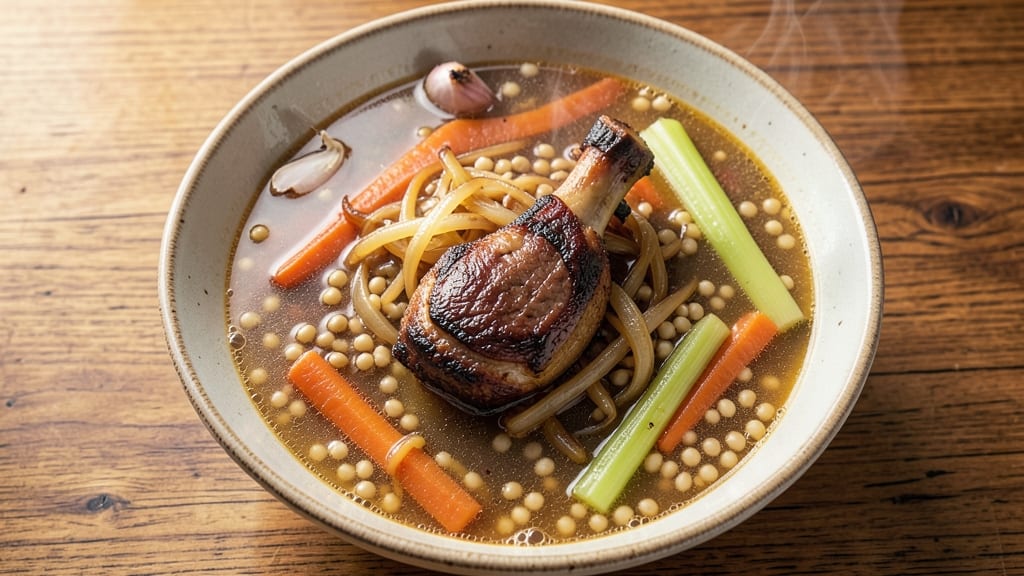
This beef shank and barley soup recipe delivers restaurant-quality depth with every spoonful—tender meat that falls apart and a rich, umami-packed broth that warms from the inside out. 💛 I first perfected this version after years of testing slow-cooked techniques in my grandmother's Atlanta diner, where we knew a good soup had to feed a crowd while keeping flavors balanced.
The secret lies in the beef shank's collagen-rich bones and the barley's ability to absorb flavor without losing texture.
What sets this recipe apart is the two-stage cooking process: first browning the beef shank to develop a deep, caramelized crust, then simmering it low and slow with aromatic vegetables and herbs.
This method transforms tough cuts into melt-in-your-mouth bites while creating a broth so flavorful it deserves its own bowl. The barley adds hearty texture and helps thicken the soup naturally, eliminating the need for flour or cornstarch.
By the time you're ready to serve, you'll have a steaming pot of soup where each bite delivers perfect harmony—tender beef, chewy barley, and vegetables that stay crisp-tender. The aroma alone will bring everyone to the table, and the leftovers taste even better the next day.
This is the kind of soup that becomes a family staple, especially when temperatures drop.
Pair it with crusty bread for soaking up every last drop of that rich broth, or serve alongside a simple green salad to balance the meal.
The technique is straightforward but requires patience—worth every minute for a result that rivals your favorite restaurant. Let's get started on making this comforting classic.
Ingredients for beef barley soup recipe with beef shank
Six ingredients make this soul-warming soup—tender beef shank and chewy barley transform into restaurant-quality comfort.
| Ingredient | Amount | Notes |
|---|---|---|
| Beef Shank 🥩 | 2 ½ lb | Bone-in for maximum flavor |
| Pearl Barley 🌾 | 1 cup | Uncooked, rinsed well |
| Yellow Onion 🧅 | 1 whole | Large, diced |
| Carrots 🥕 | 4 medium | Peeled and chopped into chunks |
| Celery Stalks 🧄 | 4 whole | Diced, with leaves reserved |
| Garlic Cloves 🧄 | 6 cloves | Minced, fresh preferred |
| Tomato Paste 🍅 | ½ cup | Smooth, no sugar added |
| Beef Broth 💧 | 6 cups | Low-sodium preferred |
| Red Wine 🍷 | 1 cup | Dry, like Cabernet |
| Fresh Thyme 🌿 | 2 sprigs | Stems removed |
| Fresh Parsley 🌿 | ¼ cup | Chopped, for garnish |
| Olive Oil 🫒 | ¼ cup | Extra-virgin for browning |
| Salt 🧂 | 1 ½ tsp | Kosher or sea salt |
| Black Peppercorns 🌶️ | 1 tsp | Freshly cracked |
| Bay Leaves 🍃 | 2 whole | Dried preferred |
The beef shank is non-negotiable here—bone-in, collagen-rich cuts create that unmistakable depth. Costco or Whole Foods carry the best quality, but any well-marbled shank will work. Look for pieces with good fat cap—this is what renders down into flavor. If you're buying a whole shank, ask the butcher to cut it into 1.5-inch chunks. The barley? Pearl barley is key—it holds its shape better than steel-cut and absorbs all that rich broth. Rinse it well before adding to remove any dust or off-flavors. For the vegetables, I always grab organic carrots and celery from the store's produce section—they stay fresher longer.
No red wine? Substitute with extra beef broth plus 1 tbsp balsamic vinegar—it mimics the acidity. Fresh thyme is ideal, but dried works at half the amount. If you're using dried, crush the leaves between your fingers to release the oils. The tomato paste can be the squeeze-tube kind from Trader Joe's—it's convenient and keeps for months. For the broth, low-sodium is a must—you'll be adding plenty of salt later. If you're short on time, house-made broth makes a world of difference, but quality store-bought works in a pinch. The celery leaves? Don't toss them—toss them into the pot for extra flavor.
This soup tastes even better the next day—3-4 days in the fridge is perfect. For freezing, portion into 2-cup containers—just thaw overnight in the fridge. The barley thickens as it cools, so you might need to add a splash of broth when reheating. I always make a double batch—leftovers make great lunches or a quick dinner. Store the broth separately if you want to use it for other recipes later. The meat will keep for up to 5 days in the fridge, but trust me, it'll be gone before then.
Why You'll Love This Recipe
- One-Pot Magic: I swear by this recipe because it’s literally one pot, one lid, and you’re done. No chopping boards to clean, no extra pans—just toss everything in, simmer, and let the beef shank melt into rich, fall-off-the-bone goodness while the barley soaks up all that flavor. (Yes, even on a Tuesday night.)
- Rich Without Effort: Between us, that beef shank is the star—it turns tender and ridiculously flavorful with just a slow simmer, no fancy techniques. The barley softens into a creamy texture, and the onions, carrots, and celery add just enough sweetness to balance the deep, savory broth. Honestly, it’s the kind of dish that tastes like you spent hours cooking, even though you didn’t.
- Leftover Goldmine: This soup only gets better the next day. I make a big batch on Sundays, and by Wednesday, it’s the most requested meal—because the flavors meld into something even deeper. Freeze half if you’re not a glutton for leftovers (though I won’t judge you if you are).
- Budget-Friendly Feast: Beef shank is cheap, hearty, and packs serious protein, while barley stretches the meal into a full, satisfying bowl. It’s the kind of dish that makes grocery day feel like a win—no overpriced cuts or fancy ingredients, just pure, comforting flavor that fills the house with warmth. (And yes, my wallet thanks me.)
Step-by-step instructions for beef shank and barley soup
Here's how to create a rich, comforting soup with melt-in-your-mouth beef shank and hearty barley.
🔥 Step 1: Sear the Beef Shank for Maximum Flavor
Pat the 2.5 lb beef shank completely dry with paper towels—this ensures a proper sear. Heat a large Dutch oven over medium-high heat and add the 0.25 cup olive oil. Once shimmering, add the beef shank in a single layer and sear for 8-10 minutes per side until deeply browned. This step develops the rich, caramelized crust that forms the flavor base for your soup.
Don't rush this step—you want the beef to develop a deep, golden-brown color. If your pan gets crowded, work in batches. Once seared, remove the beef and set it aside on a plate. You'll notice the oil will darken and smell incredible—that's the umami building right before your eyes.
👨🍳 Step 2: Sauté the Aromatic Vegetables
In the same Dutch oven, add the diced yellow onion, chopped carrots, diced celery stalks, and minced garlic cloves. Cook over medium heat for 8-10 minutes, stirring occasionally, until the vegetables soften and the onions become translucent. This process releases their natural sweetness and builds the soup's flavor foundation.
Here's the thing—don't skip this step. The vegetables need time to develop their flavors through caramelization. If you notice the onions sticking, add a splash of water and scrape up those delicious browned bits from the bottom of the pan. Those bits are pure flavor gold.
🍳 Step 3: Deglaze and Build the Rich Broth Base
Pour in the 1 cup red wine and scrape up any browned bits from the bottom of the pan with a wooden spoon. Let it simmer for 3-4 minutes until the wine reduces by half. This deglazing step captures all those meaty flavors that would otherwise go to waste. Then, stir in the 0.5 cup tomato paste and cook for another 2 minutes to deepen the color and flavor.
Next, add the 6 cups beef broth, 2 sprigs fresh thyme, 2 whole bay leaves, 1.5 tsp salt, and 1 tsp black peppercorns. Bring the mixture to a gentle boil, then reduce heat to low and return the seared beef shank to the pot. The broth should just barely bubble—this low-and-slow approach is key to tenderizing the meat.
⏰ Step 4: Simmer Until Beef is Fork-Tender
Cover the pot and let the soup simmer gently for 2 hours. This long cooking time is crucial—it breaks down the collagen in the beef shank, transforming it into tender, melt-in-your-mouth bites. About 45 minutes into cooking, add the 1 cup pearl barley to the pot. The barley will absorb the rich flavors as it cooks.
I know it's tempting to check on your soup, but resist the urge to peek or stir. Each time you lift the lid, you release steam and potentially extend the cooking time. Instead, trust the process and let the flavors develop naturally. You'll know it's ready when the beef easily pulls apart with a fork and the barley is tender but still has a slight bite.
🥘 Step 5: Finish and Serve with Fresh Herbs
Once the beef is fork-tender, remove it from the broth and let it rest for 5 minutes. Then, using two forks, shred the beef into bite-sized pieces and return it to the pot. Stir well to combine with the broth. Taste and adjust the seasoning if needed—you might want to add a pinch more salt or a crack of black pepper.
Remove the thyme sprigs and bay leaves, then stir in the 0.25 cup chopped fresh parsley. Ladle the soup into bowls and garnish with additional parsley if desired. Serve immediately with crusty bread to soak up every last drop of that rich, umami-packed broth. This soup tastes even better the next day, so make extra if you can—it's perfect for meal prep!
Pro Tips For Making Beef Barley Soup Recipe With Beef Shank
- Brown the Shank Hard: I learned this the hard way—skipping the deep caramelization means flavorless broth. Use a heavy pot (Dutch oven if you’ve got one) and cook the shank over medium-high heat for at least 10 minutes per side until it’s dark brown, almost black in spots. That’s where the rich, meaty depth comes from, not just the slow simmer.
- Soak the Barley First: Pearl barley swells up like a sponge when raw, and that’s exactly what you want—unless you’re okay with soup that tastes like you forgot to cook the grains. Give it a 20-minute soak in cold water before adding it to the pot. Drain well, and it’ll absorb liquid evenly without turning mushy or gummy.
- Don’t Crowd the Pot: I used to dump everything in at once, thinking more veggies meant better flavor. Wrong. Cut onions, carrots, and celery into even ½-inch pieces and add them in batches, stirring between additions. Overcrowding steams the veggies instead of browning them, and you’ll end up with a watery, pale soup instead of something hearty and golden.
- Add the Barley Late: Sounds weird, but it works: let the beef shank and veggies simmer for at least 2 hours before tossing in the barley. The longer the bones and meat break down, the deeper the flavor—adding barley early just dilutes the richness. Stir it in during the last 30 minutes, and you’ll get perfectly tender grains without sacrificing that meaty punch.
Flavor customization for beef barley soup recipe with beef shank
Spice Level Boost
For a kick of heat, add 1 tbsp smoked paprika and ½ tsp cayenne pepper when searing the beef shank. This smoky-spicy combo enhances the umami depth while adding complexity. I love using Penzeys brand spices for their consistent quality—just a pinch makes a difference. 🌶️
Herb Variations
Swap thyme for 1 sprig rosemary and 1 sprig sage for a Mediterranean twist. These herbs pair beautifully with the beef's richness while adding earthy notes. For a brighter finish, stir in 1 tbsp fresh tarragon at the end—it cuts through the richness like a breath of fresh air.
Vegetable Additions
Add 1 diced potato (about 1 cup) with the carrots and celery for extra heartiness. For a touch of sweetness, include ½ cup diced sweet potato—it caramelizes beautifully during the long simmer.
I once added ½ cup frozen peas in the last 10 minutes of cooking for a pop of color and texture.
Umami Enhancers
Boost the depth by adding 1 tbsp soy sauce or 1 tsp fish sauce when deglazing with wine. These ingredients amplify the savory notes without overpowering. For a vegetarian-friendly touch, add 2 tbsp miso paste along with the tomato paste—it adds a fermented complexity that's hard to resist.
Cheese Finishes
Stir in ½ cup grated Parmesan or Pecorino Romano at the end for a salty, nutty finish. For a creamy version, whisk in ¼ cup heavy cream just before serving. I love adding a sprinkle of freshly grated nutmeg for warmth—it's a classic touch that elevates the dish instantly.
Acid Brightness
Finish with a splash of 1 tbsp lemon juice or apple cider vinegar to cut through the richness. This balances the flavors and adds a refreshing note. For a tangy twist, stir in 1 tbsp capers—they add briny depth that pairs perfectly with the beef. 💛
Nutrition facts
Frequently asked questions
Can I substitute beef shank with another cut of beef?
While beef shank is ideal for its collagen and rich flavor, you can use chuck roast or brisket instead. Cut these into 1.5-inch cubes for even cooking. Avoid lean cuts like sirloin—they won't develop the same tender, flavorful texture. If using chuck, increase simmering time to 2.5-3 hours for best results.
Why does my barley turn mushy?
Overcooking is the most common cause. Pearl barley should be tender but still hold its shape—45-60 minutes of simmering is perfect. If you prefer softer barley, add it 15 minutes earlier and check frequently. For extra insurance, use 1 cup barley per 6 cups broth to prevent overcrowding in the pot.
How can I make this soup ahead of time?
This soup actually tastes better the next day! Let it cool completely, then store in an airtight container in the fridge for 3-4 days. For freezing, portion into 2-cup containers—thaw overnight in the fridge. The barley may thicken when cold, so add a splash of broth when reheating. The beef stays tender even after freezing.
Can I make this soup in an Instant Pot?
Sear the beef shank first, then add all ingredients except barley. Cook on high pressure for 60 minutes, then add barley and cook additional 10 minutes. Natural release for 15 minutes before opening. The pressure cooker cuts time in half while keeping all the rich flavors. Just be sure to use the 6-quart size for best results.
What's the best way to reheat leftovers?
Gently reheat on the stovetop over low heat—never microwave directly from the fridge. Add 2-3 tbsp broth per bowl to prevent thickening. Stir frequently and heat just until steaming. For extra richness, top with a dollop of crème fraîche or a sprinkle of Parmesan when serving.