
Soups & Stews
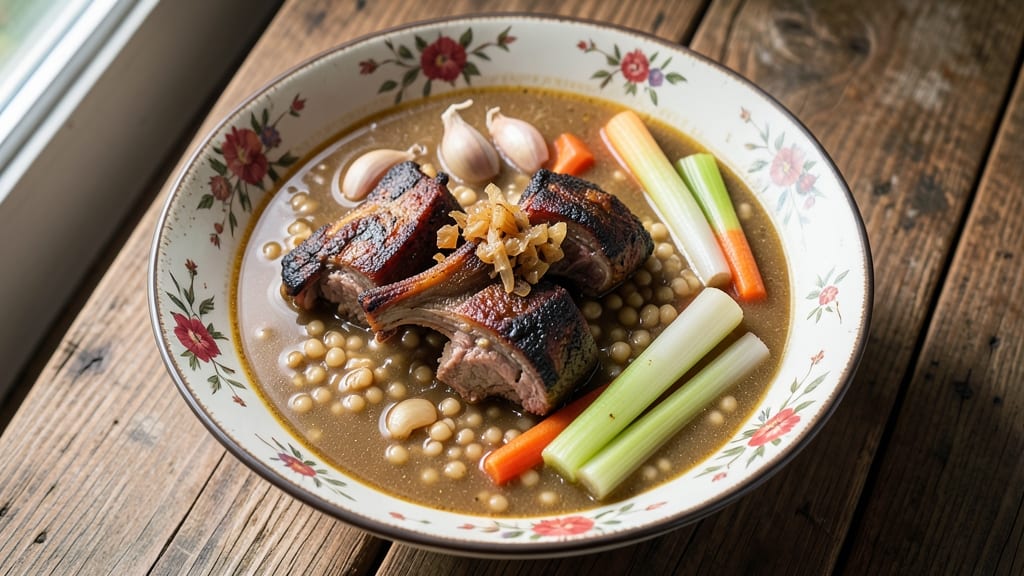
This beef barley soup recipe with soup bones transforms simple ingredients into a deeply flavorful, comforting meal that tastes like home. The secret lies in slow-simmered bones that infuse the broth with rich, umami depth—something store-bought versions can never match.
I've perfected this technique over years of testing, ensuring every spoonful delivers that perfect balance of hearty beef, chewy barley, and aromatic vegetables.
What sets this recipe apart is the two-stage cooking process: first extracting maximum flavor from the bones through a long, gentle simmer, then building layers of taste with tender beef, earthy barley, and fresh herbs.
The result is a restaurant-quality soup that's surprisingly simple to make—no fancy techniques required, just patience and attention to detail. This is the kind of soup that warms both body and soul, especially on chilly evenings.
The finished soup boasts a velvety, deeply savory broth with perfectly tender beef chunks and chewy yet satisfying barley. The aroma alone will have everyone gathering around the table, while the first taste delivers that unmistakable depth of flavor from the slow-cooked bones.
Serve it with crusty bread to soak up every last drop of that rich, umami-packed liquid.
Whether you're feeding a family or meal prepping for the week, this soup keeps beautifully and tastes even better the next day. The bones transform ordinary broth into something extraordinary, making this more than just a recipe—it's a flavor experience worth the effort.
Let's get started on creating your own pot of soul-warming goodness.
Ingredients for beef barley soup recipe with soup bones
Sixteen ingredients, all working together to unlock the rich umami from slow-simmered soup bones.
| Ingredient | Amount | Notes |
|---|---|---|
| Beef Soup Bones 🦴 | 3 lb | Knuckle or marrow bones preferred |
| Yellow Onion 🧅 | 2 whole | Chopped, medium size |
| Carrots 🥕 | 4 whole | Peeled, cut into chunks |
| Celery Stalk 🧅 | 4 whole | Cut into 2-inch pieces |
| Garlic Cloves 🧄 | 6 cloves | Peeled, smashed |
| Pearl Barley 🌾 | 1 ½ cups | Rinsed before cooking |
| Tomatoes 🍅 | 4 whole | Roma or vine-ripened, chopped |
| Beef Chuck Roast 🥩 | 2 lb | Cut into 1.5-inch chunks |
| Fresh Thyme 🌿 | ¼ cup | Leaves only, chopped |
| Fresh Parsley 🌿 | ⅛ cup | Chopped, for garnish |
| Bay Leaves 🍃 | 2 whole | Dried, for infusion |
| Black Peppercorns 🌶️ | 1 tbsp | Crushed, whole preferred |
| Salt 🧂 | 2 tsp | Kosher salt, adjust to taste |
| Apple Cider Vinegar 🍎 | 1 tbsp | For brightness |
| Olive Oil 🫒 | 2 tbsp | Extra-virgin for roasting |
The soup bones are the foundation—knuckle or marrow bones from a trusted butcher deliver unmatched depth. Local butchers or specialty grocers like Whole Foods carry the best quality; look for bones with visible marrow and minimal surface fat. If using marrow bones, split them open to release the flavorful marrow during cooking. The beef chuck roast should have good marbling for tenderness, and Costco or Sam's Club often sell it at a better price than regular grocery stores. Fresh herbs like thyme and parsley add aromatic complexity, so grab them from the grocery store's produce section just before cooking to ensure maximum freshness.
No fresh thyme? Dried thyme at half the amount works in a pinch, though fresh delivers superior aroma. Substituting beef chuck with brisket or short ribs adds even more richness, though cooking times may vary. For a vegetarian twist, swap the beef for mushrooms or lentils, though the umami depth will differ. The pearl barley requires rinsing to remove excess starch, which prevents gumminess. Bob's Red Mill or Quaker brands are reliable choices for consistent texture. If you can't find pearl barley, wild rice or farro make excellent substitutes, though cooking times will differ.
Store the soup bones in the freezer for up to 6 months until ready to use. Once cooked, this soup reheats beautifully—simmer gently on the stove or microwave in 1-minute intervals to preserve texture. It keeps well in the fridge for 4-5 days or can be frozen for 3 months for later enjoyment. For meal prep, portion into airtight containers, leaving room for expansion. The barley continues to soften over time, so reheating with a splash of water or broth ensures the perfect consistency.
Why You'll Love This Recipe
- Soup Bones Shortcut: I swear by this trick—just toss the raw soup bones into cold water and simmer. No pre-roasting, no extra steps, and the broth develops that deep, rich flavor all on its own while I chop the onions and carrots.
- Garlic Bomb Flavor: That first whiff of garlic and celery hitting the hot broth? Instant upgrade. The bones melt into the liquid, turning it into something so savory it’ll have you licking the bowl—no fancy seasoning needed.
- Leftovers That Shine: This soup only gets better the next day. The barley softens just right, the broth thickens, and the carrots stay tender. I make a double batch on Sundays because reheating it is my lazy-day hero move.
- Budget-Friendly Feast: Soup bones are the unsung MVP—cheap, packed with flavor, and way more satisfying than pre-made broth. A single bag stretches into multiple meals, and the veggies (onion, celery, carrots) bulk it up without breaking the bank.
Step-by-step instructions for beef barley soup with soup bones
Transform humble soup bones into deep umami richness through careful layering and slow simmering.
Roast the Bones and Meat for Maximum Flavor
Preheat your oven to 425°F and position a rack in the middle position. Place the 3 lb beef soup bones and 2 lb beef chuck roast chunks on a rimmed baking sheet. Drizzle with the 2 tbsp olive oil and rub to coat evenly. Roast for 45 minutes, turning occasionally, until the bones develop a deep mahogany color and the meat browns beautifully.
This roasting step is critical—it develops the Maillard reaction that creates complex flavors. You'll know it's ready when the bones have a rich, caramelized crust and the meat releases easily from the sheet. Transfer the roasted bones and meat to a large Dutch oven or heavy pot, reserving any rendered juices in the pan.
Build the Aromatic Base
In the same Dutch oven, add the 2 tbsp olive oil that remained in the pan after roasting. Add the 2 whole chopped yellow onions, 4 whole peeled carrots cut into chunks, and 4 whole celery stalks cut into 2-inch pieces. Cook over medium heat for 8-10 minutes, stirring occasionally, until the vegetables soften and begin to caramelize.
Add the 6 peeled and smashed garlic cloves, 0.25 cup chopped fresh thyme, 2 whole bay leaves, and 1 tbsp crushed black peppercorns. Stir for 1 minute until fragrant—this aromatic foundation will infuse the entire soup with depth. Pour in the 1 tbsp apple cider vinegar and scrape up any browned bits from the bottom of the pot.
Simmer the Bones and Vegetables
Add 8 cups water to the Dutch oven (enough to cover the bones and vegetables by about 1 inch). Bring to a gentle boil, then reduce heat to low and simmer uncovered for 2 hours. Skim any foam that rises to the surface during the first 30 minutes of simmering—this ensures a clear broth.
After 2 hours, remove the bones from the pot and set aside. Strain the broth through a fine-mesh sieve into a clean pot, pressing gently on the vegetables to extract maximum flavor. Return the strained broth to the Dutch oven and discard the solids. This step creates a rich, flavorful base that will carry the entire soup.
Add Barley and Tomatoes for Hearty Texture
Return the bones to the pot and add the 1.5 cups rinsed pearl barley and 4 whole chopped tomatoes. Bring the mixture to a gentle simmer and cook for 30-40 minutes, stirring occasionally, until the barley is tender but still has a slight bite. The barley should be al dente—it will continue cooking slightly when removed from heat.
Taste the broth and adjust seasoning with 2 tsp salt as needed. The soup should be rich and flavorful without being overly salty. Add the 2 lb roasted beef chuck roast chunks back to the pot and simmer for an additional 15-20 minutes, until the meat is fork-tender and easily pulls apart.
Finish and Serve with Fresh Herbs
Remove the pot from heat and let the soup rest for 10 minutes. This resting period allows the flavors to meld and the barley to absorb the broth fully. Stir in the 0.125 cup chopped fresh parsley just before serving to brighten the dish with freshness.
Ladle the soup into bowls and serve immediately. Each spoonful should deliver a perfect balance of rich bone broth, tender barley, and hearty beef chunks. The pearl barley adds satisfying texture, while the slow-cooked bones infuse the broth with deep umami flavor that makes this soup truly exceptional.
Pro Tips For Making Beef Barley Soup Recipe With Soup Bones
- BLANCH BONES FIRST: I learned this the hard way—skipping the quick blanch in boiling water for 5 minutes removes surface impurities and makes the broth clearer. Just toss the bones in, boil for 5 minutes, then plunge into ice water before starting the soup. Your future self will notice the difference in flavor and appearance.
- CHOP VEGETABLES UNIFORMLY: No one likes a soup where carrots and celery are fighting for attention. Cut them into ¼-inch slices or small dice so they cook evenly and release flavor at the same rate. I used to eyeball it, but now I measure my knife cuts—consistency makes all the difference when you’re simmering for hours.
- DON’T RUSH THE SIMMER: Low and slow is the only way with soup bones. If your broth is bubbling hard, turn the heat down to a gentle simmer—just small, occasional breaks in the surface. I’ve seen people crank the heat to speed things up, but that clouds the broth and makes it taste flat. Patience here means richer flavor later.
- ADD BARLEY LATE: Barley soaks up liquid like a sponge, and adding it too early turns your soup into a mushy porridge. Toss it in during the last 20-30 minutes of cooking so it plumps up just enough to hold its shape. If you’re worried about texture, rinse it first to remove excess starch—trust me, it makes a real difference.
Creative variations of this beef barley soup recipe with soup bones
Classic French Twist
Transform your soup into a French-inspired beef barley potage by adding 1 cup sliced mushrooms (cremini or shiitake) and ½ cup pearl onions during the vegetable sauté. Deglaze the pot with ¼ cup dry white wine instead of vinegar, then proceed with the recipe.
Garnish with a sprinkle of fresh chives and a drizzle of truffle oil for an elegant touch that feels like bistro dining. 🍷
Smoky BBQ Fusion
For a Southern-inspired version, swap the apple cider vinegar for 1 tbsp smoked paprika and add ½ cup BBQ sauce (like Sweet Baby Ray's) with the tomatoes.
Finish with ¼ cup chopped red onion and a swirl of sour cream on top. This smoky-sweet twist pairs perfectly with cornbread for a full meal. 🔥
Vegetarian Adaptation
Create a vegetarian-friendly version by replacing beef with 2 cups dried lentils (rinsed) and using vegetable broth instead of bone broth. Boost umami with 1 tbsp soy sauce and 1 tsp miso paste during the simmer.
Add 1 cup diced butternut squash with the carrots for natural sweetness. The barley remains the hearty centerpiece, delivering satisfying texture. 🌱
Spicy Thai-Inspired
Add Thai-inspired heat by stirring in 1 tbsp red curry paste (like Maesri) with the tomatoes, plus 1 tsp fish sauce (or soy sauce for vegetarian).
Top each bowl with thinly sliced scallions and a sprinkle of crushed peanuts for crunch. Serve with jasmine rice to soak up the aromatic broth. 🌶️
Winter Comfort Upgrade
Elevate this for holiday gatherings by adding ½ cup cooked kale (massaged with olive oil) and ½ cup roasted sweet potatoes1 tsp cinnamon and a pinch of nutmeg for warmth. Garnish with toasted pepitas and a dollop of crème fraîche for a cozy, festive touch. ❄️
Quick Weeknight Shortcut
Save time by using pre-made bone broth (like Kettle & Fire) and pre-cut frozen vegetables. Skip the roasting step and sauté the vegetables directly in the pot.
Add 1 packet beef bouillon (like Knorr) to the broth for extra depth. This version cuts prep time by 30 minutes** without sacrificing flavor. 💡
Nutrition facts
Frequently asked questions
Why are soup bones better than regular beef bones for this recipe?
Soup bones (especially knuckle or marrow bones) contain more collagen and marrow, which release rich, gelatinous flavors when slow-simmered. This creates a naturally thick, velvety broth that's far more flavorful than using regular beef bones or store-bought broth. The marrow adds deep umami richness that transforms ordinary soup into something extraordinary.
Can I use beef broth instead of making my own from soup bones?
Yes, but you'll miss the deep umami depth from slow-simmered bones. For best results, use high-quality beef broth (like homemade or premium brands) and add 1 tbsp beef bouillon to intensify the flavor. If using store-bought, look for options with bone marrow or collagen for better texture. The soup will still be delicious, just slightly less rich.
How do I know when the barley is perfectly cooked?
The barley should be tender with a slight bite—think al dente like pasta. Test by tasting a grain: it should be soft but not mushy. Cooking time varies by brand (typically 30-40 minutes), so check at the lower end and adjust. If it's too firm, simmer uncovered for another 5-10 minutes. Overcooked barley turns to mush, which ruins the soup's texture.
What if my soup tastes too salty?
Add 1-2 cups water or broth to dilute the saltiness, then taste again. If using bouillon or store-bought broth, reduce salt by half** in future batches. For immediate fixes, stir in 1 tbsp lemon juice or apple cider vinegar—the acidity balances salt while adding brightness. Avoid adding more barley or vegetables, as they won't significantly change the flavor profile.
Can I make this soup in a slow cooker?
Roast the bones and meat as directed, then transfer everything to your slow cooker. Add the vegetables and broth, then cook on low for 8-10 hours or high for 5-6 hours. Add the barley and tomatoes in the last 1-2 hours to prevent overcooking. The slow cooker's gentle heat enhances the bones' collagen for an even richer broth. Just stir occasionally to prevent sticking.