
Soups & Stews
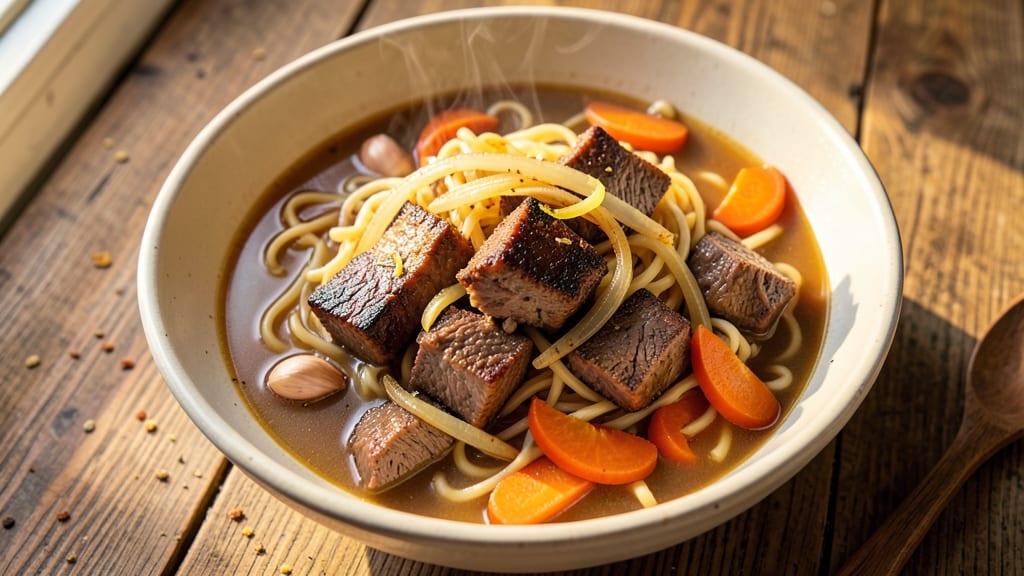
This beef egg noodle soup recipe delivers the ultimate comfort in a single pot—rich, savory broth infused with tender beef and silky egg noodles that absorb every flavor. The secret lies in slow-simmering the broth to develop deep umami while keeping the noodles perfectly chewy, not mushy.
I've perfected this version over years of testing, ensuring every spoonful delivers that restaurant-quality satisfaction without the fuss of multiple pots.
The beauty of this recipe is its simplicity: just a few core ingredients transform into a hearty meal that warms both body and soul. We start with a flavorful beef base—caramelized onions and garlic form the aromatic foundation—before adding beef chuck that breaks down into tender, melt-in-your-mouth pieces.
The broth develops a silky texture as it simmers, while the egg noodles cook directly in the pot for maximum flavor absorption.
What you'll end up with is a steaming bowl of soup where each component plays its part: tender beef chunks, silky egg noodles that hold their shape, and a broth so rich it coats your spoon.
The aroma alone will have everyone gathering around the table, and the first bite delivers that perfect balance of savory, umami, and comforting warmth. This is the kind of soup that tastes even better the next day—ideal for meal prep or feeding a crowd.
For extra depth, consider adding fresh herbs like parsley or cilantro at the end, or a sprinkle of black pepper for a subtle kick. The recipe scales beautifully, so double it for leftovers or serve it as-is for an intimate family dinner.
Here's how to make it—step by step—for the most satisfying bowl of beef egg noodle soup you've ever tasted.
Ingredients for beef egg noodle soup
Just twelve ingredients transform into the ultimate comforting beef egg noodle soup.
| Ingredient | Amount | Notes |
|---|---|---|
| Beef Chuck Roast 🥩 | 2 lb | Cut into 1-inch cubes |
| Yellow Onions 🧅 | 2 whole | Peeled and sliced into half-moons |
| Garlic Cloves 🧄 | 6 cloves | Minced for aromatic base |
| Carrots 🥕 | 4 whole | Peeled and cut into thick rounds |
| Egg Noodles 🍜 | 12 oz | Fresh or dried, medium width |
| Beef Broth 💧 | 6 cups | Low-sodium preferred |
| Tomato Paste 🍅 | 2 tbsp | For depth of flavor |
| Olive Oil 🫒 | 2 tbsp | For caramelizing onions |
| Salt 🧂 | 1 ½ tsp | Kosher or sea salt |
| Black Pepper 🌶️ | ½ tsp | Freshly ground preferred |
| Bay Leaves 🌿 | 2 whole | For subtle herbal notes |
| Fresh Parsley 🌿 | ¼ cup | Chopped for garnish |
The beef chuck is the heart of this soup—look for well-marbled pieces at the meat counter. Costco or Walmart usually have it pre-cut, but if you're buying a whole roast, ask the butcher to cube it for you. The onions and carrots should be firm and vibrant; Trader Joe's has great pre-sliced options if you're short on time. Fresh parsley makes all the difference at the end, so grab a bunch and use half for garnish, half for flavor if you like. The egg noodles? Fresh is best, but dried works in a pinch—just cook them a touch longer.
No beef broth? Chicken broth with 2 tbsp soy sauce works surprisingly well. Fresh parsley missing? Dried oregano at half the amount gives a similar earthy note. The tomato paste can be swapped for 1 cup crushed tomatoes if you prefer. For extra richness, add 1 tbsp Worcestershire sauce (check for vegetarian-friendly versions if needed). The carrots can be baby carrots—no need to peel them if you're in a hurry, just scrub them well. And if you've got mushrooms on hand, toss in 1 cup sliced for extra umami.
This soup tastes even better the next day—double the batch if you can. Store leftovers in airtight containers for up to 4 days in the fridge or freeze for 3 months. I like to portion it into individual containers so I can grab a bowl straight from the freezer for lazy mornings. The broth thickens as it cools, so add a splash of water or broth when reheating. Garnish with extra parsley and black pepper right before serving—trust me on the fresh herbs.
Why You'll Love This Recipe
- Here’s what sold me: a single chuck roast stretches for days, and the rest of the ingredients cost pennies. Carrots, onions, garlic—stuff you already have lurking in your crisper. No fancy herbs or specialty items required. Plus, the leftovers taste even better the next day, which means less food waste and more happy meals. My wallet and my family thank me every time.
- Foolproof Simplicity: I swear by this recipe because it’s the kind of dish that forgives mistakes. Toss in a hunk of chuck roast—no fancy cuts needed—and let the slow simmer do the work. By the time you’re dicing onions and mincing garlic, the beef practically falls apart on its own. (Yes, even if you’re distracted by a screaming toddler or a work call.)
- Umami Bomb: That first spoonful? Chef’s kiss. The beef chuck roast breaks down into tender, melt-in-your-mouth strands, while the onions caramelize right in the broth—no separate pan, no fuss. Add a splash of soy sauce or a pinch of MSG (if you’re brave), and suddenly you’ve got a flavor depth that’ll make takeout seem boring. The egg noodles soak up every last bit of that savory goodness.
- Weeknight Workhorse: Between us, this is my go-to when I need to feed a crowd or just avoid decision fatigue. Double the batch on Sunday, and you’ve got lunch for Tuesday, leftovers for Thursday, or a last-minute dinner guest covered. The broth freezes beautifully, too—just reheat and add fresh noodles. Honestly, it’s the only soup I make when I’m exhausted but still need to eat.
Step-by-step instructions for beef egg noodle soup
Turn simple ingredients into a comforting bowl of restaurant-quality beef noodle soup.
Brown the Beef for Deep Flavor
Heat a large Dutch oven over medium-high heat and add 2 tablespoons olive oil. Working in batches if needed, add the 2 lb beef chuck roast cut into 1-inch cubes and brown on all sides. This takes about 8-10 minutes total, but don't rush—you want a deep golden crust that builds rich flavor. The meat should release easily from the pan when ready.
As you brown, remove the beef and set it aside. You'll use those browned bits later to create a flavorful base. If the pan gets too crowded, reduce to medium heat to prevent steaming instead of browning. This step is worth the time—those caramelized surfaces are where all the deliciousness begins.
Build the Aromatic Base
In the same Dutch oven, add 2 whole yellow onions sliced into half-moons and cook for 5-6 minutes until softened and beginning to caramelize. Add the 6 cloves minced garlic and 4 whole carrots cut into thick rounds, cooking for another 3-4 minutes until the garlic becomes fragrant and the carrots start to soften.
Stir in the 2 tablespoons tomato paste and cook for 1 minute to toast its flavor. Here's where the magic happens—the tomato paste deepens the broth's richness and balances the earthy vegetables. If you smell the tomato paste burning, reduce the heat slightly. This aromatic base forms the foundation of your soup's complex flavor profile.
Simmer the Beef and Vegetables
Pour in the 6 cups beef broth and add the browned beef back to the pot. Bring to a gentle boil, then reduce heat to medium-low and add the 2 whole bay leaves, 1.5 teaspoons salt, and 0.5 teaspoon black pepper. Cover partially and simmer for 1 hour to 1 hour 15 minutes until the beef is fork-tender and pulls away from the bone easily.
Check occasionally and add water if the broth reduces too much—you want enough liquid to properly cook the noodles later. The beef should be so tender it practically falls apart when you test it with a fork. This long simmering time is crucial for developing that silky, comforting broth texture that makes this soup so special.
Finish with Noodles and Garnish
Add the 12 oz egg noodles and cook for 8-10 minutes until they're al dente—just slightly firm to the bite. The noodles should float to the surface when done. Taste the broth and adjust seasoning if needed, adding more salt or pepper as necessary. Real talk: the noodles will continue cooking slightly as they absorb the hot broth, so don't overcook them.
Remove the bay leaves and ladle the soup into bowls. Garnish each serving with 0.25 cup chopped fresh parsley. The parsley adds a bright contrast to the rich beef broth and a pop of color that makes the soup look as good as it tastes. Serve immediately with crusty bread to soak up every last drop of that delicious broth.
Pro Tips For Making Beef Egg Noodle Soup
- SEAR THE CHUCK ROAST: Don’t just toss that beef in—crank the heat to medium-high and let it develop a deep brown crust before adding liquid. I learned this the hard way: skipping the sear means flavor that’s more "meat in broth" than "rich, caramelized beef." Use about 2 tablespoons of oil and 5-7 minutes per side, even if it looks uneven.
- CHOP ONIONS IN EVEN STRIPS: Thin, consistent slices (about 1/8-inch thick) cook faster and blend better into the soup than chunky dice. I used to hack them roughly, but now I take the extra 30 seconds with a sharp knife—it keeps the texture smooth and prevents a mushy bottom. Save the scraps for stock if you’re feeling fancy.
- STIR IN CARROTS EARLY: Toss the carrots into the pot with the onions and beef broth, not after the beef is fully cooked. They’ll soften evenly and absorb flavor instead of turning to mush later. If you’re worried about overcooking, peel them first and cut into 1/4-inch rounds—no one wants to bite into a rubbery carrot.
- USE COLD NOODLES FOR AL DENTE: Shock the egg noodles in ice water for 30 seconds after cooking, then drain and toss them into the hot soup. This stops them from turning gummy and lets you add them at the very end without overcooking. (Yes, even if you’re impatient like me—trust the process.)
Wine and beer pairings for this dish
Red Wine Classics
A bold Chianti Classico from Tuscany is my go-to pairing—its bright acidity and cherry notes cut through the soup’s richness while complementing the beef’s umami depth. Look for a Sangiovese-based bottle like Castello di Volpaia or Ruffino Chianti.
The wine’s earthy undertones mirror the caramelized onions in the broth, creating harmony in every sip. 🍷
Crisp White Options
For a lighter touch, try a dry Riesling from Germany or Alsace, such as Dr. Loosen Blue Slate or Trimbach Gewürztraminer. The wine’s citrus and mineral notes balance the soup’s heartiness without overpowering it. Serve slightly chilled (45-50°F) to enhance its refreshing contrast to the warm broth.
Beer Pairings
A German Helles Lager like Augustiner Helles or Weihenstephaner Original works beautifully—its malty sweetness and subtle hop bitterness complement the beef and noodles. For a craft option, try a Belgian Dubbel like Westmalle Trappist 8, which adds a caramel depth that echoes the soup’s savory notes.
Non-Alcoholic Choices
Skip the alcohol? A sparkling apple cider like Martinelli’s Sparkling or ginger beer (like Brew Dr. Brown’s) adds effervescence to cleanse your palate between bites. For a herbal twist, serve chilled hibiscus tea—its tartness brightens the dish without competing flavors. 💧
Regional Wine Twists
In New York, swap Chianti for a Cabernet Franc like Hudson Valley’s Benmarl—its peppery notes pair perfectly with the soup’s depth. For Texas, try a Tempranillo such as Devine’s Estate, which offers smoky undertones that enhance the beef’s richness.
Always let the wine breathe for 10-15 minutes before serving.
Nutrition facts
Frequently asked questions
Can I use fresh egg noodles instead of dried?
Fresh egg noodles work beautifully and add a richer flavor to the soup. Since they cook faster, reduce the cooking time to 6-8 minutes instead of 8-10 minutes—they're done when they float and are tender but still slightly firm. Fresh noodles also hold their shape better in the broth, so you won't have that mushy texture.
What's the best cut of beef for this soup?
Beef chuck roast is ideal because it becomes fork-tender when slow-cooked, creating melt-in-your-mouth pieces. If you can't find chuck, brisket or stew meat work well too. Avoid lean cuts like sirloin—they'll turn tough. Look for well-marbled pieces at the grocery store, as the fat renders out during cooking to enrich the broth.
Why does my soup taste bland after adding noodles?
This usually happens when the broth reduces too much before adding noodles, or if you didn't properly brown the beef first. To fix it, stir in 1-2 tablespoons soy sauce or Worcestershire sauce (check for vegetarian versions if needed) for instant umami depth. For next time, keep the broth volume at 6 cups until the very end—don't let it reduce below 4 cups before adding noodles.
Can I make this soup in a slow cooker?
Yes! Brown the beef and build the aromatic base in a skillet first, then transfer everything to your slow cooker. Cook on low for 6-7 hours or high for 3-4 hours until the beef is tender. Add the noodles during the last 30 minutes of cooking (they'll finish in the residual heat). The slow cooker method actually enhances the broth's richness even more.
How do I prevent the noodles from turning mushy?
Cook the noodles for exactly 8-10 minutes (or 6-8 minutes for fresh noodles) until they're al dente—just slightly firm to the bite. The key is adding them to the broth when it's already simmering, not boiling vigorously. If your noodles are still firm after cooking, they'll finish perfectly while sitting in the hot broth for a minute or two. Never overcrowd the pot—cook them in batches if needed.