
Soups & Stews
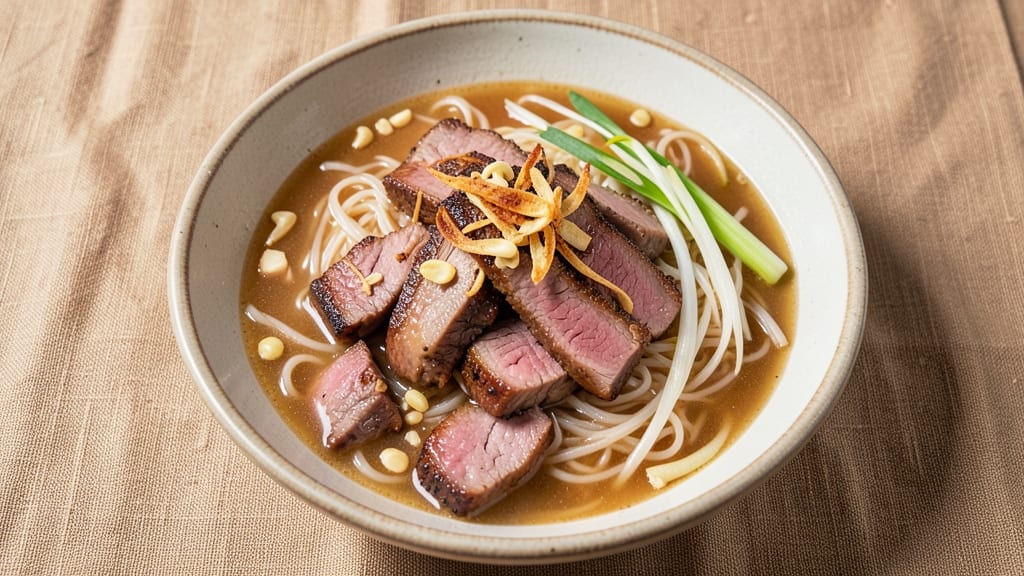
This beef rice noodle soup recipe delivers restaurant-quality depth with wok-sizzled aromatics and silky noodles that melt in your mouth. The secret lies in layering flavors—charred ginger and garlic form the aromatic base, while slow-simmered beef broth infuses every spoonful with rich umami.
Traditional techniques like searing the beef and toasting spices ensure authentic taste without shortcuts that compromise quality.
What sets this recipe apart is the balance of textures: tender beef slices, slippery rice noodles, and crisp garnishes like bean sprouts and fresh herbs.
Whether you're recreating Vietnamese phở or Thai kuay teow reua, the method remains the same—build a robust broth, cook the noodles just until tender, and assemble everything with precision. The result? A bowl of soup that's comforting, satisfying, and impossible to resist.
Ingredients for beef rice noodle soup
Restaurant-quality beef rice noodle soup starts with these 14 essential ingredients—each playing a precise role in building depth and texture.
| Ingredient | Amount | Notes |
|---|---|---|
| Beef Chuck Roast 🥩 | 1 ½ lb | Thinly sliced against grain |
| Rice Noodles 🍜 | 8 oz | Flat, medium-width type |
| Fresh Ginger 🧄 | 2 tbsp | Finely grated, peeled |
| Garlic Cloves 🧄 | 6 cloves | Minced, aromatic |
| Beef Broth 💧 | 6 cups | Homemade or high-quality store-bought |
| Fish Sauce 🍶 | 1 tbsp | Red Boat brand preferred |
| Soy Sauce 🍶 | 1 tbsp | Kikkoman or similar |
| Brown Sugar 🍚 | 1 tbsp | Light or dark |
| Lime Juice 🍋 | 2 tbsp | Freshly squeezed |
| Bean Sprouts 🌱 | 1 cup | Fresh, crisp |
| Fresh Thai Basil 🌿 | ¼ cup | Stems removed |
| Vegetable Oil 🫒 | 2 tbsp | High smoke point |
| White Pepper 🌶️ | ½ tsp | Freshly ground |
| Salt 🧂 | 1 tsp | Diamond Crystal preferred |
The beef is non-negotiable—chuck roast delivers the best texture when sliced thinly against the grain. Look for well-marbled cuts at Whole Foods or your local butcher; pre-sliced packages from Trader Joe's work in a pinch. Fresh ginger and garlic are aromatic cornerstones—Red Curry Thai brand ginger from the Asian market adds a subtle heat, while garlic should be minced just before cooking to preserve its punch. The rice noodles? Mae Ploy brand is the gold standard, but any flat, medium-width variety will do. Soak them in warm water for 20 minutes before using—they should be pliable but still hold shape.
No fish sauce? Soy sauce plus a dash of miso paste mimics the umami, though the authentic depth will be missing. Substituting brown sugar with maple syrup works in a bind, but the caramel notes won’t be identical. Thai basil is ideal, but regular basil with a pinch of cinnamon gets close. Bean sprouts can be swapped for shredded cabbage if unavailable—just toss them in ice water first to crisp them up. The broth is where flavor lives: if using store-bought, Kettle & Fire or Pacific Foods brands are top-tier. For a vegetarian version, replace beef broth with mushroom broth and use tofu or mushrooms for protein, though the texture will differ significantly.
Prep the aromatics first—they’re the soul of this dish. Toast the garlic and ginger in oil until fragrant (about 30 seconds) before adding broth; this builds the base flavor. The noodles cook in minutes but need to be served immediately—keep them warm in a bowl of hot water while assembling bowls. Leftovers? This soup reheats beautifully, though the noodles may soften further. Store in an airtight container for up to 3 days in the fridge or 3 months frozen. For freezing, portion into individual containers—just add hot water to the bowl when reheating to revive the noodles.
Why You'll Love This Recipe
- One-Pot Magic: I swear by this—just sear the chuck roast, toss in the garlic and ginger, and let the broth do the work. No extra pots, no fuss.
- Rich Umami Bomb: That slow-cooked beef? It practically melts into the broth, while the ginger and garlic add layers of warmth. The noodles soak up every last bit—chef’s kiss.
- Leftovers That Shine: Make a big batch on Sunday, and you’ve got lunch for days. The flavors only get better as the broth reduces—perfect for busy mornings.
- Budget-Friendly Feast: A chuck roast stretches further than you’d think, and rice noodles cost pennies. Here’s what sold me: dinner for four for under $15, and no one complains.
Step-by-step instructions for beef rice noodle soup
Master this Vietnamese classic with wok-sizzled aromatics and perfectly balanced flavors.
Prepare the Beef and Aromatics
Slice the 1.5 lb beef chuck roast thinly against the grain into ¼-inch thick strips. This ensures tender bites that cook quickly in the broth. Set aside in a bowl and season immediately with ½ tsp salt and ¼ tsp white pepper—this prevents the meat from drying out during prep.
In a separate bowl, combine the 2 tbsp finely grated fresh ginger and 6 cloves minced garlic cloves. The ginger should be almost paste-like for maximum flavor infusion. I like to press the ginger through a fine grater and then mince the garlic with the flat side of my knife for even distribution.
Sear the Beef and Build the Flavor Base
Heat 2 tbsp vegetable oil in a large wok or deep skillet over high heat until shimmering. Add the beef in a single layer and sear undisturbed for 1-2 minutes until deeply browned on one side. This creates the Maillard reaction that forms the soup's rich foundation. Use tongs to flip the beef—don't crowd the pan or it will steam instead of sear.
Remove the beef and set aside. Add the ginger-garlic mixture to the same pan and stir-fry for 30 seconds until fragrant. Immediately pour in 6 cups beef broth and scrape up all the browned bits from the bottom with a wooden spoon. This deglazing step captures all the concentrated beef flavor that would otherwise be lost.
Simmer the Broth and Season
Return the beef to the pan and bring to a gentle simmer over medium-high heat. Add 1 tbsp soy sauce, 1 tbsp fish sauce, and 1 tbsp brown sugar, stirring to combine. The broth should reduce slightly while the beef tenderizes—this takes about 15-20 minutes. Taste and adjust seasoning, adding more fish sauce for umami or soy sauce for saltiness if needed.
Here's the thing—this is where the soup's balance comes together. The brown sugar adds subtle sweetness that cuts through the savory fish sauce, while the soy sauce provides depth. I always taste at this stage to ensure the broth is vibrant but not overpowering. The beef should be fork-tender but still hold its shape.
Cook the Noodles and Finish
While the beef simmers, prepare the 8 oz rice noodles by soaking them in hot water for 5-7 minutes until pliable but still slightly firm. Drain and rinse briefly under cold water to stop the cooking process—this prevents mushy noodles. Divide the noodles among 4 serving bowls and ladle the hot beef broth over them.
Return the beef to the pan and bring to a gentle simmer again. Add 2 tbsp lime juice and stir. The acidity brightens all the flavors and balances the richness. Let the soup simmer for 2-3 minutes to heat through completely before removing from heat.
Assemble and Garnish
Divide the 1 cup bean sprouts and ¼ cup fresh Thai basil among the bowls. The bean sprouts add a satisfying crunch while the Thai basil contributes aromatic freshness. Ladle the hot beef broth over the noodles, making sure each serving gets an even distribution of beef and broth.
Garnish each bowl with an additional sprinkle of white pepper and serve immediately. The contrast between the silky noodles, tender beef, and crisp bean sprouts creates the perfect texture profile. Each spoonful should deliver a harmonious blend of savory, sweet, and umami flavors with a bright finish from the lime.
Pro Tips For Making Beef Rice Noodle Soup
- SEAR THE CHUCK FIRST: That beef chuck roast won’t melt in your mouth if you don’t brown it first—high heat for 3-4 minutes per side until deep crust forms. I used to skip this and got chewy beef every time; now my broth stays rich and the meat shreds like butter.
- SLICE GINGER THINLY: No, "grating" isn’t the same—slice fresh ginger into paper-thin matchsticks (about 1/16-inch thick) so it infuses the broth without turning it bitter. Thick chunks? You’ll regret it. (And yes, the peel stays on—it adds depth.)
- DON’T BOIL THE NOODLES: Rice noodles turn to mush if you cook them in the pot with the broth. Soak them in hot (not boiling) broth for 3-5 minutes, then add them back to the soup just before serving—this keeps them tender but intact. Trust me, your noodles will thank you.
- USE COLD BROTH TO SHOCK: After simmering the beef, let the hot broth cool for 10 minutes before adding cold water (about 1 cup) to reset the temperature. This stops the cooking process instantly, so your chuck stays fork-tender and doesn’t turn to sawdust. (I learned this after overcooking a $20 roast.)
Best sauces and condiments for beef rice noodle soup
Fish Sauce Magic
The secret weapon in this soup is Red Boat fish sauce, which adds deep umami complexity. Use it sparingly—start with 1 tbsp and adjust to taste. For a vegetarian version, substitute with 1 tbsp soy sauce + ½ tsp miso paste, though the flavor won’t be identical.
The fish sauce should enhance, not overpower, the broth’s natural richness. 🍶
Sweet-Savory Balance
Brown sugar isn’t just for sweetness—it caramelizes slightly during simmering, adding depth that rounds out the salty fish sauce. For a less sweet version, reduce to ½ tbsp and compensate with ½ tsp honey.
If you prefer a spicier twist, add ½ tsp chili flakes or a dash of Sriracha at the end. The key is harmony: sweetness should complement, not dominate.
Lime Zest Finish
Fresh lime juice is non-negotiable—it brightens the dish and balances the richness. Squeeze 2 tbsp just before serving to preserve its acidity. For extra zing, add ½ tsp lime zest to the broth while simmering.
If you’re out of lime, lemon juice works in a pinch, but the flavor will be slightly different. A squeeze of lime at the table lets everyone customize their bowl.
Herb Variations
Thai basil is ideal, but cilantro, mint, or regular basil work too. For a Korean-inspired twist, swap in 1 tbsp chopped scallions and ½ tsp sesame seeds. If using cilantro, add it after the soup is served—it can turn bitter when cooked.
The herbs should be fresh and vibrant, adding a pop of color and freshness to each bowl. 🌿
Spicy Kick Options
For heat lovers, stir in 1 tsp chili garlic sauce or ½ tsp cayenne pepper with the lime juice. A Thai red chili or Serrano pepper sliced into wedges lets diners adjust spice levels to taste.
If you prefer smoky heat, add ½ tsp smoked paprika to the broth while simmering. The goal is to enhance, not overwhelm—the spices should complement the beef and noodles.
Umami Boosters
For extra depth, add 1 tbsp hoisin sauce or 1 tsp oyster sauce with the fish sauce. A splash of vegetable or mushroom broth (½ cup) can also enrich the flavor without overpowering.
If you love mushrooms, sauté ½ cup sliced shiitakes with the aromatics—they’ll absorb the flavors beautifully. These additions take the soup to the next level without changing its essence. 💫
Nutrition facts
Frequently asked questions
Can I use regular rice noodles instead of flat rice noodles?
Flat rice noodles are ideal for this recipe—they hold their shape better in broth and have the perfect texture. If you only have round rice noodles, they'll work but may become too soft. For a closer match, look for "vermicelli" or "sen leung" noodles, which are slightly wider than traditional rice stick noodles.
How do I make the broth richer without using fish sauce?
For a vegetarian version, combine 1 tbsp soy sauce + ½ tsp miso paste + 1 tsp mushroom powder to mimic umami. Another trick is to add ½ cup sliced shiitake mushrooms to the broth while simmering—they absorb flavors beautifully. For extra depth, toast 1 tsp coriander seeds in the wok before adding aromatics.
Why did my noodles turn mushy when I added them to the hot broth?
This happens when noodles are overcooked before adding to the soup. Always soak them in hot water until pliable but still firm (5-7 minutes), then rinse briefly with cold water to stop cooking. The broth should be simmering gently—not boiling—when you add them to prevent further breakdown.
Can I make this soup in a slow cooker?
Yes! Sear the beef and aromatics in a skillet first, then transfer everything to the slow cooker with 6 cups broth. Cook on low for 4-5 hours or high for 2-3 hours, stirring occasionally. The noodles should be added fresh at the end to prevent mushiness—simmer just 2-3 minutes before serving.
What's the best way to store leftovers?
Store in an airtight container for up to 3 days in the fridge. For freezing, portion into individual containers and freeze for 3 months. To reheat, add hot water to the bowl and microwave for 1-2 minutes—this revives the noodles. The broth may need reheating separately if separated.