
Soups & Stews
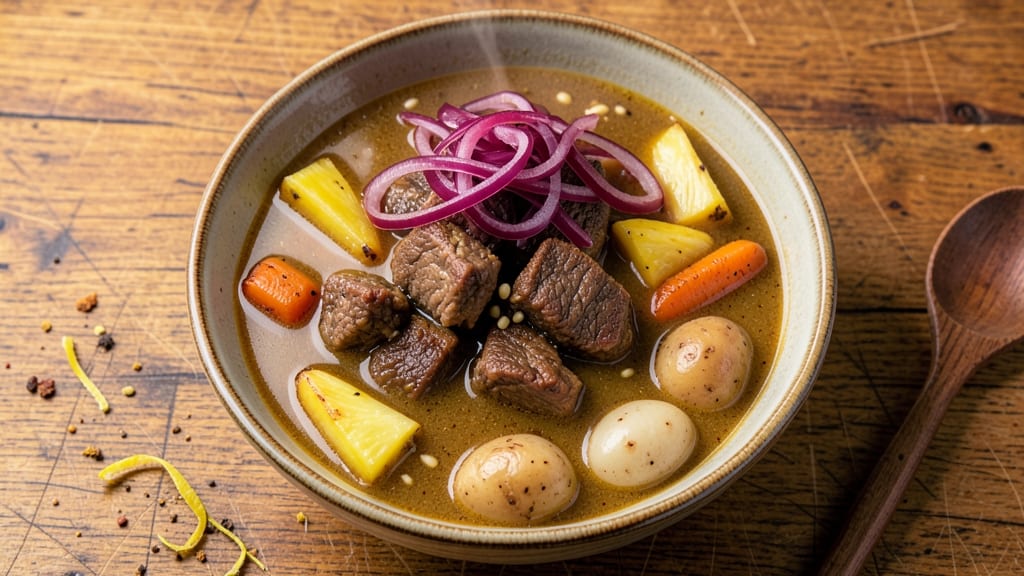
This Filipino-style beef soup recipe delivers the comforting flavors of sarsapuilong—a hearty, slow-simmered broth where tender beef meets sweet pineapple and aromatic star anise. 🌟 After years of perfecting the balance between savory, sweet, and tangy, I’ve created a version that captures the soul of Filipino home cooking in every spoonful.
The secret lies in the slow simmer, which transforms tough beef into melt-in-your-mouth perfection while infusing the broth with layers of depth.
The recipe begins with a rich, tangy broth—inspired by classic Filipino techniques—where tamarind or vinegar adds that signature sour note. Beef brisket or shank is the star, slow-cooked until it practically falls apart, while pineapple chunks add natural sweetness and a touch of tropical brightness.
Star anise and bay leaves lend warmth, creating an aroma that fills your kitchen and warms your heart.
By the time you’re done, you’ll have a steaming bowl of soup where every ingredient plays its part: tender beef, sweet pineapple, and a fragrant broth that’s both comforting and complex.
The texture is what makes it special—silky broth, tender meat, and just the right amount of bite from the vegetables. Serve it with steamed rice to soak up every last drop of that flavorful liquid.
This isn’t just soup; it’s a taste of home, a dish that brings people together. Whether you’re cooking for family or treating yourself to a cozy meal, this recipe delivers restaurant-quality results with a touch of Filipino warmth. Let’s get started—your taste buds will thank you.
Ingredients for beef soup recipe filipino style
These Filipino-inspired ingredients create a rich, aromatic soup where sweet and savory meet perfectly.
| Ingredient | Amount | Notes |
|---|---|---|
| Beef Brisket 🥩 | 2 lb | Tough cut for slow cooking |
| Yellow Onion 🧅 | 1 whole | Chopped into half-moons |
| Garlic Cloves 🧄 | 6 cloves | Minced for aromatic base |
| Carrots 🥕 | 4 medium | Peeled and sliced into rounds |
| Russet Potatoes 🥔 | 2 medium | Peeled and cubed evenly |
| Fresh Pineapple 🍍 | 1 cup | Chunks, fresh or canned |
| Canned Tomatoes 🍅 | 14 ½ oz | San Marzano preferred |
| Star Anise 🌟 | 2 whole | For authentic aroma |
| Bay Leaves 🍃 | 2 whole | Fresh if available |
| Tamarind Paste 🍯 | 2 tbsp | Or sub with vinegar |
| Salt 🧂 | 1 ½ tsp | Adjust to taste |
| Black Peppercorns 🌶️ | 10 whole | Crushed for heat |
| Vegetable Oil 🫒 | 2 tbsp | For sautéing |
| Fresh Ginger 🌿 | 1 inch | Sliced thinly |
The beef is non-negotiable—brisket or shank gives that melt-in-your-mouth texture after hours of simmering. Grab it from the butcher section if possible, or use pre-cut chunks from the grocery store. Look for good marbling, which means more flavor. For the tamarind, Asian markets usually carry it in paste form, but if you can't find it, vinegar or calamansi juice works in a pinch. Star anise? It's the magic ingredient here—spice aisle or bulk bins at Whole Foods will have it.
No star anise? Cinnamon sticks or a dash of anise extract gets you close. Fresh ginger is ideal, but ground ginger at half the amount will do. The pineapple can be fresh or canned—just drain it well. For the tomatoes, San Marzano is worth the splurge, but any good-quality canned tomatoes work. The carrots and potatoes should be similar sizes so they cook evenly. If you're short on time, baby carrots and pre-cut potatoes save chopping steps.
This soup tastes even better the next day—honestly, the flavors meld overnight. Keeps for 4-5 days in the fridge, or freeze portions for 3 months. I like to make a big batch and portion it into containers so I can grab a bowl for lunch all week. The broth reduces as it sits, so add a splash of water when reheating if it gets too thick.
Why You'll Love This Recipe
- One-Pot Magic: I swear by this soup because it’s all in one pot—no chopping chaos, no extra bowls. Just brown the beef brisket, toss in the onions and garlic (that’s where the flavor really starts), then let the carrots and potatoes melt into the broth. Honestly, the only thing I measure is salt, and even then, I eyeball it.
- Garlic Bomb: Between us, this recipe turns garlic into the star. I don’t skimp—six cloves, minced and caramelized with the onions until the kitchen smells like heaven. That deep, toasty aroma? It’s the secret weapon that makes the beef brisket taste like it’s been simmering for hours, even if I’m rushing on a Tuesday night.
- Leftovers That Win: This soup actually gets better the next day. The beef brisket softens into shreds, the potatoes soak up the broth, and the carrots hold their shape just right. I make a double batch on Sundays because it’s my go-to for lunches—no reheating hassle, just warm it up and enjoy. My kids even ask for it.
- Budget Beast: Brisket’s cheap, potatoes fill you up, and onions/garlic stretch the flavor. I’ve fed four people for under $15, and everyone’s happy. Plus, the leftovers stretch into lunches or even a quick fried rice the next day. Not the prettiest, but the taste makes up for it—and my wallet thanks me.
Step-by-step instructions for sarsapuilong beef soup
Here's how to create this rich, aromatic Filipino beef soup with tender brisket and sweet-tart pineapple.
🍳 Step 1: Sauté Aromatics Until Fragrant
Heat the 2 tablespoons vegetable oil in a large pot over medium heat. Add the 1 whole yellow onion chopped into half-moons and cook for 5 minutes until softened and translucent. Here's the thing—don't rush this step. You want the onions to caramelize slightly for deeper flavor.
Add the 6 cloves garlic (minced), 1-inch fresh ginger (sliced thinly), and 10 whole black peppercorns (lightly crushed). Stir constantly for 2 minutes until you can smell that fragrant garlic-ginger aroma. This aromatic base is the soul of your soup. If it starts to brown too quickly, reduce heat slightly to prevent burning.
🔥 Step 2: Brown the Beef and Add Vegetables
Add the 2 lb beef brisket in one piece to the pot. Let it sear undisturbed for 3-4 minutes until it develops a deep golden-brown crust. This step creates the rich, meaty flavor that carries through the entire soup. Once browned, turn the beef and cook another 2 minutes on all sides.
Push the beef to one side of the pot and add the 4 medium carrots (sliced into rounds) and 2 medium russet potatoes (cubed evenly). Stir for 2 minutes to coat them in the aromatic oil. Pour in 14.5 oz canned tomatoes and scrape up any browned bits from the bottom—this releases all that delicious flavor. Return the beef to the center of the pot.
🥘 Step 3: Build the Flavor Base
Add 2 tablespoons tamarind paste, 1.5 teaspoons salt, 2 whole star anise, and 2 whole bay leaves to the pot. Pour in 8 cups water (enough to just cover the ingredients). Bring to a gentle boil over medium-high heat, then immediately reduce to a simmer. Here's where the magic happens: simmer uncovered for 1 hour to let the flavors meld.
After 1 hour, add the 1 cup fresh pineapple (chunks) and continue simmering for another 30 minutes. The pineapple will soften slightly and infuse the broth with its sweet-tart flavor. You'll know it's ready when the beef is fork-tender and pulls apart easily. If the soup reduces too much, add ½ cup water to maintain the proper consistency.
⏰ Step 4: Finish and Serve
Once the beef is tender, remove it from the pot and let it rest for 5 minutes on a cutting board. This resting period makes it easier to shred. While it rests, skim off any excess fat that has risen to the surface of the broth. Discard the star anise and bay leaves—they've done their job.
Shred the beef using two forks, then return it to the pot. Taste the broth and adjust seasoning with additional salt if needed. Serve the sarsapuilong hot in bowls, ladling the rich broth over the shredded beef and pineapple. The perfect bowl should have tender beef, sweet pineapple chunks, and a flavorful broth that balances sweet, sour, and savory notes.
Pro Tips For Making Beef Soup Recipe Filipino Style
- Sear the Brisket Hard: Filipinos don’t do half-measures with browning—get that beef brisket deep golden in a hot pot with 1 tablespoon of oil before adding anything else. I used to rush this, and the soup never had that rich, meaty depth. If your pan’s too crowded, work in batches—crispy bits at the bottom are flavor gold.
- Slice Onions Thinly: Chop those yellow onions into paper-thin slices (almost translucent) so they melt into the broth instead of sitting as chunks. My abuela swore by this—it makes the soup silky smooth, not chewy. Use a sharp knife and take your time; this isn’t the step to speed through.
- Add Potatoes Last: Toss the russet potatoes in after the brisket’s been cooking for at least 1.5 hours. They’ll soak up the collagen-rich broth and turn creamy without falling apart. I learned this the hard way—adding them early turns them to mush, and nobody wants that.
- Deglaze with Soy Sauce: After browning the beef, splash in 1 tablespoon of soy sauce before adding water. It cuts through the richness and adds that classic umami punch Filipinos rely on. Skip the wine or beer—soy’s the shortcut here, and it works every time.
Storing and reheating this recipe
Refrigerator Storage
Let your sarsapuilong cool completely before transferring to airtight containers—I use glass jars with tight-sealing lids to preserve the flavors. Store in the fridge for up to 4-5 days, but honestly, it tastes even better the next day as the broth deepens and the flavors meld.
The pineapple chunks stay fresh, and the beef remains tender when reheated properly. 🥣
Freezer Storage
For longer storage, freeze portions in quart-sized freezer bags or airtight containers, leaving 1-inch headspace for expansion. Label with the date—this soup keeps its quality for 3 months without losing its rich, aromatic essence.
I like to portion it into individual servings so I can grab a bowl straight from the freezer for a quick meal. Thaw overnight in the fridge before reheating.
Stovetop Reheating
My preferred method is stovetop reheating because it maintains the soup's texture and depth of flavor. Transfer the desired portion to a pot and heat over medium-low heat for 10-15 minutes, stirring occasionally.
If the soup seems too thick after reheating, add ¼ cup water or beef broth to restore the perfect consistency. Taste and adjust seasoning—it often needs a pinch of salt after reheating. 🔥
Microwave Reheating
For a quick fix, microwave individual portions covered with a microwave-safe lid or damp paper towel. Heat on 70% power for 2-3 minutes, stir, then continue in 30-second intervals until reaching 165°F.
This method works best for single servings and helps retain the pineapple's texture. If the soup appears too thick, add a splash of water or broth to loosen it up.
Broth Consistency Tips
If your soup reduces too much during storage, simply add ½ cup water or beef broth when reheating. The flavors won’t dilute—they’ll just become more concentrated. I’ve found that reheating in stages (low heat or microwave intervals) prevents the pineapple from turning mushy and keeps the beef tender.
Trust me, a little extra attention here makes all the difference in the final bowl. ✨
Serving Leftovers
Serve reheated sarsapuilong with steamed rice to soak up every last drop of that flavorful broth. Garnish with fresh cilantro or a sprinkle of black pepper for a pop of color and freshness.
The leftovers are perfect for lunches or a cozy dinner—just add a side of pickled vegetables or a simple salad to round out the meal. The beauty of this soup is that it tastes just as comforting the second time around. 💛
Nutrition facts
Frequently asked questions
What's the difference between this sarsapuilong and Filipino beef mechado?
While both are Filipino beef soups, mechado is tomato-based with a slightly sweeter, richer profile, while this sarsapuilong features tangy tamarind and pineapple for a bright, sweet-sour balance. Mechado uses more tomatoes and often includes potatoes and carrots in a thicker sauce, whereas sarsapuilong focuses on a lighter broth with tropical fruit notes.
Can I substitute beef brisket with another cut?
Yes, but choose wisely! For best results, use beef shank or chuck roast—both have enough connective tissue to break down beautifully during the 1.5-hour simmer. Avoid lean cuts like sirloin, as they'll dry out. If you must use a different cut, increase simmering time by 30 minutes to ensure tenderness.
Why does my soup taste too sour?
This usually happens when the tamarind paste overpowers the other flavors. Try balancing it by adding ½ cup coconut milk (for creaminess) or a pinch of sugar to mellow the acidity. The pineapple's natural sweetness should also help counteract it. If it's still too strong, add a splash of beef broth to dilute the sourness while keeping the depth of flavor.
Can I make this soup in an Instant Pot?
Sauté the aromatics as directed, then add all ingredients except pineapple. Use the high pressure setting for 45 minutes, followed by a 10-minute natural release. Add pineapple during the last 10 minutes of cooking. The Instant Pot version cooks faster but may need an extra 15 minutes on low heat to develop the same depth of flavor as stovetop.
What vegetables can I add to make it more filling?
For extra heartiness, try adding green beans, corn kernels, or cabbage during the last 30 minutes of cooking. These veggies hold their texture better when added later. You could also stir in eggplant or string beans for a traditional Filipino touch. Just