
Soups & Stews
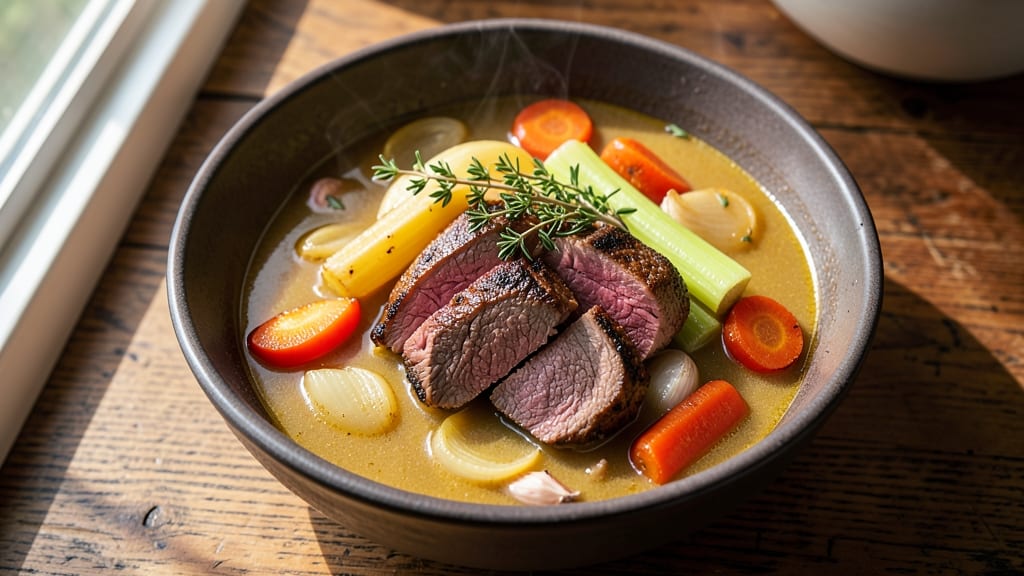
This beef soup recipe inspired by Ina Garten delivers restaurant-quality comfort with tender beef chunks and aromatic herb-infused broth. The secret lies in slow simmering—transforming tough cuts into melt-in-your-mouth perfection while building layers of savory depth.
Every spoonful balances rich beef with bright vegetables and fragrant herbs, making it both elegant and approachable for weeknight dinners.
The recipe begins with properly searing beef chunks to develop a deep, caramelized flavor before simmering for hours in a flavorful broth. Aromatics like onions, carrots, and celery form the classic "holy trinity" base, while fresh herbs (thyme, bay leaf) infuse the broth with subtle sophistication.
The result is a soup that feels special yet remains simple enough for home cooks to master.
What sets this apart is the attention to texture—tender beef that practically falls apart with each bite, paired with al dente vegetables that maintain their structure. The broth reduces to a velvety consistency, perfectly balancing richness and brightness.
It’s the kind of soup that warms both body and soul, ideal for chilly evenings or when you crave a comforting classic.
Serve with crusty bread to soak up every drop of that aromatic broth, or pair with a simple green salad for balance. The recipe scales beautifully, making it perfect for feeding a crowd or prepping ahead for meal prep. Here’s how to create this timeless favorite in your own kitchen.
Ingredients for beef soup recipe ina garten
Sixteen ingredients, one unforgettable soup—where tender beef meets aromatic herbs in perfect harmony.
| Ingredient | Amount | Notes |
|---|---|---|
| Chuck Roast 🥩 | 2 lb | Cut into 1.5-inch chunks |
| Yellow Onions 🧅 | 2 whole | Medium, peeled and quartered |
| Carrots 🥕 | 4 whole | Medium, peeled and cut into chunks |
| Celery Stalks 🧄 | 4 whole | Cut into 1-inch pieces |
| Garlic Cloves 🧄 | 6 cloves | Peeled and smashed |
| Fresh Thyme 🌿 | 2 tbsp | Leaves only, chopped |
| Bay Leaves 🍃 | 2 whole | Dried, standard size |
| Tomato Paste 🍅 | ½ cup | Smooth, not chunky |
| Red Wine 🍷 | 1 cup | Dry, bold variety |
| Beef Broth 💧 | 6 cups | Low-sodium preferred |
| Olive Oil 🫒 | ¼ cup | Extra-virgin for richness |
| Salt 🧂 | 1 ½ tsp | Kosher or sea salt |
| Black Pepper 🌶️ | 1 tsp | Freshly ground preferred |
| Parsley 🌿 | ¼ cup | Fresh, chopped for garnish |
The beef is non-negotiable here. Chuck roast delivers that melt-in-your-mouth texture when cooked low and slow, while sirloin or ribeye will stay too firm. Most grocery stores carry chuck roast in the meat counter, often pre-cut—ask for it to be chunked if they don't have it that way. For the aromatics, organic produce at Whole Foods or a local farmers market makes a noticeable difference in flavor depth, but standard grocery store veggies work perfectly fine. The key is to cut them evenly so they cook at the same rate as the beef. I always double-check my knife work here—uneven pieces lead to some vegetables turning mushy while others stay crunchy.
No red wine? Substitute with extra beef broth plus a splash of balsamic vinegar—it mimics the acidity beautifully. Fresh thyme is ideal, but dried thyme at one-third the amount works in a pinch (just toast it in a dry pan for 30 seconds first to wake up the flavor). The tomato paste can be skipped entirely if you dislike its intensity, though I find it adds a subtle sweetness that balances the richness. For the broth, low-sodium options like Pacific Foods or Homemade are my go-tos—they let you control the seasoning better than store-bought high-sodium versions. And if you're using pre-cut vegetables from the salad bar, give them a quick rinse to remove any dirt or wax coating.
This soup tastes even better the next day as the flavors meld together. Store leftovers in the fridge for up to 5 days, covered tightly to preserve the aroma. For freezing, portion it into 2-cup containers—perfect for single servings. The broth will thicken slightly when reheated, so add a splash of water or broth to loosen it if needed. I always make a double batch because it disappears fast, especially with that crusty bread on the side. The parsley garnish is optional but adds a fresh pop of color—just chop it right before serving so it stays vibrant.
Why You'll Love This Recipe
- Chop Once, Savor Always: I swear by the "sofrito" trick here—sauté onions, carrots, celery, and garlic until they’re almost jammy, then toss in the chuck roast. That one-step prep means I’m not stuck dicing veggies for hours, and the flavors meld into this deep, savory base that tastes like it simmered all day.
- Garlic-Glazed Magic: Between us, the garlic in this soup isn’t just background noise—it’s the star. Those cloves get browned in the fat until they’re almost crispy, then dissolve into the broth like a secret weapon. One sniff and my kids fight over the last bowl (yes, even on a Tuesday night).
- Leftovers That Beg for More: This soup tastes better the next day. Honestly, the chuck roast gets so tender it practically falls apart, and the veggies soak up all that rich broth. I make a double batch, freeze half, and pull it out for lazy days or when company drops by—no one ever guesses it’s reheated.
- Budget-Friendly Powerhouse: A chuck roast stretches to feed five for under $20, and the veggies? Basic, cheap, and always on sale. Here’s what sold me—the carrots and celery stay crisp even after hours of simmering, so nothing goes to waste. My wallet and my family win.
Step-by-step instructions for herb-infused beef soup
Follow this method and you'll achieve melt-in-your-mouth beef chunks in a rich, aromatic broth.
Sear the Chuck Roast for Deep Flavor
Heat the 0.25 cup olive oil in a large Dutch oven over medium-high heat until shimmering. Pat the 2 lb chuck roast dry with paper towels and season generously with 1 tsp salt and 1 tsp black pepper on all sides. This drying step is crucial—it ensures a proper sear instead of steaming.
Add the beef in a single layer and sear undisturbed for 4-5 minutes until a deep golden-brown crust forms. Flip and sear another 4-5 minutes on the opposite side. The goal is to develop maximum flavor through the Maillard reaction. Once browned, remove the beef and set it aside on a plate.
Build the Aromatic Vegetable Base
In the same Dutch oven, add the 2 whole yellow onions, 4 whole carrots, and 4 whole celery stalks all at once. Cook over medium heat for 8-10 minutes, stirring occasionally, until the vegetables begin to soften and release their natural juices. You'll see the onions turn translucent and the carrots develop a slight caramelization.
Add the 6 cloves garlic cloves, 2 tbsp fresh thyme, and 2 whole bay leaves to the pot. Stir for 1 minute until the garlic becomes fragrant. This step forms the flavor foundation of your soup—don't rush it. The thyme and bay leaves will infuse their earthy notes into the broth as it simmers.
Develop the Rich Broth
Pour in the 1 cup red wine and scrape up any browned bits from the bottom of the pot with a wooden spoon. This deglazing step captures all the caramelized flavors you worked so hard to create. Let the wine simmer for 2-3 minutes until it reduces by half and the alcohol cooks off, leaving behind concentrated flavor.
Stir in the 0.5 cup tomato paste and cook for 1 minute to toast its rich, umami qualities. Then pour in the 6 cups beef broth and bring the mixture to a gentle boil. Return the beef to the pot, along with any accumulated juices from the plate. The broth should just cover the beef chunks—if it looks too thin, add a splash of water.
Simmer Until Tender and Flavorful
Reduce heat to low and cover the pot with a tight-fitting lid. Let the soup simmer gently for 2-2.5 hours, stirring occasionally. This long cooking time is essential—it breaks down the tough beef connective tissue into gelatin, creating that luxurious mouthfeel we all crave in a proper beef soup.
About 45 minutes into cooking, check the beef for tenderness. Use tongs to lift a chunk—it should be fork-tender but not falling apart. If needed, continue simmering for another 30 minutes. The broth should be rich and deeply infused with the flavors of the vegetables and herbs, with the beef falling apart easily at the touch of a fork.
Finish and Serve with Fresh Herbs
Once the beef is perfectly tender, remove the pot from heat and discard the bay leaves. Taste the broth and adjust seasoning with additional salt if needed. The soup should be rich but not overly salty—remember, the beef itself contributes significant flavor.
Ladle the soup into bowls and garnish each serving with 1 tablespoon chopped parsley. The bright herbs provide a fresh contrast to the deep, savory broth. Serve immediately with crusty bread to soak up every last drop of that flavorful liquid. The result should be a comforting bowl of soup where each bite delivers tender beef and aromatic broth in perfect harmony.
Pro Tips For Making Beef Soup Recipe Ina Garten
- Sear the Chuck Hard: I learned this the hard way—skipping the sear means flavor hiding in the background. Get that roast deep brown on all sides in a hot pan with oil before adding anything else. Yes, it takes 5-10 minutes, but that crust locks in juices and builds depth the rest of the soup can’t match.
- Slice Onions Like a Pro: Thin, even strips melt into the soup without turning to mush. Cut onions into ⅛-inch slices (not dice) and soak them in cold water for 10 minutes first—this softens them just enough to cook through without disappearing. (Your future self will notice the difference.)
- Don’t Rush the Low Simmer: After the initial boil, drop heat to a gentle simmer—you shouldn’t see big bubbles, just tiny ripples. High heat makes tough chuck roast stringy and carrots turn to mush. I used to rush this, and the texture suffered every time. Patience here makes the soup tender and rich.
- Brown Celery First: This isn’t the prettiest method, but it works: Sauté chopped celery in the same pan you seared the beef (no need to wash it) until it’s golden, about 5 minutes. The extra flavor carries through the whole soup—skip this, and you’re missing a layer of depth. (Yes, it looks weird, but trust it.)
Essential equipment for great beef soup recipe ina garten
Dutch Oven Essentials
A 5-7 quart Dutch oven like the Le Creuset Stoneware or Lodge Cast Iron is my go-to for this recipe. The heavy base distributes heat evenly, preventing hot spots that could burn your onions or sear the beef unevenly.
I’ve found Lodge’s 5.5-quart model works perfectly for this batch size—it fits all ingredients comfortably while leaving room for liquid expansion during simmering. 🌡️
If you don’t own a Dutch oven, a large heavy-bottomed pot (like All-Clad’s 5-quart Stainless Steel) will work, though you may need to stir more frequently to prevent sticking. Avoid thin, lightweight pots—they can’t maintain consistent heat, leading to uneven cooking and potential flavor loss.
Precision Tools
Invest in a meat thermometer like the Thermoworks ThermoPop—it’s affordable and accurate. Check the beef’s internal temperature at 195-200°F for perfect tenderness. I also recommend a wooden spoon (like OXO’s Good Grips) for stirring without scratching your Dutch oven’s surface.
A fine-mesh strainer comes in handy if you prefer a smoother broth—just strain the soup before serving.
Knife & Cutting Prep
A sharp 8-inch chef’s knife (like Wüsthof’s Classic) is essential for even vegetable cutting. I cut carrots and celery into 1-inch chunks and onions into ¼-inch slices for consistent cooking times.
A mandoline speeds up prep if you’re making this soup frequently, but it’s not necessary. For the garlic, I use a garlic press to smash cloves—it releases more flavor than mincing.
Optional Upgrades
For extra flavor, a mortar and pestle lets you crush dried herbs like thyme before adding them to the pot. I also love using a ladle with a strainer (like the OXO Good Grips) to serve soup without the vegetables—great for those who prefer a cleaner bowl.
A slow cooker (like Instant Pot’s 6-quart model) can handle this recipe too, but I find the Dutch oven gives better caramelization and depth.
Nutrition facts
Frequently asked questions
Can I use a different cut of beef instead of chuck roast?
While chuck roast is ideal for its tenderness when slow-cooked, you can substitute with brisket or short ribs—both work well but may need slightly longer cooking times. Avoid lean cuts like sirloin or ribeye, as they won't become as tender. If using brisket, trim excess fat first to prevent greasiness in the broth.
How do I make this soup in a slow cooker?
Transfer the seared beef, vegetables, and aromatics to a 6-quart slow cooker, then add the wine, tomato paste, and broth. Cook on low for 8 hours or high for 4-5 hours, stirring once halfway. The broth may thicken more than in stovetop versions—add water if needed. The beef should be fork-tender when done.
Why does my broth look cloudy or greasy?
Cloudiness often comes from fat not rendering properly or overcooking the vegetables. Skim excess fat with a spoon while the soup simmers, and avoid stirring too vigorously. For a clearer broth, strain it through a fine-mesh sieve before serving. If using a slow cooker, reduce cooking time slightly to prevent vegetable breakdown.
Can I prepare this soup ahead of time?
This soup tastes even better the next day! Store it in an airtight container in the fridge for up to 5 days. Reheat gently on the stove over low heat, stirring occasionally, until warmed through. For freezing, portion into 2-cup containers—it reheats beautifully and maintains texture. Add a splash of water if the broth thickens too much.
What’s the best way to serve this soup?
Pair it with crusty sourdough bread or garlic toast to soak up the rich broth. For a complete meal, add a side of simple green salad with lemon vinaigrette to balance the richness. Garnish each bowl with fresh parsley and a drizzle of extra-virgin olive oil right before serving for an elegant touch.