
Soups & Stews
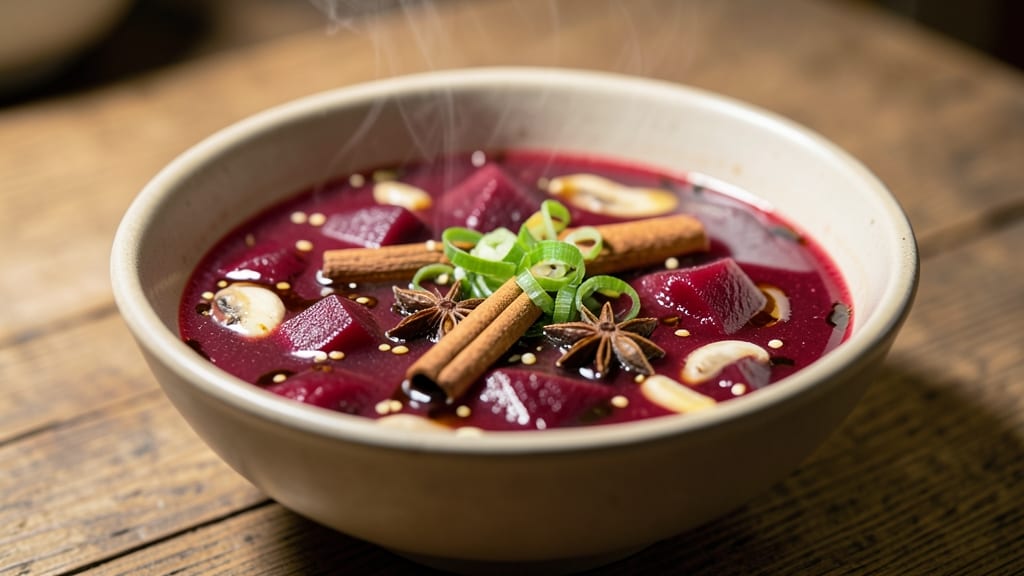
This Chinese beetroot soup recipe transforms humble ingredients into a velvety, aromatic masterpiece where earthy beets meet fragrant star anise and ginger. The secret lies in slow-simmered broth and traditional Chinese techniques that create depth without meat.
I developed this version after discovering how star anise and cinnamon could elevate beets' natural sweetness into something truly special.
The recipe begins with sautéing aromatic spices until fragrant, then simmering fresh beetroot with ginger and garlic for hours to develop complex flavors. For vegetarians, a rich mushroom broth replaces traditional meat-based versions while maintaining authentic umami.
The final texture is silky smooth, achieved through careful blending or traditional dicing techniques.
What makes this soup extraordinary is its balance of sweet, spicy, and earthy notes—each spoonful delivers tender beets, warming ginger, and subtle star anise that lingers on the palate. The recipe adapts easily to dietary needs while staying true to Chinese culinary principles of harmony and depth.
Perfect for chilly evenings or as a comforting starter, this beetroot soup proves that Chinese cuisine can be both traditional and innovative. The method ensures restaurant-quality results at home with minimal effort once you master the slow-simmering technique.
Ingredients for beetroot soup chinese
Earthy beets meet aromatic spices in this vegetarian Chinese soup masterpiece.
| Ingredient | Amount | Notes |
|---|---|---|
| Fresh Beetroot 🍠 | 1 ½ lb | Medium-sized, peeled and chopped |
| Vegetable Stock 💧 | 4 cups | Homemade or high-quality store-bought |
| Fresh Ginger 🧄 | 2 tbsp | Grated, aromatic variety preferred |
| Garlic Cloves 🧄 | 4 cloves | Minced for aromatic depth |
| Star Anise Pods 🌿 | 2 whole | Whole, for infusion |
| Cinnamon Sticks 🌿 | 1 whole | For aromatic infusion |
| White Mushrooms 🍄 | 8 oz | Sliced for umami depth |
| Green Onions 🧅 | 3 whole | Thinly sliced, for garnish |
| Sesame Oil 🫒 | 1 tbsp | Toasted, for finishing |
| Soy Sauce 🥢 | 1 tbsp | Light or all-purpose |
| Maple Syrup 🍯 | 1 tbsp | For subtle sweetness |
| Salt 🧂 | 1 tsp | Diamond Crystal preferred |
| Black Pepper 🌶️ | ½ tsp | Freshly ground for balance |
| Cornstarch 🌾 | 1 tbsp | For thickening |
| Cold Water 💧 | 1 tbsp | For slurry |
The star anise and cinnamon are non-negotiable—they create that signature depth. Penzeys Spices or bulk bins at Whole Foods offer the freshest varieties. For ginger, look for knobby, firm roots with smooth skin—Asian markets often carry the most aromatic varieties. The beetroot should be vibrant, not wilted. If using pre-peeled beets, rinse them thoroughly to remove any residual soil. The mushrooms add umami without meat, so shiitake or oyster mushrooms work beautifully if available.
No star anise? Anise seeds or fennel seeds at half the amount will mimic the flavor profile. Substituting maple syrup with agave nectar or date syrup maintains the same sweetness level. For a richer broth, mushroom powder can be added directly to the stock. If you're short on time, pre-minced garlic works, though fresh is always preferred for that aromatic punch. The sesame oil should be toasted—Trader Joe's carries excellent options at an affordable price.
Store the vegetable stock in the fridge for up to 5 days or freeze for 3 months in ice cube trays. The cooked soup reheats beautifully—simmer gently to preserve its silky texture. For leftovers, portion into glass containers to maintain freshness. The spices can be toasted ahead of time and stored in an airtight container for up to 6 months in a cool, dark place. Garnish with fresh green onions and a drizzle of sesame oil just before serving for maximum freshness.
Why You'll Love This Recipe
- No-Chop Needed: I swear by this trick—just toss whole peeled beets into simmering stock with star anise and ginger. The stock does all the work while you chop garlic (which takes two minutes). Honestly, my lazy Sundays thank me every time.
- Earthy Warmth: That first sip? Pure satisfaction. The star anise gives it a subtle licorice kick, while the ginger and garlic make it taste like a hug in a bowl. My picky-eating partner actually asked for seconds—rare.
- Leftover Magic: This soup only gets better the next day. The flavors meld into something deeper, and you can reheat it straight from the fridge. I’ve turned weeknight leftovers into packed-lunch heroes with a sprinkle of sesame seeds.
- Budget Bright Spot: Fresh beets are cheaper than most veggies, and a single pod of star anise stretches across three batches. Between us, this is my go-to when grocery money’s tight—but no one suspects it’s budget-friendly.
Step-by-step instructions for silky star anise beetroot soup
Here's the method to craft a velvety Chinese-inspired beetroot soup with aromatic depth and perfect texture.
Prepare the Beetroot and Infuse the Broth
Peel and chop the 1.5 lb fresh beetroot into ½-inch cubes—uniform size ensures even cooking. In a large pot, combine the beetroot with 4 cups vegetable stock, 2 whole star anise pods, 1 whole cinnamon stick, and 2 tbsp grated fresh ginger. Bring to a boil over medium-high heat, then immediately reduce to a gentle simmer for 25-30 minutes until the beetroot is fork-tender and the broth deeply infused with aromatic notes.
The star anise and cinnamon will dissolve slightly, releasing their warm, licorice-like essence into the broth. Skim any foam that rises to the surface during the first 5 minutes of simmering—this ensures a cleaner, smoother final texture. The broth should reduce slightly but remain ample for blending later.
Build the Umami Base with Mushrooms and Aromatics
While the beetroot simmers, heat 1 tbsp sesame oil in a separate skillet over medium heat. Add 8 oz sliced white mushrooms and cook for 5-6 minutes until they release their moisture and develop golden-brown spots. Remove the mushrooms and set aside, then add 4 minced garlic cloves to the same pan, cooking for 30 seconds until fragrant.
This step is critical for developing depth of flavor. The mushrooms should be tender but not mushy, and the garlic should sizzle without burning. Transfer the mushrooms and garlic to the simmering beetroot pot, along with 1 tbsp soy sauce and 1 tbsp maple syrup. Stir gently to combine, then simmer for an additional 10 minutes to allow the flavors to meld.
Blend to Silky Perfection
Using an immersion blender, purée the soup directly in the pot until completely smooth. If you prefer a chunkier texture, reserve ½ cup of the soup before blending and stir it back in after blending. Season with 1 tsp salt and ½ tsp black pepper, then taste and adjust—this is where the balance of sweet, savory, and aromatic elements comes together.
For an extra-smooth finish, strain the soup through a fine-mesh sieve if desired. The result should be a velvety, deep-red soup with a subtle sweetness from the maple syrup and a warm, spiced backbone from the star anise and cinnamon.
Thicken and Finish with Garnish
In a small bowl, whisk together 1 tbsp cornstarch and 1 tbsp cold water to form a slurry. Slowly pour the slurry into the simmering soup while stirring constantly over medium-low heat for 2-3 minutes until the soup thickens to a luxurious, creamy consistency. Remove from heat and let it rest for 5 minutes to settle.
Just before serving, thinly slice the 3 whole green onions and drizzle with 1 tbsp toasted sesame oil. Ladle the soup into bowls, garnishing each serving with the green onions and a light drizzle of sesame oil. The contrast of fresh green onions against the deep red soup adds brightness and completes the dish.
Pro Tips For Making Beetroot Soup Chinese
- PEEL BEETS AFTER COOKING: I used to waste time peeling raw beets, only to find they still stained my hands. Instead, roast or boil them whole first—the skins slide off like a glove afterward. (Yes, even the stubborn red ones.)
- CRUSH GINGER, DON’T GRATE: Fresh ginger loses its punch when finely grated for soup. Use the flat side of a knife to smash it into a paste first—this releases more flavor without turning the soup into a slurry. (Trust me, your spoon will thank you.)
- STAR ANISE: TOAST IT FIRST: Skip the whole pod in cold stock—it’ll just float there, underused. Lightly toast the star anise in a dry pan for 30 seconds until fragrant before adding it to the pot. The aroma jumps from subtle to there.
- STRAIN THE SOUP TWICE: One pass through a fine-mesh sieve leaves behind gritty bits that ruin texture. Run the soup through a nut milk bag or cheesecloth-lined strainer afterward for that silky, restaurant-quality finish. (Lazy? At least do this step.)
Troubleshooting perfect results
Broth Too Thin?
If your soup feels watery after simmering, don’t panic—simmer uncovered for an extra 10-15 minutes to reduce the liquid naturally. For a quicker fix, whisk 1 tbsp cornstarch with 1 tbsp cold water and stir into the hot soup until thickened.
I’ve found that shiitake mushrooms (instead of white mushrooms) add extra umami, helping the broth feel richer without extra thickening.
Beets Too Tough?
Overcooked beets turn mushy, but undercooked ones stay tough. Cut them into ½-inch cubes for even cooking and simmer for 25-30 minutes—they’re done when a fork slides in easily. For extra tenderness, add ½ cup coconut milk at the end to balance the texture.
If using pre-cooked beets, simmer them for just 10 minutes to warm through without breaking down.
Spices Overpowering?
Star anise and cinnamon can dominate if not balanced. Start with 1 pod each and taste the broth before blending. If too strong, remove the spices early (after 10 minutes) and add ½ tsp vanilla extract to mellow the licorice notes.
A splash of coconut milk also softens the intensity while adding creaminess.
Grainy Texture After Blending?
An immersion blender works best—pulse in short bursts while moving the blender in circles. For stubborn lumps, strain the soup through a fine-mesh sieve before serving. If you prefer chunks, reserve ½ cup of broth before blending and stir it back in after puréeing for a hybrid texture.
Lacks Depth of Flavor?
The secret is patience—simmer the spices with the broth for at least 20 minutes before adding beets. For extra umami, toast 1 tsp white peppercorns in a dry pan until fragrant, then crush and add to the soup.
A pinch of MSG (or nutritional yeast) can also elevate the savory profile without altering taste.
Too Sweet or Salty?
Adjust sweetness with maple syrup (start with 1 tsp) or acidity with a squeeze of lime juice. For salt, taste as you go—Diamond Crystal salt dissolves better than iodized table salt. If the soup tastes flat, a dash of fish sauce (1 tsp) adds complexity without overpowering.
Nutrition facts
Frequently asked questions
Can I make this beetroot soup without star anise?
Star anise adds depth, but you can substitute with ½ teaspoon ground anise seeds or ¼ teaspoon fennel seeds for a similar licorice-like warmth. For a completely different but still aromatic profile, try 1 cinnamon stick + 1 bay leaf instead. The key is balancing the spices—start with half the amount and adjust to taste.
How do I store and reheat leftovers?
Store in an airtight container in the fridge for up to 4 days. For reheating, warm gently on the stove over low heat—never microwave directly, as it can make the soup grainy. Stir occasionally and add 1-2 tablespoons water if it thickens too much. Garnish with fresh green onions and sesame oil before serving to maintain freshness.
Is this recipe truly vegetarian?
Yes! This version uses vegetable stock and mushrooms for umami instead of meat-based broths. For extra richness, add ½ cup coconut milk at the end or use shiitake mushrooms which have a deeper savory flavor. Always check your stock label to ensure it's 100% vegetarian—some brands use fish-based additives.
Can I make this soup spicier?
For heat, add ½ teaspoon chili flakes or 1 sliced Thai chili when sautéing the mushrooms. For a smoky kick, stir in ½ teaspoon smoked paprika at the end. If you love Sichuan flavors, mash ½ teaspoon Sichuan peppercorns into the soup—they add both heat and a tingling sensation. Always taste first and adjust gradually.
What's the best way to prep beets for this recipe?
Start with fresh beets—roasted or pre-cooked beets won't work as well. Peel them first (the skins can be tough), then cut into ½-inch cubes for even cooking. For easier peeling, boil whole beets for 10 minutes first, then cool before peeling. The cubes should be uniform so they cook at the same rate—this ensures a perfectly creamy texture when blended.