
Soups & Stews
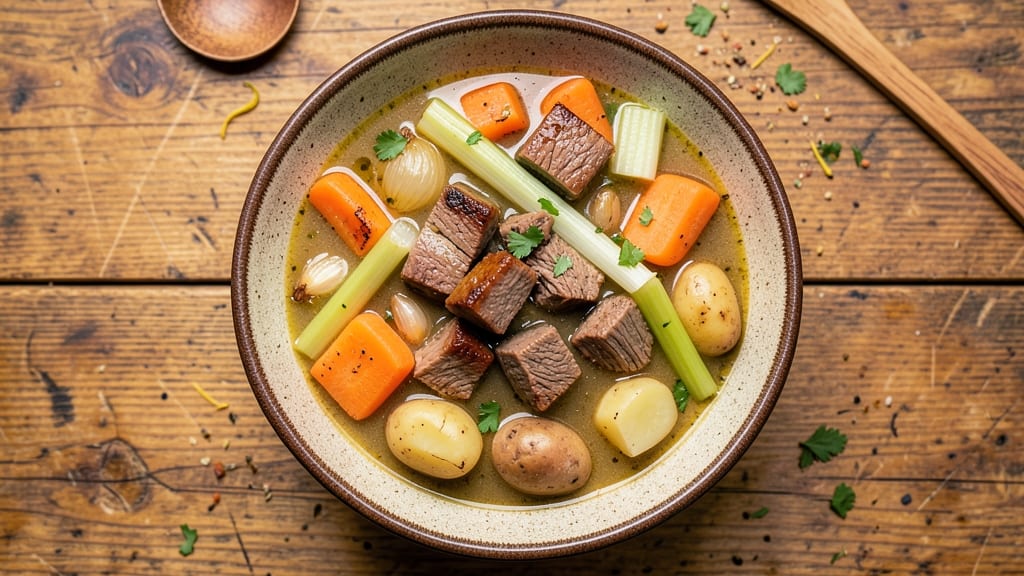
This Bob Evans beef vegetable soup copycat recipe delivers the same rich, smoky depth and melt-in-your-mouth beef chunks you love from the restaurant. 🔥 The secret lies in slow-browning the beef and simmering it with aromatic herbs until tender—just like the original.
What sets this version apart is the balance of hearty vegetables and a broth so flavorful it’ll have everyone asking for seconds.
The recipe starts with browning beef chuck in batches for maximum flavor, then simmering it low and slow until fork-tender. Carrots, celery, and potatoes absorb the rich broth while developing natural sweetness, and a blend of herbs—including thyme and bay leaf—mimics that signature Bob Evans taste.
The result is a soup that’s both comforting and deeply satisfying, perfect for chilly days or meal prep.
By the time you ladle this into bowls, you’ll have a steaming pot of soup with tender beef chunks, perfectly cooked vegetables, and a broth so flavorful it tastes homemade—even if you’re not a seasoned chef.
The texture is where this copycat truly shines: creamy from the potatoes, hearty from the beef, and brightened just enough by the herbs.
This recipe scales beautifully for crowds and reheats perfectly, making it ideal for family dinners or potlucks. The key to success? Patience—letting the beef and vegetables simmer until they’re just right ensures every spoonful delivers that restaurant-quality taste. Let’s get started on recreating this classic.
Ingredients for bob evans beef vegetable soup copycat
Pantry staples meet restaurant-quality beef for this copycat Bob Evans classic.
| Ingredient | Amount | Notes |
|---|---|---|
| Beef Chuck Roast 🥩 | 2 ½ lb | Cut into 1-inch chunks, trimmed of fat |
| Yellow Onions 🧅 | 1 ½ cups | Chopped, medium dice (about 3 medium onions) |
| Carrots 🥕 | 3 cups | Peeled, sliced into 1/4-inch rounds (about 6 medium carrots) |
| Celery Stalks 🧄 | 3 cups | Chopped, medium dice (about 6 stalks) |
| Russet Potatoes 🥔 | 2 lb | Peeled, cut into 1-inch cubes (about 4 medium potatoes) |
| Garlic Cloves 🧄 | 6 cloves | Minced, for deep flavor |
| Fresh Thyme 🌿 | 2 tbsp | Leaves only, finely chopped (or 2 tsp dried) |
| Bay Leaves 🍃 | 2 whole | Dried, for smoky depth |
| Beef Broth 💧 | 6 cups | Low-sodium preferred, homemade or high-quality |
| Tomato Paste 🍅 | 2 tbsp | For subtle richness (or 1/4 cup crushed tomatoes) |
| Worcestershire Sauce 🍶 | 1 tbsp | For umami depth (vegan version if needed) |
| Salt 🧂 | 1 ½ tsp | Diamond Crystal preferred, adjust to taste |
| Black Pepper 🌶️ | 1 tsp | Freshly ground for best flavor |
| Olive Oil 🫒 | 2 tbsp | For browning beef (extra-virgin preferred) |
The beef is non-negotiable here—chuck roast gives you that signature tenderness, while sirloin or round stays tough. Costco or local butchers usually have it pre-cut, but if you're buying whole, ask for a piece with good marbling. The onions, carrots, and celery should be fresh (no wilted celery!)—Trader Joe's has great pre-chopped veggie mixes if you're short on time. For the potatoes, Russets break down perfectly, but Yukon Golds add creaminess if you prefer. The secret to that smoky depth? Bay leaves and Worcestershire sauce—don't skip either.
No beef broth? Chicken or vegetable broth works, but add 1 tsp soy sauce for depth. Fresh thyme is ideal, but dried works at half the amount—just crush the leaves between your fingers first. Short on tomato paste? Crushed tomatoes or even a splash of red wine gets you close. The Worcestershire sauce is crucial—Lea & Perrins is the gold standard, but any good brand works. For the Worcestershire-free crowd, 1 tbsp soy sauce plus 1/2 tsp liquid smoke mimics that smoky flavor. And if you're prepping ahead, freeze the soup in portions—it reheats beautifully.
This soup tastes even better the next day as flavors meld. Store leftovers in the fridge for 4-5 days or freeze for up to 3 months. I always make a double batch—one for dinner, one for lunches. The beef stays tender when reheated slowly, and the broth gets even more concentrated. For serving, a sprinkle of fresh parsley or extra black pepper brightens it up. Pro tip: Save the bay leaves for your next soup—they're reusable!
Why You'll Love This Recipe
- One-Pot Magic: I swear by this—just dump everything in one pot, let it simmer, and walk away. No chopping like a pro, no fancy techniques: the beef chuck roast practically melts into tender chunks while the veggies soften just enough to soak up that rich broth.
- Deep, Savory Umami: That slow-cooked beef chuck roast? It’s the star—fall-apart tender with a depth of flavor you’d pay restaurant prices for. The onions caramelize slightly, carrots stay crisp-tender, and the potatoes? Creamy perfection. Every spoonful tastes like a hug from your favorite diner.
- Leftovers That Beg: Between us, this soup only gets better the next day. The flavors meld into something even more addictive, and it reheats like a dream. Pack it for lunch or freeze portions—your future self will thank you when you’re too tired to cook.
- Budget-Friendly Feast: A single chuck roast stretches to feed four, maybe five, and the veggies are cheap staples. Honestly, it’s one of those recipes where you’ll make twice as much as you need because it’s that good—and your wallet stays happy.
Step-by-step instructions for Bob Evans beef vegetable soup
Here's how to recreate that iconic restaurant soup at home—rich, hearty, and full of smoky depth.
🔥 Step 1: Brown the Beef for Maximum Flavor
Heat a large Dutch oven over medium-high heat and add the 2 tablespoons olive oil. Working in batches (you'll need two rounds), add the 2.5 lb beef chuck roast cut into 1-inch chunks—don't overcrowd the pan or it'll steam instead of brown. Let each piece sear undisturbed for 3-4 minutes until deeply browned on all sides.
This browning step is non-negotiable—it develops the Maillard reaction that creates that restaurant-quality depth of flavor. If you see fat pooling in the pan, use a spoon to baste the beef with it. Once all pieces are browned, transfer them to a plate and set aside. You'll notice the beef releases easily when it's ready to flip.
👨🍳 Step 2: Build the Aromatic Vegetable Base
In the same Dutch oven, add the 1.5 cups yellow onions, 3 cups carrots, and 3 cups celery stalks (all prepped as specified). Cook over medium heat for 8-10 minutes, stirring occasionally, until the vegetables soften and the onions become translucent. You'll smell that sweet, caramelized aroma—this is where the soup's foundation begins.
Add the 6 cloves minced garlic, 2 tablespoons fresh thyme, and 2 whole bay leaves to the pot. Stir for 30 seconds until fragrant—this releases the essential oils that will infuse your entire soup. The garlic should sizzle slightly but not burn, so keep the heat at medium during this step.
🥘 Step 3: Develop the Rich Broth Base
Stir in the 2 tablespoons tomato paste and cook for 1 minute to toast its flavors. Pour in the 6 cups beef broth and scrape up any browned bits from the bottom of the pot with a wooden spoon—these contain concentrated flavor. Return the browned beef to the pot along with the 1 tablespoon Worcestershire sauce.
Bring everything to a gentle boil, then reduce heat to low and add the 2 lb russet potatoes cut into 1-inch cubes. The potatoes should be fully submerged—if not, add a splash of water. Cover and simmer for 30 minutes, stirring occasionally, until the potatoes are tender when pierced with a fork.
🔪 Step 4: Season and Finish to Perfection
Remove the 2 whole bay leaves from the soup. Stir in the 1.5 teaspoons salt and 1 teaspoon black pepper, then taste and adjust seasoning if needed. The soup should be rich and savory, with the Worcestershire adding that signature umami depth. If you want to thicken it slightly, mash a few potato cubes against the side of the pot to release starch.
Let the soup sit off heat for 5 minutes before serving. This resting period allows all the flavors to meld together. Ladle into bowls and serve immediately with crusty bread—each spoonful should deliver tender beef, hearty vegetables, and that unmistakable smoky herb-infused broth that makes this soup so beloved.
Pro Tips For Making Bob Evans Beef Vegetable Soup Copycat
- Sear the Chuck Roast First: I learned this the hard way—skipping the sear means flavorless beef. Pat the roast dry, then hit it with high heat in a Dutch oven until deep brown on all sides. That crust locks in moisture and makes the soup taste like it came from a restaurant, not a can.
- Cut Potatoes Uniformly: Big chunks stay tough; tiny bits turn to mush. Aim for 1.5-inch cubes—big enough to hold shape but small enough to cook through. My grandmother swore by this, and she was right: consistent size means even cooking every time.
- Don’t Overcrowd the Pot: Tossing everything in at once just steams the veggies. Brown the onions, celery, and carrots first in batches, then add the potatoes and beef. This keeps the soup from turning into a watery mess and ensures the veggies actually caramelize.
- Use a Meat Thermometer: Guessing with beef chuck roast is how you end up with dry, stringy meat. Pull it at 195°F—yes, it’ll be fork-tender, not rare. Rest it 10 minutes under foil before shredding, or you’ll lose all that juicy goodness to the pot.
Storing and reheating this dish
Refrigerator Storage
Let your soup cool to room temperature for no more than 2 hours before transferring it to airtight containers—I use glass Pyrex with snap-on lids for best results. Store in the refrigerator at 40°F or below for up to 4-5 days.
The flavors actually deepen overnight as the broth absorbs the beef and vegetables. I always make a double batch so we have leftovers for lunch the next day. 🥣
Freezer Prep
For longer storage, portion the soup into quart-sized freezer bags or airtight containers, leaving 1-inch headspace for expansion. Freeze for up to 3 months—this soup reheats beautifully without losing texture.
I label each bag with the date to track freshness. When ready to serve, thaw overnight in the fridge for even heating.
Stovetop Reheating
My preferred method is stovetop reheating because it maintains the best texture. Pour the soup into a pot and heat over medium-low heat for 10-15 minutes, stirring occasionally.
If it looks too thick, add ¼ cup water or beef broth to restore consistency. Taste and adjust seasoning—it often needs a pinch more salt after reheating. 🔥
Microwave Safety
For quick reheating, transfer soup to a microwave-safe bowl and cover with a microwave-safe lid or damp paper towel. Heat on 50% power in 2-minute intervals, stirring between each, until reaching 165°F internal temperature.
Avoid overheating, which can make the beef dry. I recommend this method for single servings or when you're in a hurry.
Leftover Refresh
To revive day-old soup, stir in 1 tablespoon butter or olive oil and a splash of beef broth. Heat gently for 5 minutes to restore richness. For extra brightness, add a pinch of fresh thyme or black pepper.
This simple trick makes reheated soup taste almost as good as fresh! The key is patience—never rush the reheating process.
Serving Tips
Serve reheated soup immediately with a sprinkle of fresh parsley or a dollop of sour cream for contrast. I like to pair it with crusty bread or dinner rolls to soak up every last drop.
The texture should be creamy from the potatoes while still having bite from the tender beef and crisp vegetables. 💛
Nutrition facts
Frequently asked questions
Can I substitute beef broth with chicken broth?
You can use chicken broth, but the flavor will be lighter. To compensate, add 1 teaspoon soy sauce or 1/2 teaspoon liquid smoke for depth. The Worcestershire sauce already provides umami, so the broth swap won't ruin the dish—just expect a slightly different profile. For a vegetarian version, use vegetable broth and add 1 tablespoon miso paste for richness.
Why does my beef turn out tough instead of tender?
Tough beef usually means it wasn't simmered long enough. This soup needs at least 1.5 hours of simmering time—don't rush it! Cook the beef in batches at low heat until it's fork-tender (it should pull apart easily). If using pre-cut beef, check for marbling (fat streaks)—less marbling means longer cooking time. For extra tenderness, add 1/2 cup red wine with the broth.
How can I make this soup spicier? Add 1/2 teaspoon cayenne pepper or 1/4 teaspoon red pepper flakes during the final seasoning step. For heat with depth, stir in 1 tablespoon hot sauce (like Tabasco) or 1/2 teaspoon smoked paprika with the Worcestershire sauce.
Can I make this soup in an Instant Pot?
Sauté the beef in batches, then add all ingredients except potatoes. Cook on high pressure for 30 minutes, then add potatoes and cook 10 more minutes. Release pressure naturally. The Instant Pot version finishes faster, but the stovetop method gives more time for flavors to develop. For best results, use 2 cups beef broth instead of 6 to prevent overflow.
What's the best way to serve this soup?
Pair it with crusty bread or dinner rolls for soaking up the broth. For extra flair, top each bowl with a dollop of sour cream or shredded cheddar. The soup's hearty texture works well with green salads or roasted vegetables as a full meal. Serve immediately after reheating—it's best hot, with tender beef chunks and creamy potatoes.