
Soups & Stews
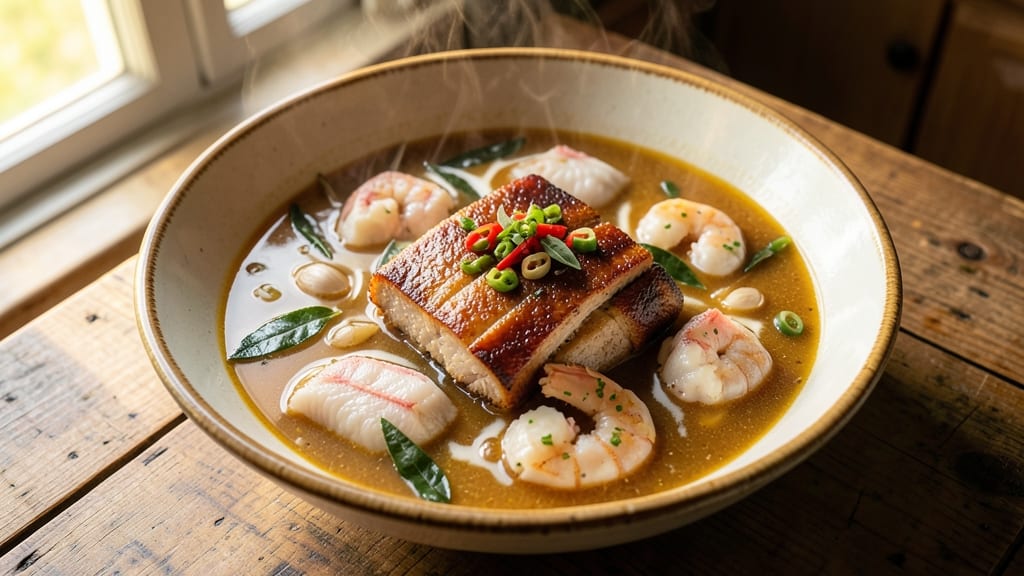
This Filipino-style bouillabaisse soup reimagines the classic Provençal dish with bold, aromatic flavors that feel distinctly local. 🌟 The secret lies in a silky garlic-chili broth infused with coconut milk and siling labuyo, transforming traditional saffron into something even more vibrant.
While authentic bouillabaisse relies on seafood, this version keeps the essence while using crispy pork belly bites—a Filipino twist that adds irresistible texture and depth.
The broth development is where the magic happens, using a slow-simmered base of fish stock, garlic, and aromatic herbs like laurel leaves. The crispy pork belly bites, marinated in a blend of soy sauce and calamansi, provide a satisfying contrast to the silky soup.
This adaptation stays true to the original's comforting nature while embracing Filipino flavors that make it uniquely approachable.
What you'll end up with is a rich, fragrant soup where every spoonful delivers layers of flavor—creamy coconut milk, fiery chili, and the savory richness of the pork belly. The crispy edges of the pork bites add a satisfying crunch, while the broth remains velvety and aromatic.
This dish is perfect for a cozy dinner or a special occasion, offering the best of both culinary worlds.
Serve with toasted garlic bread and a drizzle of patis for an extra umami kick, or pair it with steamed jasmine rice to soak up every last drop of that flavorful broth.
The recipe is designed to be both impressive and comforting, making it ideal for gatherings or a quiet night in. Let's dive into the full recipe!
Ingredients for bouillabaisse soup recipe filipino style
Pork belly, coconut milk, and siling labuyo create a Filipino twist on classic bouillabaisse.
| Ingredient | Amount | Notes |
|---|---|---|
| Pork Belly 🥓 | 1 ½ lb | Skin-on, cut into 1-inch cubes |
| Fish Stock 🐟 | 4 cups | Homemade or high-quality store-bought |
| Garlic Cloves 🧄 | 8 cloves | Minced, for marinade and broth |
| Siling Labuyo 🌶️ | 3 whole | Fresh chili, finely chopped |
| Coconut Milk 🥥 | 1 ½ cups | Full-fat, canned (13.5 oz can) |
| Laurel Leaves 🌿 | 2 whole | Dried or fresh |
| Soy Sauce 🍶 | ½ cup | For pork belly marinade |
| Calamansi Juice 🍋 | ¼ cup | Or substitute lime juice |
| Medium Tomatoes 🍅 | 2 whole | Ripe, diced for broth |
| Yellow Onion 🧅 | 1 whole | Diced for base |
| Olive Oil 🫒 | ¼ cup | Extra-virgin for richness |
| Salt 🧂 | 1 ½ tsp | Adjust to taste |
| Black Pepper 🌶️ | ½ tsp | Freshly ground |
| Patis 🍶 | 1 tbsp | For garnish, optional |
| Fresh Thai Basil 🌿 | ¼ cup | Chopped for garnish |
The pork belly is non-negotiable for that crispy texture—look for thick slices with good fat marbling at Costco or your local butcher. Siling labuyo is the Filipino secret weapon here; if you can't find it, bird's eye chilies work in a pinch. Coconut milk should be full-fat (none of that light stuff)—Aroy-D or Grocery Outlet brands are reliable. For the fish stock, homemade is ideal, but Pacific Foods or Imagine brands are solid shortcuts. The calamansi juice adds that bright, tangy kick—substitute lime juice if needed, but it won't be quite the same.
No siling labuyo? Fresh red chili or Thai bird's eye will do, but adjust the heat to your taste. Patis (Filipino fish sauce) is optional but adds that signature umami—Toyo brand is widely available. Fresh Thai basil is ideal for garnish, but regular basil or cilantro work if that's what you have. The tomatoes should be ripe and juicy—Roma or vine-ripened hold up best in the broth. For the onion, yellow or red will work, but yellow adds a touch of sweetness that pairs well with the chili. Olive oil matters here—use something fruity and peppery, not the cheap stuff.
The pork belly marinade keeps for 2 days in the fridge, but the longer it sits, the more flavor it absorbs. Coconut milk stays fresh 3-4 days once opened if stored properly—keep the can sealed and refrigerate after opening. The fish stock can be made ahead and frozen for 3 months. For leftovers, the soup reheats beautifully—just add a splash of water or coconut milk to restore creaminess. Patis and Thai basil should be added fresh right before serving to preserve their bright flavors.
Why You'll Love This Recipe
- One-Pot Magic: I swear by this recipe because it’s all in one pot—no fussing with multiple pans or messy transfers. The pork belly renders its own fat into the broth while the garlic and siling labuyo bloom together, turning the kitchen into a fragrant paradise without the cleanup.
- Creamy-Spicy Balance: That coconut milk doesn’t just add richness—it softens the heat from the siling labuyo just enough to make every spoonful ridiculously good. The fish stock carries all the umami, but the pork belly? It’s the star stealing the show with its melt-in-your-mouth texture.
- Leftovers That Beg for More: Between us, this soup only gets better the next day. The flavors meld overnight, and the coconut milk thickens just enough to make it feel like a whole new dish. I’ve reheated portions for lunch three times this week—no complaints, just empty bowls.
- Weeknight Workhorse: Honestly, this is my go-to when I’m too tired to think but still need something hearty. Toss in whatever fish or veggies you have (even canned sardines work), and it’s ready in under an hour. The pork belly’s fat renders while you prep—minimal effort, maximum reward.
Step-by-step instructions for Filipino-style bouillabaisse
Here's how to build a rich, aromatic broth with perfectly crisp pork belly cubes.
🔥 Step 1: Render the Pork Belly Until Crispy
Heat a large Dutch oven over medium heat and add the 1.5 lb pork belly cut into 1-inch cubes. Let it render undisturbed for 10 minutes until the fat begins to sizzle and the meat releases easily from the pan. This initial sear locks in moisture while building deep flavor.
I press down gently on the pork cubes during the first 2 minutes—this prevents them from curling and ensures even contact with the hot pan. Once golden brown on all sides, transfer the pork to a plate, leaving the rendered fat in the pot. This fat becomes the flavor base for your soup. Don't drain it; we'll use every drop.
🍳 Step 2: Build the Garlic-Chili Base
In the same Dutch oven, add 0.25 cup olive oil and reduce heat to medium-low. Add the 8 cloves minced garlic and 3 chopped siling labuyo, cooking for 2-3 minutes until fragrant but not browned. This is where the magic happens—the garlic should smell sweet and the chili should perfume the air without burning.
Add the 1 diced yellow onion and 2 diced medium tomatoes, cooking for another 5 minutes until softened. Stir occasionally to prevent sticking. The onions should become translucent while the tomatoes break down into a chunky sauce. This aromatic base forms the soul of your soup.
🥘 Step 3: Develop the Broth with Fish Stock
Pour in the 4 cups fish stock and bring to a gentle simmer. Add the 2 laurel leaves, 0.5 cup soy sauce, 0.25 cup calamansi juice, 1.5 tsp salt, and 0.5 tsp black pepper. Return the pork belly to the pot and simmer uncovered for 45-50 minutes until the meat is tender but still holds its shape.
Here's the thing—you want the broth to reduce slightly but remain silky. If it gets too thin, simmer uncovered for an extra 5 minutes. The pork should be fork-tender with just a slight resistance. Taste and adjust seasoning—Filipino soups need that perfect balance of salty, sour, and umami.
⏰ Step 4: Finish with Coconut Milk and Garnish
Reduce heat to low and stir in the 1.5 cups coconut milk until fully incorporated. Simmer for another 5 minutes to let the flavors meld. The coconut milk should create a velvety texture without curdling. If it separates, whisk vigorously to re-emulsify.
Remove from heat and stir in the 1 tbsp patis (if using) and 0.25 cup chopped fresh Thai basil. Ladle into bowls and serve immediately with extra crispy pork belly cubes on top. The contrast of creamy coconut broth with crispy pork bits is what makes this dish truly special.
Pro Tips For Making Bouillabaisse Soup Recipe Filipino Style
- CRISP THE PORK FIRST: Render the pork belly until it’s deep golden and crispy in spots—don’t rush this. I used to pull it out too soon, and the fat stayed greasy instead of adding rich flavor. Once it’s sizzling like bacon, remove and set aside, then use the rendered fat to fry the garlic and siling labuyo next. That fat’s the soul of the dish.
- BLANCH THE GARLIC: Toss the minced garlic into the hot pork fat for just 30 seconds—until it smells nutty but not burnt. Overcooking turns it bitter, and that’s a fast way to ruin the whole soup. Remove it before it browns, then let the siling labuyo take over.
- CONTROL THE COCONUT MILK: Stir in the coconut milk gradually, a splash at a time, while the soup simmers. Adding it all at once can make the broth turn greasy or split. I learned this after my first batch looked suspiciously like a creamy curry, not a bouillabaisse.
- SIMMER, DON’T BOIL: Keep the soup at a gentle bubble—just enough to maintain heat without violent rolling. Boiling breaks down the fish stock too fast, turning it cloudy and flat. A low simmer for 20-30 minutes after adding the coconut milk lets the flavors meld without overcooking the pork.
Common mistakes when making perfect results
Overcooking Pork Belly
Pork belly is forgiving but can turn rubbery if overcooked. The goal is tender meat with crispy edges—not dry or chewy. I pull the pork from the broth when it reaches 205°F internal temperature (about 45-50 minutes of simmering).
Overcooking releases too much collagen, turning the meat tough. If your pork belly feels firm, it needs more time; if it crumbles easily, it's done. 💡
Skipping the Fat Rendering
Never skip rendering the pork belly fat—it’s the flavor foundation! I’ve seen people drain it immediately, thinking it’s unhealthy, but those rich fats carry the umami depth. Let the pork sear until golden brown, then leave the fat in the pot.
It’ll create a silky, flavorful base for your broth. If you’re concerned about excess fat, skim it off after cooking, but don’t discard it entirely.
Burning the Garlic-Chili Base
Garlic and siling labuyo burn faster than you think, turning bitter and harsh. Cook them over medium-low heat for just 2-3 minutes—they should perfume the air but not brown.
I watch closely and stir constantly. If they darken, start over with fresh garlic. The aroma is your cue: sweet, not acrid. 🌶️
Ignoring the Broth Reduction
The broth needs to reduce slightly to concentrate flavors, but don’t let it boil vigorously. Simmer uncovered at low heat for 45-50 minutes. If it reduces too much, add ¼ cup hot water or fish stock to restore balance.
A thin broth lacks depth, while a thick one can turn gluey. Taste as you go—Filipino soups should be rich but still silky, not heavy.
Adding Coconut Milk Too Early
Coconut milk curdles if added to hot broth. Always stir it in at the very end over low heat and simmer for just 5 minutes. If it separates, whisk vigorously to re-emulsify.
For extra insurance, temper the coconut milk first by mixing 1 tbsp of warm broth into it before adding the whole can. This keeps the texture velvety, not lumpy.
Neglecting the Pork Belly Marinade
The marinade (soy sauce and calamansi) is non-negotiable for flavor. Let the pork belly marinate for at least 1 hour (overnight is even better). This tenderizes the meat and infuses it with savory, tangy notes.
Skipping it means bland, dry pork. I marinate mine in the fridge, flipping the cubes halfway through for even seasoning. 🥓
Nutrition facts
Frequently asked questions
Can I make this Filipino-style bouillabaisse without pork belly?
For a vegetarian version, swap the pork belly for extra-firm tofu cut into cubes and marinated in soy sauce and calamansi. For seafood lovers, try shrimp or scallops—they cook quickly and add a delightful texture contrast. Just reduce the cooking time to 5-8 minutes after adding them to the broth.
What's the best way to store leftovers?
Store leftovers in an airtight container in the fridge for up to 3 days. Reheat gently on the stove over low heat, adding a splash of water or coconut milk to restore creaminess. For longer storage, freeze for up to 1 month—just thaw overnight in the fridge before reheating.
How can I adjust the heat level?
Siling labuyo packs serious heat! For milder flavor, reduce to 1-2 chilies or remove seeds. For extra spice, add ½ tsp chili flakes or a dash of sambal oelek at the end. Remember, you can always add more heat but can't remove it once cooked.
What makes this different from traditional bouillabaisse?
This Filipino version swaps saffron for garlic-chili-calamansi brightness and replaces seafood with pork belly for that signature crispy texture. The coconut milk adds creaminess while keeping it lighter than traditional French versions. It's all about balancing rich umami with tropical, tangy notes that feel distinctly local.
Can I use this broth for other dishes?
Yes! The aromatic broth makes an excellent base for Filipino-style pasta or rice dishes. Use it as a soup base for sinigang or as a flavorful liquid for steamed dumplings. Just store it without the pork belly (cooled quickly) in an airtight container for up to 3 days in the fridge.