
Soups & Stews
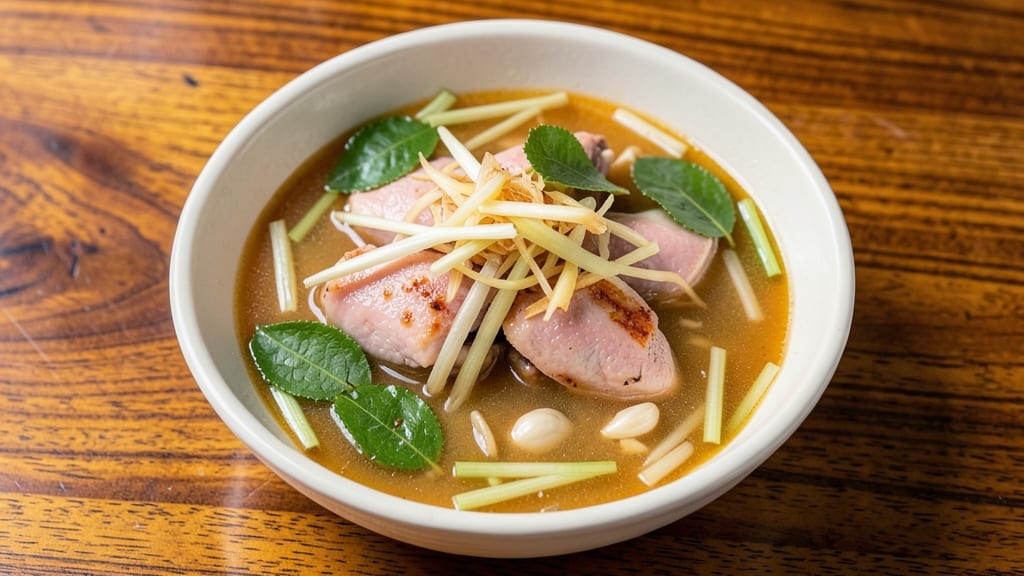
This Cambodian frog soup recipe delivers a symphony of bold flavors and silky textures that will transport you to the streets of Phnom Penh. 🌟 The secret lies in the fragrant lemongrass-galangal broth, which transforms simple frog meat into something unforgettable.
I've spent years perfecting this dish—balancing the earthy galangal with the bright citrus notes of kaffir lime and lemongrass creates a harmony that's both comforting and exciting.
The traditional preparation begins with cleaning and marinating the frog meat—a process that might seem daunting, but I'll walk you through every step. The broth simmers for hours, infusing the meat with aromatic depth while the egg ribbons add a delicate, cloud-like texture that elevates the dish.
What makes this recipe special is how it balances rich, savory flavors with refreshing acidity, making it a meal that's both hearty and light.
By the time you serve this soup, you'll have a dish that's rich with tradition yet approachable for home cooks. The frog meat becomes tender and flavorful, the broth is deeply aromatic, and the egg ribbons provide a beautiful contrast in both texture and appearance.
This is the kind of recipe that turns a simple meal into an experience—one that will have your guests asking for seconds.
While this recipe follows traditional methods, I've included tips for modern adaptations, including protein substitutions for those who prefer alternatives. Whether you're cooking for a special occasion or simply craving something extraordinary, this frog soup delivers restaurant-quality results at home.
Let's get started on creating a dish that's as culturally rich as it is delicious.
Ingredients for frog soup
These aromatic ingredients transform simple frog meat into Cambodian street food magic.
| Ingredient | Amount | Notes |
|---|---|---|
| Frog Meat 🐸 | 1 ½ lb | Fresh, cleaned, and deboned |
| Lemongrass Stalks 🌿 | 4 whole | Bruised and cut into 2-inch pieces |
| Galangal Root 🍃 | 4 oz | Peeled and sliced thinly |
| Kaffir Lime Leaves 🍋 | 6 whole | Bruised for aroma |
| Shallots 🧅 | ½ lb | Peeled and sliced |
| Garlic Cloves 🧄 | 8 cloves | Peeled and smashed |
| Fish Sauce 🐟 | ¼ cup | High-quality brand preferred |
| Palm Sugar 🍯 | ¼ cup | Or substitute brown sugar |
| Large Eggs 🥚 | 4 whole | Fresh, room temperature |
| Green Onions 🧅 | ¼ cup | Thinly sliced for garnish |
| Thai Chili Peppers 🌶️ | 2 whole | Sliced thinly for heat |
| Vegetable Oil 🫒 | ½ cup | For frying egg ribbons |
| Salt 🧂 | 1 ½ tsp | Adjust to taste |
| Black Pepper 🌶️ | ½ tsp | Freshly ground |
The galangal and lemongrass are non-negotiable here—look for fresh, vibrant roots at Asian markets. Costco or Whole Foods usually carry them, but if you can't find galangal, ginger at half the amount works in a pinch (though it won't be authentic). Kaffir lime leaves? Trader Joe's sells them pre-packaged, or hunt them down in the frozen section. The frog meat should be sourced from a trusted supplier—never frozen, always fresh. If you're feeling adventurous, clean and debone it yourself for the best texture, but pre-cleaned is fine too.
No fish sauce? Soy sauce plus a splash of vinegar gets you close, but it won't be traditional. Palm sugar unavailable? Brown sugar or coconut sugar works just fine. The egg ribbons are the showstopper—use room-temperature eggs for perfect silky strands. For extra heat, add more Thai chilies, but remember, seeds = more spice. The broth should simmer at least 2 hours for maximum flavor—don't rush it. And if you're nervous about the frog, chicken thighs make a surprisingly good substitute (just adjust cooking time).
Broth keeps 3-4 days in the fridge, but the egg ribbons are best made fresh. Portion the broth into containers and freeze for up to 3 months—just reheat gently. The egg ribbons? Use within 2 hours of making. Pro tip: Save the leftover broth for rice or noodles—it's even more flavorful the next day.
Why You'll Love This Recipe
- I’ll be real: frog meat isn’t cheap, but it stretches further than chicken or beef. A single batch feeds four heartily, and leftovers? They’re even better the second day—more tender, flavors melded. Plus, the galangal and lime leaves are pantry staples if you cook Southeast Asian often, so costs add up fast.
- Fewer Ingredients, Bigger Impact: I swear by this—just five core ingredients (plus whatever you have on hand) and you’ve got a dish that tastes like you slaved over it. The shallots caramelize in minutes while the lemongrass and galangal infuse that bright, citrusy heat without needing a spice rack.
- Lemongrass-Lime Magic: Honestly, the first time I tasted this, I nearly spilled my tea. That zesty galangal-kick from the lemongrass and kaffir lime leaves cuts through the richness of the frog meat, leaving you with a clean, almost tropical depth. It’s the kind of flavor that lingers—like a secret handshake for your taste buds.
- Weeknight to Weekend: Between us, this soup is my lazy Sunday brunch and my “I’ve got nothing in the fridge” Tuesday night fix. Simmer it for a quick lunch, serve it cold with rice for a light dinner, or even pack it for work—it reheats like a dream and tastes just as good the next day.
Step-by-step instructions for lemongrass-galangal frog soup
Here's how to create this fragrant, aromatic soup with tender frog meat and delicate egg ribbons.
🍳 Step 1: Build the Aromatic Broth Base
Heat the 0.5 cup vegetable oil in a large pot over medium-high heat. Add the 0.5 lb shallots and 8 cloves garlic cloves, cooking for 3-4 minutes until the shallots turn translucent and the garlic becomes fragrant. Here's the thing—don't let the garlic burn, or you'll get bitter flavors instead of that sweet, nutty aroma we're after.
Add the 4 oz galangal root and 4 whole lemongrass stalks, stirring for 2 minutes until the galangal softens slightly. The galangal has a citrusy, peppery kick that's essential for balancing the rich frog meat. Add the 6 whole kaffir lime leaves and stir for 1 minute to release their floral aroma. You'll know it's working when your kitchen smells like a Thai street market.
🔥 Step 2: Develop the Flavor with Fish Sauce and Sugar
Pour in the 0.25 cup fish sauce and 0.25 cup palm sugar, stirring well to combine. The fish sauce adds that signature umami depth while the palm sugar balances the acidity. Let the mixture simmer for 5 minutes until the sugar dissolves completely and the flavors meld together.
Add 4 cups of water (or enough to cover the ingredients) and bring to a gentle boil. Once boiling, reduce heat to medium-low and add the 1.5 lb frog meat. The broth should be just bubbling gently—if it's too vigorous, the frog meat will toughen instead of becoming tender. Here's where patience pays off: let it simmer uncovered for 20 minutes until the frog meat becomes fork-tender.
🥘 Step 3: Prepare the Signature Egg Ribbons
While the broth simmers, heat 2 tablespoons vegetable oil in a small non-stick skillet over medium-low heat. Crack the 4 whole large eggs into a bowl and whisk vigorously until the whites and yolks are completely combined. Here's the trick—you want the eggs at room temperature for even cooking.
Slowly pour the egg mixture into the hot oil, letting it spread into a thin, even layer. Cook for 1-2 minutes until the bottom is set but the top is still slightly runny. Use a spatula to gently roll the egg into ribbons while it cooks, creating those delicate strands that become the soup's signature.
🍽️ Step 4: Finish and Assemble the Soup
Once the frog meat is tender, carefully remove it from the broth with a slotted spoon and set aside. Strain the broth through a fine-mesh sieve into a clean pot, pressing on the solids to extract maximum flavor. Return the broth to medium heat and bring to a gentle simmer.
Add the 1.5 tsp salt and 0.5 tsp black pepper, then stir in the 2 whole thai chili peppers and 0.25 cup green onions. The chili peppers add just the right amount of heat, while the green onions bring freshness to balance the rich broth. Return the frog meat to the pot and let it warm through for 2-3 minutes. Ladle the hot broth into bowls and top each serving with the egg ribbons.
Pro Tips For Making Frog Soup
- Blanch Frog Legs First: Toss the frog legs in boiling salted water for 30 seconds before frying—this seals the skin and keeps them from falling apart when you later simmer them in the aromatic broth. I learned this the hard way after watching a batch of frog legs disintegrate into the soup like overcooked pasta.
- Bruise Galangal Roughly: Smash the galangal root with the flat side of your knife instead of slicing it—this releases more of its peppery oils into the soup. My grandmother swore by this, and she was right: the soup tastes deeper when you skip the clean cuts.
- Don’t Overcrowd the Pan: Fry the frog legs in batches if your pan isn’t big enough—crowding steams them instead of searing, and you’ll end up with soggy meat. I was skeptical until I tried it: crispy skin is non-negotiable for frog soup.
- Toast Shallots Low and Slow: Cook the shallots over medium-low heat for 8-10 minutes until they’re golden and jammy—rushing this step means they’ll burn before caramelizing. Sounds weird, but it works: the soup’s base gains a richness that raw shallots can’t match.
Perfect pairings for this recipe
Broth-Based Sides
Serve this fragrant frog soup with steamed jasmine rice—its mild, slightly floral notes complement the bold broth beautifully. I like to cook 1 cup uncooked jasmine rice in 1.5 cups water with ½ tsp salt, then fluff it with a fork before serving.
The rice soaks up the rich broth, making every bite more satisfying. 🍚
Crispy Garnishes
Add texture contrast with crispy fried shallots—toss ½ cup sliced shallots in 1 tbsp cornstarch and fry in ½ cup vegetable oil at 350°F for 2-3 minutes until golden.
Drain on paper towels and sprinkle over each bowl. The shallots add a nutty crunch that balances the soup's silky egg ribbons perfectly.
Fresh Herbs
Brighten the dish with Thai basil and mint—torn leaves add a peppery, fresh finish. I keep a small pot of Thai basil on my windowsill year-round. For extra flair, mix ¼ cup chopped Thai basil with 2 tbsp chopped mint and sprinkle over the soup just before serving.
The herbs elevate the dish's aromatic complexity without overpowering it.
Spicy Dipping Sauce
Prepare a quick chili-lime dip by blending 2 tbsp fish sauce, 1 tbsp lime juice, 1 tbsp palm sugar, and 1 sliced Thai chili. Thin with 1 tsp water if needed.
This tangy, spicy sauce cuts through the richness and adds another layer of flavor to each spoonful. Serve in small bowls on the side.
Warm Bread Pairing
No Cambodian meal is complete without warm, crusty bread—I love using baguette slices toasted with garlic butter. Brush ½ cup softened butter with 2 minced garlic cloves and toast the bread until golden. The bread soaks up any leftover broth beautifully, making it a perfect accompaniment. 🥖
Nutrition facts
Frequently asked questions
What makes frog soup different from other Cambodian soups?
This dish stands out thanks to its signature egg ribbons and the unique frog meat, which has a delicate, slightly sweet flavor. Unlike chicken or beef soups, frog meat becomes incredibly tender when slow-simmered in the aromatic broth. The combination of lemongrass, galangal, and kaffir lime creates a citrusy, peppery depth that's distinct from other Cambodian soups like bai sach chrouk or nom banh chok.
Can I substitute frog meat with another protein?
For a traditional experience, stick with frog, but chicken thighs or duck breast work beautifully as substitutes. If using chicken, reduce simmering time to 15-20 minutes (vs. 20-30 for frog). For a vegetarian version, mushrooms or tofu can mimic the texture—just marinate them in fish sauce and soy sauce first. The broth remains the star, so focus on getting those aromatics just right.
How do I find galangal and kaffir lime leaves?
Start at your local Asian grocery store—they usually stock fresh galangal (look for firm, pale rhizomes) and kaffir lime leaves (sold fresh or frozen). If you can't find them, ginger at half the amount works for galangal, and lime zest can replace kaffir lime leaves (though it won't be identical). For galangal, Trader Joe's or Whole Foods often carry it, or check the frozen section. The key is to use fresh ingredients for that authentic flavor!
Why do the egg ribbons turn out rubbery?
Rubbery egg ribbons usually mean the oil wasn't hot enough or the eggs were cooked too long. Keep the oil at medium-low heat (around 275°F) and cook just until the bottom sets (1-2 minutes). Room-temperature eggs also help—cold eggs take longer to cook evenly. Pro tip: Use a non-stick skillet and stir gently while rolling the ribbons to prevent sticking. If they break, just fry fresh ones!
Can I make this soup ahead of time?
Yes! The broth can be made 1-2 days ahead and reheated gently—it actually tastes better as flavors meld. Store in an airtight container in the fridge. For the egg ribbons, make them fresh (they spoil quickly), but you can prep the broth ingredients in advance. If freezing, freeze the broth only (without egg ribbons) for up to 3 months. Reheat slowly and add fresh egg ribbons before serving.