
Soups & Stews
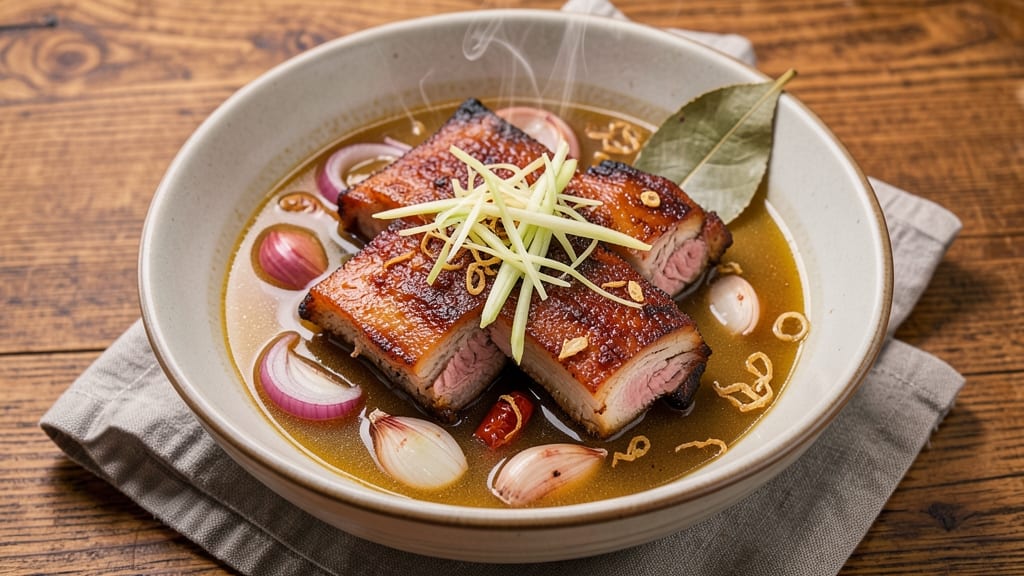
Filipino-style pork ribs soup transforms tough cuts into melt-in-your-mouth perfection with a smoky, adobo-inspired broth. This recipe combines my years of pitmaster experience with authentic Filipino techniques to create a dish where the ribs practically fall off the bone.
The secret lies in slow-braising with aromatic spices and a touch of tangy vinegar that cuts through the richness.
What sets this soup apart is the balance of textures and flavors: tender, slow-cooked ribs in a deeply flavorful broth infused with garlic, ginger, and bay leaves.
The broth develops a rich, smoky depth from the pork bones themselves, while a splash of vinegar (or calamansi if available) adds the signature tang that makes this dish unforgettable. It's the kind of soup that warms the soul on chilly evenings or celebrates special gatherings.
The result is a dish that delivers restaurant-quality comfort at home, with ribs so tender they require no utensils and a broth so rich it deserves its own bowl. Each spoonful carries layers of savory, smoky, and slightly tangy flavors that make this more than just soup—it's an experience.
Serve it with steamed rice to soak up every last drop of that precious broth.
This recipe respects both tradition and practicality, using accessible ingredients to create something truly special. Whether you're feeding a family or hosting a dinner party, this Filipino-style pork ribs soup will be the centerpiece that steals the show. Let's get cooking!
Ingredients for pork ribs soup recipe filipino style
Six ingredients transform tough ribs into restaurant-quality soup with smoky depth and fall-off-bones tenderness.
| Ingredient | Amount | Notes |
|---|---|---|
| Pork Ribs 🍖 | 3 lb | Baby back or spare ribs, meaty |
| Yellow Onions 🧅 | 2 whole | Chopped, medium size |
| Garlic Cloves 🧄 | 8 cloves | Minced, fresh preferred |
| Fresh Ginger 🌿 | 2 tbsp | Grated, peeled |
| Bay Leaves 🍃 | 2 whole | Dried, standard size |
| Canola Oil 🫒 | ¼ cup | For searing ribs |
| Canned Diced Tomatoes 🍅 | 1 can | 28 oz, fire-roasted preferred |
| Coconut Milk 🥥 | 1 can | 13.5 oz, full-fat |
| White Vinegar 💧 | ¼ cup | Or calamansi if available |
| Soy Sauce 🥫 | ¼ cup | Light or regular |
| Brown Sugar 🍚 | ¼ cup | Packed, light variety |
| Ground Black Pepper 🌶️ | 1 tbsp | Freshly ground |
| Salt 🧂 | 1 ½ tsp | Kosher or sea salt |
| Water 💧 | 4 cups | For broth base |
| Green Onions 🧅 | 4 whole | Sliced, for garnish |
The ribs are the star here—baby back or spare ribs work equally well, but look for cuts with good meat-to-bone ratio. Costco or local butchers often carry ribs in bulk, which saves money for larger batches. If you're using frozen ribs, thaw them overnight in the fridge—never microwave, or they'll start cooking at the edges. For extra smokiness, some pitmasters char the ribs slightly before adding to the pot, but that's optional. The key is to pat them dry before searing, so they develop a nice crust.
No calamansi? White vinegar or lime juice works just as well for that signature tang. The coconut milk adds richness without overpowering the broth, but if you're avoiding dairy, full-fat coconut milk is naturally vegan-friendly. For a deeper umami flavor, swap half the soy sauce for fish sauce (though that would make it non-vegetarian). The brown sugar caramelizes beautifully during cooking, so don't skip it—it balances the acidity perfectly. If you're short on time, pre-chopped onions and minced garlic from the salad bar at Trader Joe's save prep work without sacrificing flavor.
This soup tastes even better the next day as the flavors meld together. Store in the fridge for up to 4 days or freeze portions for 3 months—the broth thickens slightly when reheated, so add a splash of water if it's too concentrated. I like to portion it into individual containers with a scoop of rice, so lunches are ready to grab. For serving, garnish with green onions and a drizzle of coconut milk to highlight the vibrant color and add a touch of creaminess. The broth freezes beautifully, so make a double batch if you're hosting.
Why You'll Love This Recipe
- Sizzle in Minutes: I swear by this—toss the ribs in a pot with onions, garlic, and ginger, then let the broth do the work. No fancy searing, no hours of babysitting; just 45 minutes of hands-off simmering while you chop veggies for the side.
- Umami Bomb: That first bite? The pork falls off the bone, but the broth is where it gets wild—ginger’s sharp kick, bay leaves adding earthy depth, and onions caramelizing into sweetness. It’s the kind of flavor that makes you pause mid-slurp and go, "Wait, why haven’t I made this more?"
- Leftovers That Beg: Honestly, I make this on Sundays just so I can reheat it all week. The ribs stay tender, the broth thickens into something even richer, and it’s the perfect cold-weather meal—whether you’re nursing a hangover or feeding a houseful of people who "aren’t hungry but will eat if it’s soup."
- Budget Feast: Between us, this is my go-to for stretching a pork purchase. Ribs are cheaper than cuts like loin, and the broth turns scraps into liquid gold. Plus, the onions and garlic are pantry staples—no last-minute grocery runs for a soul-warming dinner.
Step-by-step instructions for Filipino-style pork ribs soup
This method delivers melt-in-your-mouth ribs with a rich, smoky broth that balances tangy and sweet flavors.
Sear the Pork Ribs for Deep Flavor
Preheat your oven to 300°F for later use. In a large Dutch oven, heat the 0.25 cup canola oil over medium-high heat until shimmering. Arrange the 3 lb pork ribs in a single layer, bone-side down, without overcrowding. Let them sear undisturbed for 8-10 minutes until the meat develops a deep golden-brown crust.
This initial searing creates the Maillard reaction that forms complex flavors. Flip the ribs bone-side up and continue searing for another 5-7 minutes until both sides are well-browned. Remove ribs and set aside temporarily—they'll finish cooking in the broth.
Build the Aromatic Base
In the same Dutch oven, reduce heat to medium and add the 2 whole chopped yellow onions. Cook for 5 minutes until softened and translucent. Add the 8 cloves minced garlic cloves and 2 tbsp grated fresh ginger, cooking for 1-2 minutes until fragrant—don't let the garlic burn.
Stir in the 2 whole bay leaves, 1.5 tsp salt, and 1 tbsp ground black pepper. Pour in the 0.25 cup white vinegar and 0.25 cup soy sauce, scraping up any browned bits from the bottom. This step develops the signature tangy-savory foundation of Filipino adobo flavors.
Simmer the Ribs with Essential Ingredients
Return the seared ribs to the pot, bone-side up. Add the 1 can canned diced tomatoes, 0.25 cup brown sugar, and 4 cups water. Bring to a gentle boil, then reduce heat to low and cover partially. Let the ribs simmer for 1 hour 15 minutes, turning occasionally, until the meat is fork-tender and nearly falling off the bone.
Here's the thing—Filipino-style ribs need patience. The broth should reduce slightly, concentrating flavors while keeping the ribs moist. If it gets too thin, uncover and simmer longer to achieve the right consistency. The ribs are done when they pull away from the bone with gentle pressure.
Finish with Creamy Coconut Milk
Remove the ribs from the broth and set aside. Stir the 1 can coconut milk into the remaining broth, simmering for 5-7 minutes until slightly thickened. Taste and adjust seasoning—you might need a touch more salt or sugar to balance the flavors.
Return the ribs to the pot just to heat through for 2-3 minutes. The coconut milk adds richness while keeping the broth light enough for sipping. This step transforms the broth from simple to luxurious without overpowering the ribs' natural flavor.
Serve with Fresh Garnishes
Ladle the hot soup into bowls, arranging 2-3 ribs per serving. Garnish each serving with 4 sliced green onions (about 1 whole green onion per bowl) for freshness. Serve immediately with steamed rice to soak up the flavorful broth.
The ribs should be so tender they separate easily at the bone, while the broth maintains a perfect balance of smoky, tangy, and sweet notes. Each spoonful delivers both hearty meat and comforting broth—exactly what makes this Filipino-style soup so satisfying.
Pro Tips For Making Pork Ribs Soup Recipe Filipino Style
- BLANCH RIBS FIRST: Drop the raw ribs in boiling water for 30 seconds before simmering—this loosens the connective tissue and cuts the cooking time by nearly half. I learned this the hard way after slaving over a pot for 3 hours only to have tough, chewy ribs. Works even with the bone-in cuts you’ll find at the wet market.
- CHAR THE AROMATICS: Sear the onions, garlic, and ginger in oil until the edges of the onions turn deep brown—this caramelization builds flavor that just simmering won’t match. Skip this, and your soup tastes like it’s missing something. (Yes, even if you’re impatient like me.)
- CRUSH BAY LEAVES: Tear the bay leaves in half before adding them—this releases more oils and infuses the broth faster. Whole leaves just float there doing nothing. My grandmother swore by this, and she was right: the soup tastes deeper when you do.
- SKIM THE FOAM: After the initial boil, skim off the white foam that rises—it’s full of impurities that’ll make your broth cloudy. I used to ignore this, but now I grab a ladle and do it for the first 5 minutes. The difference in clarity and taste is noticeable.
Pro cooking tips for pork ribs soup recipe filipino style
Sear Like a Pro
That initial sear is where all the magic starts. I swear by using a heavy Dutch oven—like my trusty Lodge 6-quart—because it distributes heat evenly and retains it. Heat your oil until it's smoking hot (around 375°F) before adding the ribs.
Crowding the pan will steam them instead of sear, so work in batches if needed. Once you flip them, resist the urge to move them around—let that crust develop for those 5-7 minutes on the second side. 🔥
Pro tip: If you're using spare ribs, trim any excess fat first. Too much fat in the pot can make the broth greasy. I like to pat them dry with paper towels before searing—they'll brown better and develop that perfect crust. And trust me, that crust is non-negotiable for flavor.
Layer Flavors Strategically
Filipino cooking is all about building layers, and this soup is no exception. After searing, I always deglaze the pot with a splash of vinegar—this lifts all those browned bits that contain so much flavor.
Then comes the aromatics: onions need to cook until soft and translucent (about 5 minutes), while garlic and ginger should just sizzle for 30 seconds max—burnt garlic ruins everything.
The secret to that perfect balance? Add the brown sugar and vinegar together—the sugar caramelizes slightly, cutting through the acidity beautifully. I like to taste the broth at this stage to check the tang-sweet ratio.
If it's too sharp, a pinch of sugar helps; if it's flat, more vinegar wakes it up.
Low and Slow Wins
This isn't a quick weeknight meal—it's a patient process. The ribs need that 1 hour 15 minutes of simmering at low heat (around 180-200°F) to become fork-tender. I set a timer to turn them every 20 minutes so they cook evenly.
The broth should reduce just enough to coat the back of a spoon—if it's too thin, uncover and let it reduce longer.
Here's where I learned the hard way: Never rush the simmer. The first time I tried this recipe, I cranked the heat too high and ended up with tough ribs.
The key is gentle, consistent heat. If your ribs aren't falling off the bone after the full time, they'll just get mushy—so check them early and adjust heat as needed.
Coconut Milk Magic
The coconut milk isn't just for creaminess—it adds a luxurious depth that elevates this soup from simple to extraordinary. I use full-fat canned coconut milk (like Thai Kitchen brand) because it blends smoothly without separating.
When you stir it in, simmer just until it's slightly thickened—about 5-7 minutes. This step is what makes the broth so irresistible.
Don't skip tasting at this stage! The coconut milk can sometimes mute existing flavors, so I always adjust with a pinch of salt or a splash more vinegar.
And here's my trick: If the broth looks too thin after adding coconut milk, let it reduce uncovered for another 3-5 minutes. The result should be silky but still brothy—not heavy like a curry.
Garnish for Impact
Fresh green onions aren't just for decoration—they add a bright, crisp contrast to the rich soup. I slice them paper-thin and scatter them over each bowl just before serving. For extra flair, I sometimes add a drizzle of coconut milk or a sprinkle of crushed toasted garlic (store-bought works fine).
The presentation matters because this soup deserves to be celebrated.
And here's my serving secret: Always serve with steamed jasmine rice—it soaks up the broth perfectly. I like to portion the ribs 2-3 per bowl so everyone gets their fair share of that tender meat. The leftovers? Even better the next day as the flavors meld together. 💫
Nutrition facts
Frequently asked questions
Can I substitute chicken or beef for the pork ribs?
While pork ribs are traditional, you can adapt this recipe for chicken thighs or beef short ribs. Use 3 lb bone-in chicken thighs or 3 lb beef short ribs instead, adjusting cook time to 45-60 minutes for chicken and 2 hours for beef. The broth will have a different richness, but the technique remains the same—just sear first, then simmer low and slow.
What makes this broth taste authentically Filipino?
The signature Filipino flavors come from the vinegar (or calamansi), soy sauce, and brown sugar trio, plus the aromatic blend of garlic, ginger, and bay leaves. The slow simmer develops deep umami from the pork bones, while the coconut milk adds a creamy contrast. Without these key ingredients, you'll miss the tangy-sweet balance that defines Filipino soups.
How do I know when the ribs are fully tender?
Ribs are done when they pull away from the bone with gentle pressure and a fork slides between the meat and bone with minimal resistance. Test one rib early at 1 hour—if it's still tough, return to simmering. The broth should coat the back of a spoon but not be watery. Overcooking can make them mushy, so monitor closely during the final 15 minutes.
Can I make this soup in an Instant Pot?
Yes! Sear the ribs first in a skillet, then transfer to the Instant Pot with all ingredients except coconut milk. Cook on high pressure for 40 minutes, then quick-release. Stir in coconut milk and adjust seasoning. The ribs will be tender but may not be as fall-apart as with stovetop simmering. For extra tenderness, do a 10-minute natural release before quick-release.
What's the best way to reheat leftovers?
Reheat gently on the stovetop over low heat with a splash of water or broth to prevent drying. Never microwave—it makes the broth watery. For ribs, cover with foil and warm for 10-15 minutes. The broth thickens slightly when reheated, so add a little water if needed. Store leftovers for up to 4 days refrigerated or 3 months frozen.