
Soups & Stews
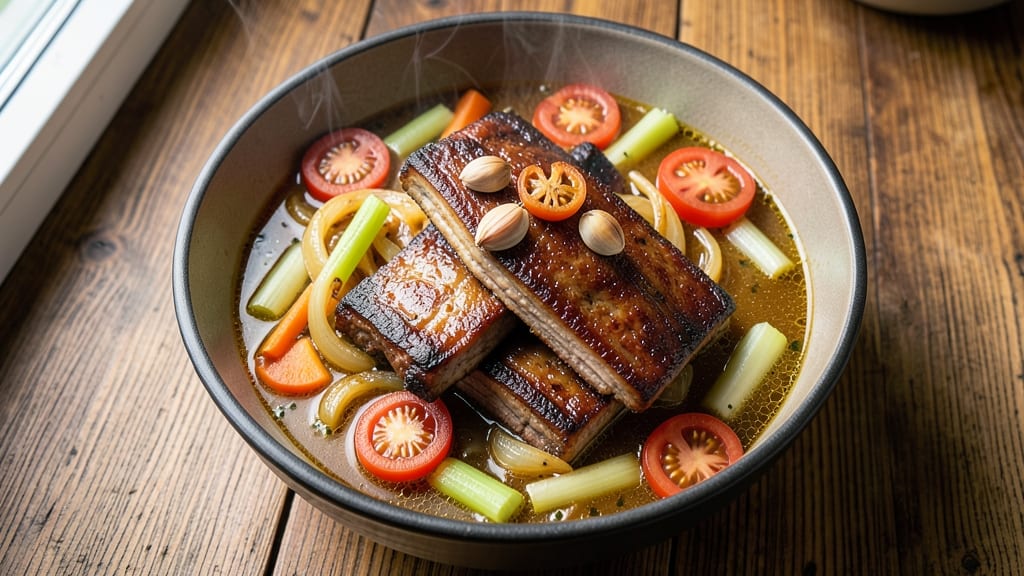
This beef back ribs soup recipe transforms tough cuts into melt-in-your-mouth tenderness through slow simmering and rich broth development. The secret lies in rendering fat first to create a deeply flavorful base, then allowing the ribs to break down over hours into fork-tender pieces.
Every spoonful delivers that satisfying combination of meaty richness and aromatic vegetables that makes soup so comforting.
What sets this recipe apart is the balance of techniques: starting with a high-heat sear to develop deep meaty flavors, then transferring to a pot where the ribs simmer gently with vegetables and herbs.
The slow cooking process not only tenderizes the meat but also infuses the broth with layers of umami and savory depth. This isn't just soup—it's a hearty, restaurant-quality meal in a bowl that comes together with minimal effort after the initial prep.
The result is a soup where each bite offers perfect harmony—tender ribs that practically dissolve on your tongue, vegetables that maintain their texture without becoming mushy, and a broth so rich it coats your spoon.
The aroma alone will have your kitchen filled with warmth and anticipation, while the flavors satisfy even the heartiest appetites. Perfect for chilly evenings or as a make-ahead meal that tastes even better the next day.
Serve with crusty bread to soak up every last drop of that flavorful broth, or pair with a simple green salad to balance the richness. The leftovers reheat beautifully, making this an ideal recipe for feeding a crowd or preparing ahead for busy weeks.
Here's how to create this deeply satisfying bowl of comfort.
Ingredients for beef back ribs soup
Six ingredients transform tough ribs into melt-in-your-mouth comfort—rich, smoky, and deeply satisfying.
| Ingredient | Amount | Notes |
|---|---|---|
| Beef Back Ribs 🥩 | 3 lb | Bone-in, meaty cuts preferred |
| Yellow Onion 🧅 | 1 whole | Large, chopped into chunks |
| Carrots 🥕 | 3 medium | Peeled, cut into 1-inch pieces |
| Celery Stalks 🧅 | 3 whole | Trimmed, cut into 1-inch pieces |
| Garlic Cloves 🧄 | 6 cloves | Peeled, smashed slightly |
| Tomatoes 🍅 | 2 whole | Large, Roma preferred, chopped |
| Potatoes 🥔 | 2 lb | Russet, cut into 1-inch chunks |
| Beef Broth 💧 | 6 cups | Homemade or high-quality store-bought |
| Red Wine 🍷 | 1 cup | Bold dry red, like Cabernet |
| Fresh Thyme 🌿 | 2 sprigs | Or 1 tsp dried thyme |
| Fresh Bay Leaves 🌿 | 2 whole | Remove before serving |
| Olive Oil 🫒 | ½ cup | Extra-virgin for richness |
| Salt 🧂 | 2 tbsp | Kosher or sea salt |
| Black Peppercorns 🌶️ | 1 tbsp | Freshly cracked |
| Tomato Paste 🍅 | 2 tbsp | For depth of flavor |
The ribs are the star here—bone-in, meaty cuts from the butcher section (not pre-trimmed). Costco or local butchers often have the best deals on whole packs. Look for good marbling—those white fat streaks mean more flavor. If you can't find back ribs, spare ribs work too, but they're leaner so add an extra splash of broth. The potatoes are key for heartiness—Russets hold up best during long cooking. Carrots and celery? Baby versions save chopping time, but the regular stuff works just as well.
No red wine? Beef broth with a splash of balsamic does the trick. Fresh thyme is ideal, but dried works at one-third the amount. The tomato paste can be skipped if you're short, but trust me—that two tablespoons makes all the difference. Prefer a smoother texture? Blend half the soup at the end for a velvety finish. The bay leaves add aroma but disappear—no need to fuss over them. And if you're using dried herbs, toast them in the oil first for extra depth. That's where the magic happens.
This soup tastes even better the next day—4-5 days in the fridge, 3 months frozen. I always make a double batch because it disappears fast. Store in airtight containers, and if freezing, portion into individual servings. The broth thickens as it cools, so add a splash of water when reheating. Serve with crusty bread to soak up every last drop of that rich, meaty goodness.
Why You'll Love This Recipe
- I’ll be real: beef ribs aren’t cheap, but this recipe stretches them far. A single pack feeds four, and the veggies stretch the broth so you’re not drowning in meat. Plus, it’s the kind of dish that makes even the simplest meal feel like a celebration.
- One-Pot Magic: Honestly, I swear by this—just toss ribs, onions, carrots, and celery into a pot with broth, and boom. No chopping like a fine-dining chef, no measuring cups of spices. The ribs practically melt off the bone while the veggies soften into that perfect, savory base.
- Rich Depth Fast: Here’s what sold me—the garlic and onions caramelize just enough to coat every bite, while the ribs add this meaty richness that turns a simple soup into something hearty. Not to mention, the carrots and celery add a natural sweetness that balances the boldness.
- Leftovers That Win: Between us, this soup only gets better the next day. I make a double batch on Sundays, and by Wednesday, my family’s begging for seconds. The flavors meld together like a cozy hug—no sad, watery leftovers here.
Step-by-step instructions for slow-simmered beef back ribs soup
Here's how to create a hearty, flavor-packed soup where ribs become fork-tender and broth develops deep, rich layers.
Sear the Ribs for Maximum Flavor
Pat the 3 lb beef back ribs completely dry with paper towels—this ensures a good sear. Heat the 0.5 cup olive oil in a large Dutch oven over medium-high heat until shimmering. Working in batches, add the ribs and sear for 4-5 minutes per side until deeply browned. You're building flavor here, so don't rush this step.
Once all ribs are browned, remove them and set aside. The browned bits left in the pot will dissolve into the broth, creating a rich foundation. Here's the thing—if you skip this searing, your soup will taste flat compared to the deep, caramelized flavor you get from browning the meat first.
Build the Aromatic Base
In the same Dutch oven, add the chopped 1 whole yellow onion, 3 medium carrots, 3 whole celery stalks, and 6 cloves garlic cloves. Cook for 5-6 minutes, stirring occasionally, until the vegetables soften and begin to caramelize slightly. This process releases their natural sugars, adding sweetness to your soup.
Stir in the 2 tbsp tomato paste and cook for another 1 minute until fragrant. The tomato paste adds depth and prevents the broth from becoming cloudy. Pour in the 1 cup red wine and scrape up any browned bits from the bottom of the pot—this is where all the flavor lives. Let it simmer for 2-3 minutes until the wine reduces by half.
Simmer the Vegetables and Potatoes
Add the 6 cups beef broth, 2 sprigs fresh thyme, and 2 whole fresh bay leaves to the pot. Bring to a gentle boil, then reduce heat to low and add the 2 lb potatoes cut into 1-inch chunks. The potatoes will absorb some of the broth's richness as they cook, creating a satisfying texture contrast.
Return the seared ribs to the pot and add the chopped 2 whole tomatoes. Partially cover the pot and let everything simmer gently for 45 minutes. You're looking for the ribs to become tender enough that they pull away from the bone easily when tested with a fork. The broth should be developing a rich, reddish color from the wine and tomato paste.
Finish and Season to Perfection
After 45 minutes, check the ribs for tenderness. If they're not quite there, continue simmering for another 15-20 minutes. Once the ribs are fork-tender, remove them from the pot and let them cool slightly. Using two forks, carefully pull the meat from the bones, discarding any large pieces of cartilage or gristle.
Return the meat to the pot and stir in the 2 tbsp salt and 1 tbsp freshly cracked black peppercorns. Taste the broth and adjust seasoning if needed—this is where you'll notice if you need more salt. The soup should be rich but not overly salty. Remove the thyme sprigs and bay leaves before serving, as they're meant for flavor during cooking, not eating.
Serve with Crusty Bread and Garnishes
Ladle the soup into bowls, making sure each serving gets a generous portion of meat and potatoes. The broth should be rich and flavorful, with the ribs falling apart easily. Serve immediately with crusty bread to soak up every last drop of that delicious broth.
This soup tastes even better the next day as the flavors continue to meld. If you have leftovers, store them in the refrigerator for up to 3 days or freeze for up to 3 months. The ribs will continue to tenderize in the broth, making each bowl even more comforting.
Pro Tips For Making Beef Back Ribs Soup
- Sear the Ribs First: I used to toss raw ribs straight into the pot and wondered why the broth never tasted rich. Brown the ribs in batches over medium-high heat—3-4 minutes per side—before adding liquid. The crust locks in flavor and deepens the soup’s base.
- Cut Ribs Against the Bone: Slice the ribs into 1-2 inch chunks, cutting through the bone for even cooking. I learned this the hard way—whole ribs left tough, chewy pieces. A sharp knife and a little patience make all the difference.
- Salt the Pot Early: Add salt and aromatics (onion, carrot, celery) to the pot before the ribs go in. The salt penetrates the meat better this way, and the veggies soften faster. I skip this and end up with bland broth—don’t repeat my mistake.
- Simmer Low and Long: After the initial boil, drop the heat to a gentle simmer (small bubbles, occasional skimming). Ribs need 2-3 hours to fall apart—rushing it leaves them stringy. Sounds tedious, but the payoff is melt-in-your-mouth texture.
Regional styles of this dish
Southern BBQ-Inspired Style
In the South, this soup gets a smoky twist by adding ¼ cup BBQ sauce (like Sweet Baby Ray's) with the wine. I also swap the red wine for ½ cup apple cider vinegar to balance the sweetness.
The key is using slow-cooked smoked paprika—just 1 tsp—to mimic the flavor of pulled pork without overpowering. Serve with cornbread instead of regular bread for that true Southern experience. 🍖
Italian-Inspired Ribollita
For an Italian-inspired version, replace the red wine with 1 cup dry white wine and add 1 cup canned crushed tomatoes instead of fresh. Stir in ½ cup chopped kale or spinach at the end for a ribollita-style finish.
I also add ½ tsp red pepper flakes and a splash of white wine vinegar to brighten the flavors. This version pairs beautifully with crusty focaccia. 🍷
French-Inspired Bouillon
Transform this into a French-style bouillon by adding 1 sprig rosemary with the thyme and replacing the red wine with 1 cup dry vermouth. For extra richness, stir in 2 tbsp Dijon mustard and 1 tbsp Worcestershire sauce at the end.
Garnish with chopped parsley and a drizzle of truffle oil for a refined touch. Serve with baguette slices for dipping. 🥖
Mexican-Inspired Carnitas Soup
Give it a Mexican flair by adding 1 tsp ground cumin, 1 tsp smoked paprika, and ½ tsp oregano with the other spices. Replace the red wine with 1 cup beer (like Mexican lager) and add 1 diced chipotle pepper in adobo for heat.
Top with avocado slices, cilantro, and lime wedges before serving. This version is perfect with warm tortillas. 🌶️
German-Inspired Sauerbraten Style
For a German-inspired twist, replace the red wine with 1 cup red wine vinegar and add 1 tbsp juniper berries (lightly crushed) with the thyme. Use 1 lb sauerkraut instead of potatoes, and add it with the ribs in the final 30 minutes of cooking.
Finish with 1 tbsp caraway seeds toasted in the oil at the start. Serve with pretzel buns for dipping. 🥨
Nutrition facts
Frequently asked questions
Why does the recipe call for searing the ribs before cooking?
Searing creates a flavorful crust (the Maillard reaction) that dissolves into the broth, adding deep, meaty richness. Skipping this step means your soup will taste more like boiled meat than rich, caramelized comfort food. The browned bits in the pot are pure flavor gold!
Can I use spare ribs instead of back ribs?
Yes, but they're leaner so add ½ cup extra beef broth and simmer 15-20 minutes longer. Spare ribs also have more connective tissue, which breaks down into gelatin that thickens the broth beautifully. Just don't skip the searing step!
How do I know when the ribs are tender enough?
Test with a fork after 45 minutes—if the meat pulls away easily from the bone, they're done. For extra tenderness, continue simmering 15-20 minutes more. The ribs should practically fall apart when you lift them from the broth. Pro tip: The broth will turn cloudy when the collagen breaks down!
What if I don't have red wine?
No problem! Use 1 cup beef broth + 2 tbsp balsamic vinegar for depth, or 1 cup apple cider for a sweeter balance. The key is acidity to brighten the broth. If you're avoiding alcohol completely, ½ cup tomato juice + 1 tbsp soy sauce works too.
Can I make this soup in a slow cooker?
Brown the ribs first, then transfer everything to the slow cooker and cook on low for 6-8 hours or high for 3-4 hours. The ribs will become even more tender from the long, gentle cooking. Just add ½ cup water if the broth gets too thick during cooking.