
Soups & Stews
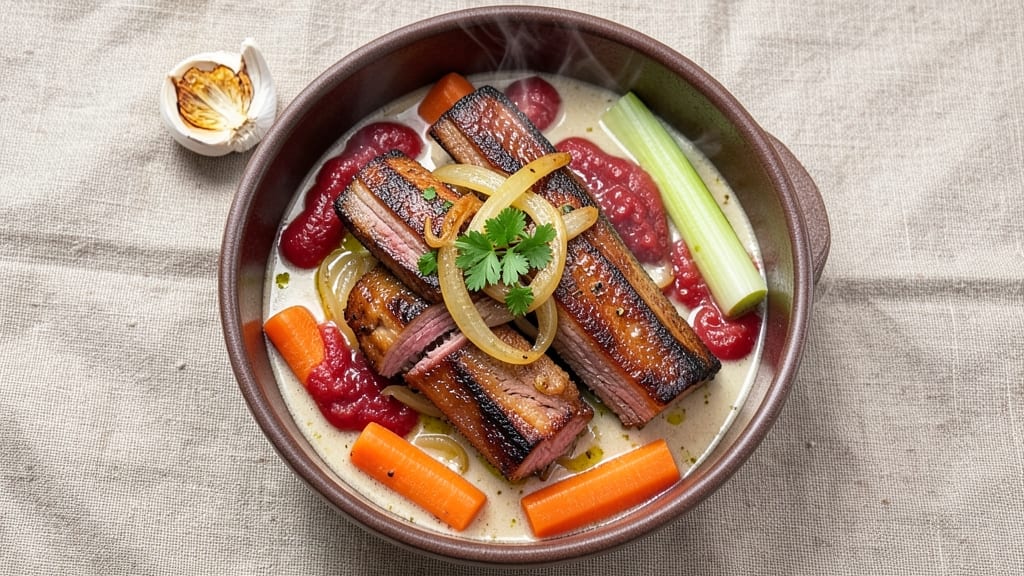
This short rib soup recipe delivers restaurant-quality depth from slow-cooked bones that melt into rich, velvety broth. The secret lies in searing the ribs first—creating a flavorful crust that dissolves into the broth during hours of simmering, transforming tough cuts into tender, shatteringly tender pieces.
Every spoonful carries layers of umami from the bones, deepened by aromatic vegetables and herbs that infuse the liquid with complexity.
The process requires patience, but the result is worth every minute: a soup so rich it coats your spoon, with ribs that fall apart at the touch.
You'll start with a deep, caramelized sear, then braise the ribs until they're fork-tender, all while building a broth that develops into a luxurious, velvety base. The vegetables—carrots, celery, onions—soften just enough to release their natural sweetness without losing texture, creating perfect balance.
What sets this apart is how the flavors evolve: the initial sharpness of the seared meat mellows into deep, savory richness as it cooks, while the broth reduces to concentrate its intensity. The final touch—fresh herbs and a swirl of cream—adds brightness that cuts through the richness without overpowering it.
This isn't just soup; it's a hearty, comforting meal that feels like a hug in a bowl.
Serve it with crusty bread to soak up every last drop of that precious broth, or pair it with a simple green salad to balance the richness.
The leftovers only get better as the flavors meld further, making this the perfect make-ahead dish for busy weeks. Let's get started on creating something truly special.
Ingredients for short rib soup
Six ingredients make this soup sing—rich ribs, bold wine, and aromatic veggies.
| Ingredient | Amount | Notes |
|---|---|---|
| Beef Short Ribs 🥩 | 3 lb | Bone-in, cut into 1-inch pieces |
| Yellow Onion 🧅 | 2 whole | Chopped, medium size |
| Carrots 🥕 | 4 whole | Peeled, cut into 2-inch chunks |
| Celery Stalks 🌿 | 4 whole | Chopped, including leaves |
| Garlic Cloves 🧄 | 6 cloves | Smashed, not minced |
| Tomato Paste 🍅 | ½ cup | Smooth, not chunky |
| Red Wine 🍷 | 1 cup | Bold, dry variety |
| Beef Broth 💧 | 6 cups | High-quality, low-sodium |
| Fresh Thyme 🌿 | 2 sprigs | Plus 1 tbsp leaves |
| Fresh Bay Leaves 🌿 | 2 whole | For deep flavor |
| Black Peppercorns 🌶️ | 1 tbsp | Freshly cracked |
| Kosher Salt 🧂 | 1 ½ tbsp | For seasoning |
| Heavy Cream 🥛 | ½ cup | Full-fat for richness |
| Fresh Parsley 🌿 | ¼ cup | Chopped, for garnish |
| Olive Oil 🫒 | ½ cup | For searing |
The ribs are non-negotiable—bone-in, chuck-style gives the most flavor. Costco or local butchers usually have them pre-cut, but if you're buying whole, ask for the chuck roast section. Look for good marbling (white flecks in the meat) and avoid anything grayish or slimy. Fresh thyme and bay leaves are worth hunting down at Trader Joe's or your local farmers market—they make all the difference. The beef broth? Store-brand usually works, but if you've got a high-end brand like Kettle & Fire, use that. Skip the low-sodium kind unless you're watching salt intake.
No red wine? Beef broth with a splash of balsamic works in a pinch, but you'll miss that deep fruitiness. Fresh thyme out of season? Dried works at one-third the amount, but toast it first in a dry pan for 30 seconds to wake up the flavor. The tomato paste can be that squeeze tube from Trader Joe's—it's perfect for small amounts and lasts forever. Carrots and celery? Baby versions save chopping time, but regular works too. The ribs can be frozen if you're prepping ahead—just thaw overnight in the fridge before cooking.
This soup only gets better with time. 4-5 days in the fridge is ideal—flavors meld beautifully. For longer storage, freeze portions for up to 3 months. I like to portion it into containers so lunches are ready to grab. The cream adds richness, but if you prefer it lighter, half-and-half or coconut milk work great. Always add the cream at the end—it breaks if simmered too long. Garnish with parsley right before serving, or it'll wilt in the hot broth.
Why You'll Love This Recipe
- Minimal Chopping Required: I swear by this—just dice the onions, roughly chop the carrots and celery, and smash those garlic cloves. No fancy knife work, no stress. The ribs do all the heavy lifting once they hit the pot.
- Rich Without Effort: That slow-braised beef turns tender, falling off the bone while the veggies soak up the deep, savory broth. Honestly, I’ve made simpler soups that didn’t hit this hard—this one’s ridiculously satisfying with almost no extra work.
- Leftovers That Shine: The broth thickens overnight, making it even better the next day. I freeze portions for quick meals—just reheat, add a splash of water, and boom, restaurant-quality soup without the fuss.
- Budget-Friendly Luxury: Short ribs feel fancy, but they stretch across multiple meals. Between us, this recipe turns a $15 cut into five hearty servings—way better value than takeout or pre-made soups. Plus, the veggies bulk it up without breaking the bank.
Step-by-step instructions for slow-cooked short rib soup
Here's how to transform tough short ribs into melt-in-your-mouth richness with layers of umami flavor.
Sear the Short Ribs for Deep Flavor
Heat 0.5 cup olive oil in a large Dutch oven over medium-high heat until shimmering. Working in batches, add the 3 lb beef short ribs in a single layer—don't crowd the pan. Sear for 3-4 minutes per side until deeply browned and crispy in spots. This caramelization builds the soup's foundation.
Transfer the seared ribs to a plate as they cook. You want them to develop a rich crust before we add liquid. If your pan gets too crowded, reduce the heat slightly but keep it hot enough to maintain that sear. This step is worth the patience—it's what makes the difference between good soup and extraordinary soup.
Build the Aromatic Base
In the same Dutch oven, add the 2 chopped yellow onion, 4 chopped celery stalks, and 4 peeled carrot chunks. Cook for 5-6 minutes, stirring occasionally, until the vegetables soften and begin to caramelize. Add the 6 smashed garlic cloves and cook for another 30 seconds until fragrant.
Here's the thing—don't rush this step. The vegetables should be tender but still hold their shape. If they turn to mush, you'll lose that sweetness that balances the rich meat. Add 1 tbsp black peppercorns and 1.5 tbsp kosher salt now, letting them toast slightly in the oil for 30 seconds to release their essential oils.
Deglaze and Simmer the Bones
Pour in the 1 cup red wine and scrape up all those browned bits from the bottom of the pan—this is where the magic happens. Let the wine simmer for 2-3 minutes until reduced by half. Add the 0.5 cup tomato paste, stirring until fully incorporated and the mixture darkens slightly.
Now return all the seared short ribs to the pot. Pour in the 6 cups beef broth, add the 2 sprigs fresh thyme and 2 whole fresh bay leaves, and bring to a gentle boil. Reduce heat to low and cover partially. Simmer for 2.5 hours, skimming any foam that rises to the surface. This slow cooking breaks down the collagen in the bones and meat, creating that silky texture we want.
Finish with Cream and Fresh Herbs
After 2.5 hours, remove the short ribs and strain the broth through a fine-mesh sieve into a clean pot. Discard the vegetables and herbs. Return the broth to the heat and stir in the 0.5 cup heavy cream. Simmer gently for 5 minutes—just enough to warm through without curdling the cream.
Shred the short ribs using two forks, removing any large bone fragments. Return the meat to the broth and adjust seasoning if needed. The soup should be rich but balanced—you might need just a pinch more salt or a crack of pepper. Stir in the 0.25 cup chopped fresh parsley right before serving to brighten the flavors.
Serve with Crusty Bread
Ladle the soup into bowls and serve immediately. Each spoonful should deliver tender, falling-apart meat, velvety broth, and layers of umami flavor. The cream adds richness without overpowering, while the fresh parsley cuts through the richness with a bright finish.
For the full experience, serve with warm crusty bread to soak up every last drop of that luxurious broth. The soup tastes even better the next day as the flavors meld further, but the ribs will be even more tender—so enjoy it while they're at their peak!
Pro Tips For Making Short Rib Soup
- SEAR THE RIBS HARD: Get that Dutch oven smoking hot—we’re talking 425°F or higher—before adding the short ribs. I used to skimp on this, and the soup would taste more like stewed beef than rich, caramelized comfort. Let them brown 4-5 minutes per side until deep, crusty black spots form. That’s where the flavor hides.
- CUT ONIONS SMALLER THAN YOU THINK: Dice those yellow onions into 1/4-inch pieces, not 1/2-inch chunks. I learned this the hard way—big onion pieces turn to mush and make the soup taste watery. Tiny pieces dissolve into the broth, adding sweetness without losing texture. Same goes for carrots and celery: julienne them thin.
- DEGLAZE WITH RED WINE FIRST: After searing the ribs, hit the pot with 1/2 cup red wine (or broth if you’re skipping alcohol) and let it bubble for 2 minutes. Then add the onions, carrots, and celery. The wine lifts the browned bits and softens the veggies faster than starting with just broth. Skip this, and you’re left scraping burnt bits off the bottom later.
- SIMMER LOW AND LONG: Once everything’s in the pot, drop the heat to a gentle simmer—barely any bubbles breaking the surface—and walk away for 2.5 hours. I used to babysit it, and the ribs stayed tough. Cover it loosely (so moisture escapes) and let the collagen melt into the broth. The ribs will fall apart when you’re ready to shred them.
Pro cooking tips for perfect results
Sear Like a Pro
Don't rush the searing step—this is where the magic happens. Use a large Dutch oven (I love my All-Clad) and work in batches to avoid crowding. The ribs should develop a deep mahogany crust on all sides, which adds incredible depth to the broth.
For extra flavor, I like to add 1 tablespoon tomato paste to the pan right after searing—it caramelizes beautifully and adds umami complexity. 🔥
Wine Reduction Matters
After searing, deglaze with 1 cup dry red wine (I prefer Cabernet Sauvignon or Malbec) and let it reduce by half before adding tomato paste. This concentrated wine adds richness that store-bought broth can't match.
If you're using a bold, tannic wine, the soup will have more depth, while a fruity one adds brightness. Never skip this step—it's the flavor bridge between the seared meat and broth.
Low and Slow Wins
The 2.5-hour simmer at low heat is non-negotiable for tender ribs. I use a meat thermometer to check doneness—when the ribs reach 203°F, they're perfect. For even more tenderness, I sometimes add 1 cup water after the initial hour to keep the broth from reducing too much.
The key is patience—rushing leads to tough meat and weak flavor.
Straining for Silky Texture
After simmering, strain the broth through a fine-mesh sieve to remove all solids. This creates an incredibly smooth, velvety base. I like to press the vegetables with a spoon to extract every last drop of flavor.
For extra richness, I sometimes add 1 teaspoon butter to the broth when reheating—it melts beautifully and adds another layer of depth. ⚡
Cream Timing is Critical
Always add the ½ cup heavy cream at the very end—even 5 extra minutes of simmering can cause it to curdle. Warm the cream separately in a small saucepan over low heat until just steaming, then whisk it into the broth.
For a lighter option, I've used ½ cup coconut milk with great results. The cream should melt smoothly into the broth without breaking.
Garnish for Freshness
The final touch is ¼ cup chopped fresh parsley, added just before serving. This bright herb cuts through the richness and adds a pop of color. For extra flair, I sometimes add 1 teaspoon grated Parmesan or a drizzle of truffle oil—both elevate the dish to restaurant quality.
Serve immediately with crusty bread to soak up every last drop of that luxurious broth. 💫
Nutrition facts
Frequently asked questions
Can I use frozen short ribs instead of fresh?
Yes, but thaw them completely in the refrigerator overnight first. Never use cold frozen ribs—they'll cook unevenly and may stay tough. For best results, pat them dry before searing to get that perfect crust. If you're short on time, you can thaw them in cold water (sealed in a bag) for 2-3 hours, but always drain and dry them well before cooking.
How do I make this soup in a slow cooker?
Transfer the seared ribs and all ingredients (except cream and parsley) to your slow cooker. Cook on low for 8 hours or high for 5-6 hours. After cooking, strain the broth, stir in the cream, and shred the ribs. The slow cooker method works well but may need more liquid—add 1 extra cup of broth if needed. The ribs will be even more tender this way!
Why does my soup taste too salty?
This usually happens when using high-sodium broth or adding too much salt during cooking. To fix it, add 1 cup cold water to dilute the broth, then simmer for 10 minutes to reduce slightly. For prevention, use low-sodium broth and taste as you go—adding salt gradually is better than overdoing it. The ribs themselves often carry enough natural saltiness.
Can I make this soup ahead of time?
This soup tastes even better the next day as flavors deepen. Store in an airtight container in the fridge for up to 4-5 days. For longer storage, freeze portions for 3 months. Reheat gently on the stove, adding a splash of water if the broth seems too thick. The ribs will be even more tender after resting!
What if I don't have red wine?
No problem! Use 1 cup beef broth + 1 tablespoon balsamic vinegar for depth, or 1 cup beef broth + 1 teaspoon soy sauce for umami. For a non-alcoholic option, try 1 cup apple cider + 1 tablespoon brown sugar. The wine adds complexity, but these substitutes work well in a pinch. The tomato paste will still help bridge the flavors.