
Soups & Stews
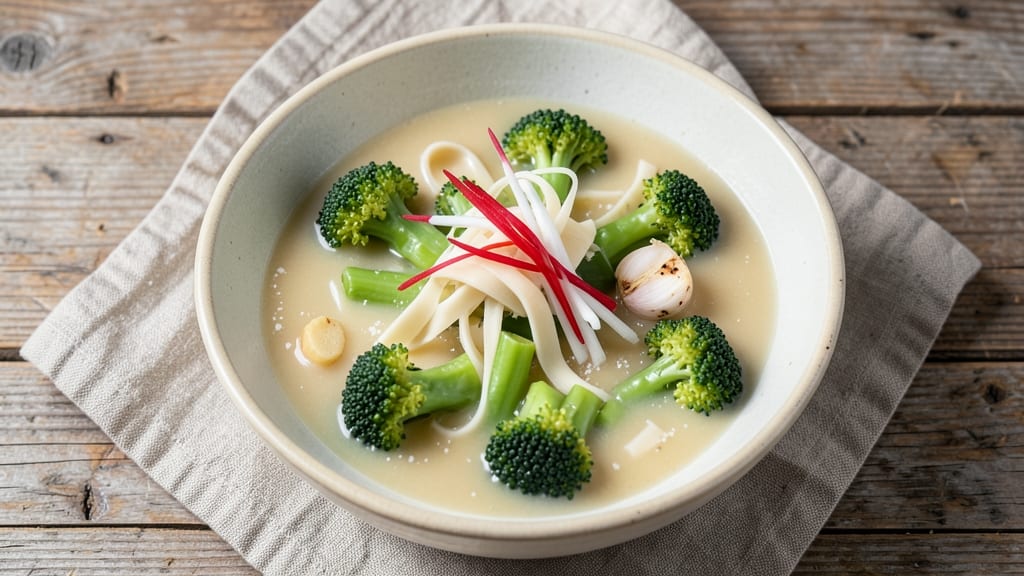
This Asian broccoli soup recipe delivers a fragrant, umami-rich broth that transforms simple ingredients into a restaurant-quality dish. The secret lies in a balanced miso-ginger base that builds deep flavor while keeping the soup light and comforting.
I developed this vegetarian version after discovering how well tofu ribbons hold their shape and absorb the aromatic broth—creating a silky texture that pairs perfectly with crisp broccoli florets.
The broth starts with a sautéed aromatics foundation—garlic, ginger, and scallions—then simmers with white miso for that signature savory depth. Silken tofu adds protein without overpowering the delicate vegetables, while fresh ginger and chili flakes at the end brighten each spoonful.
This soup is naturally gluten-free and easily adaptable for vegan diets by using tamari instead of soy sauce.
What makes this recipe special is its versatility—serve it as a light main course with steamed rice or as a hearty appetizer with crispy noodles. The silky tofu ribbons melt in your mouth while the broccoli maintains satisfying crunch.
Garnish with sesame oil and green onions for freshness, and you'll have a soup that's both nutritious and deeply satisfying.
Perfect for chilly evenings or when you crave something comforting yet healthy, this soup comes together in under 45 minutes with minimal prep. The miso-ginger broth develops even more flavor as it sits, making it ideal for meal prep. Let's create this aromatic, nourishing bowl of goodness.
Ingredients for asian broccoli soup
These simple yet aromatic ingredients create a restaurant-quality Asian broccoli soup with depth and comfort.
| Ingredient | Amount | Notes |
|---|---|---|
| Silken Tofu 🥬 | 14 oz | Drained and cut into ribbons |
| Broccoli Florets 🥦 | 6 cups | Fresh, cut into bite-sized pieces |
| White Miso Paste 🧈 | 2 tbsp | High-quality, preferably organic |
| Fresh Ginger 🧄 | 2 tbsp | Finely grated, aromatic variety |
| Garlic Cloves 🧄 | 4 cloves | Minced, fresh preferred |
| Scallions 🧅 | 3 whole | Thinly sliced, white and green parts |
| Vegetable Broth 💧 | 4 cups | Low-sodium, homemade preferred |
| Sesame Oil 🫒 | 1 tbsp | Toasted, for finishing |
| Red Chili Flakes 🌶️ | ½ tsp | Adjust for heat preference |
| Green Onions 🧅 | 3 whole | Thinly sliced, for garnish |
| Soy Sauce 🥄 | 1 tbsp | Tamari for gluten-free option |
| Rice Vinegar 🍶 | 1 tbsp | For brightness |
| Sesame Seeds 🌰 | 1 tsp | Toasted, for garnish |
| Olive Oil 🫒 | 2 tbsp | For sautéing aromatics |
| Sea Salt 🧂 | 1 tsp | Diamond Crystal preferred |
The miso paste is the flavor anchor here—look for white miso in the refrigerated section of stores like Whole Foods or Trader Joe's for that authentic umami punch. Fresh ginger and garlic are non-negotiable; pre-minced jars lack the aromatic intensity. I always grab the organic ginger root at Sprouts—it's more vibrant and lasts longer. For the tofu, Kite Hill or Nasoya brands work perfectly, but any silken tofu will do. The broccoli should be bright green and firm; avoid anything with yellowing florets—it's a flavor killer.
No white miso? Red miso at half the amount works in a pinch, though it'll be darker. Fresh ginger too pungent? Dried ginger powder at one-third the amount gets you close, but it lacks that fresh zing. Short on scallions? Green onions work fine, just use the white parts for the base and green for garnish. The vegetable broth can be store-bought (I like Pacific Foods or Imagine brands), but homemade is always better. For extra depth, add a splash of fish sauce if you're not keeping it vegetarian, or soy sauce for a similar umami boost.
This soup tastes even better the next day—flavor develops as it sits. Store leftovers in an airtight container for up to 4 days in the fridge. Freeze portions in ice cube trays for easy single servings—just thaw and reheat gently. The tofu ribbons will get slightly softer when reheated, but that's part of the charm. For meal prep, make a double batch—it reheats beautifully and keeps for 3 months frozen. Garnish with sesame seeds and chili flakes right before serving to keep everything fresh and vibrant.
Why You'll Love This Recipe
- Here’s what sold me: that first spoonful of soup where the garlic hits your tongue, then the ginger lingers like a warm hug, and then—the miso. It’s not just salty; it’s this deep, funky, savory punch that makes you go back for more. I’ll be real: I’ve skipped dinner for this soup alone.
- Few Ingredients, Big Payoff: I swear by this recipe when I’m staring at a half-empty fridge. Silken tofu, miso, and fresh ginger—just five core things—and you’ve got a soup that tastes like a whole restaurant’s worth of effort. The broccoli florets stay crisp-tender, the tofu blends into creamy ribbons without a trace of chalkiness, and the miso paste does all the heavy lifting for depth.
- Umami Bomb: Here’s what sold me: that first spoonful of soup where the garlic hits your tongue, then the ginger lingers like a warm hug, and then—the miso. It’s not just salty; it’s this deep, funky, savory punch that makes you go back for more. I’ll be real: I’ve skipped dinner for this soup alone.
- Lunchbox Hero: Between us, this is my go-to for meal prep. The flavors only get better after a day in the fridge, and it reheats like a dream. Pack it in a thermos for work, or let the kids assemble their own bowls with extra ginger or tofu. (Yes, even on a Tuesday night.)
Step-by-step instructions for fragrant ginger-garlic broccoli soup
This method builds layers of flavor through precise timing and technique—think aromatic base, umami depth, and silky texture.
Prepare the Silken Tofu Ribbons
Drain the 14 oz silken tofu thoroughly by wrapping it in a clean kitchen towel and pressing gently between your palms for 2 minutes. This removes excess moisture that would dilute your soup. Using a sharp chef's knife, cut the tofu into ¼-inch thick ribbons—think delicate noodles rather than thick strips. The thinner the ribbons, the more they'll absorb the broth's flavors while maintaining their silky texture.
Transfer the tofu ribbons to a small bowl and set aside. I like to keep them covered with a damp paper towel until ready to use—this prevents them from drying out before they hit the simmering broth. The tofu should be ready to cook immediately after preparation, as prolonged exposure to air can make it rubbery.
Build the Aromatic Base
Heat the 2 tbsp olive oil in a large pot over medium heat until shimmering but not smoking—you should see tiny bubbles forming around the edges. Add the 2 tbsp finely grated fresh ginger and 4 cloves minced garlic cloves, stirring constantly for 1-2 minutes until the mixture becomes fragrant and the raw garlic scent disappears. This is your flavor foundation, so don't rush it.
Next, add the 3 whole scallions (sliced into ½-inch pieces) and cook for another 30 seconds, stirring frequently. The scallions should soften slightly but remain vibrant. Here's where it gets good: sprinkle in the 1 tsp sea salt and 0.5 tsp red chili flakes, stirring to coat the aromatics evenly. This creates a balanced flavor profile right from the start.
Develop the Umami Broth
Reduce the heat to medium-low and add the 2 tbsp white miso paste, stirring vigorously to dissolve completely. The miso should blend smoothly into the oil—if it clumps, add 1 tablespoon of the vegetable broth to help it incorporate. Pour in the 4 cups vegetable broth and bring to a gentle simmer, which should take about 3-4 minutes. The broth should bubble softly at the edges but not boil vigorously.
Simmer uncovered for 8-10 minutes, allowing the flavors to meld. You'll notice the broth deepen in color and develop a rich, almost nutty aroma from the miso. This is the moment the soup transforms from simple to complex. If you notice any foam forming on top, skim it off with a spoon—it can make the broth cloudy.
Add Vegetables and Finish
Add the 6 cups broccoli florets to the simmering broth and cook for 4-5 minutes until they're bright green and just tender—you want them to retain a slight bite. Stir gently to prevent the florets from breaking apart. Meanwhile, add the 1 tbsp soy sauce and 1 tbsp rice vinegar to the broth, stirring well to distribute evenly. The vinegar adds brightness that cuts through the richness of the miso.
Just before removing from heat, add the silken tofu ribbons and cook for 1-2 minutes until they're heated through. The tofu should be warm but still hold its shape—overcooking will make it mushy. Taste the broth and adjust seasoning if needed, adding a pinch more salt or chili flakes to taste. Remove from heat immediately to preserve the vibrant flavors.
Garnish and Serve
Divide the soup among 4 bowls, ladling in the broth and tofu ribbons evenly. Drizzle each serving with 1 tsp toasted sesame oil and sprinkle with 1 tsp toasted sesame seeds and ½ of the 3 whole green onions (thinly sliced). The sesame oil adds a nutty finish, while the sesame seeds provide texture contrast. Serve immediately while the broth is steaming hot—this dish tastes best fresh from the pot.
For an extra touch, I like to serve this soup with a side of steamed jasmine rice to soak up the flavorful broth. The combination of the silky tofu, tender broccoli, and aromatic broth creates a harmonious balance that's both comforting and sophisticated. Each spoonful delivers layers of ginger's warmth, garlic's depth, and the umami richness of the miso.
Pro Tips For Making Asian Broccoli Soup
- STIR THE MISO LAST: White miso paste burns faster than you’d think—it’s got sugar in there. Simmer your broth with ginger and garlic until the aromatics smell deep and fragrant (about 5 minutes), then lower the heat to medium-low before stirring in the miso. If you rush it, you’ll end up with a bitter, off-flavor instead of that rich umami depth.
- CUT TOFU IN THIN SLICES: Silken tofu’s texture is delicate, so don’t toss it in whole. Slice it into ½-inch cubes or thin strips—this ensures it soaks up the broth’s flavor without turning to mush. (Yes, even if it looks weird, it works.)
- BLANCH BROCCOLI FIRST: Toss broccoli florets in boiling water for 30 seconds before adding them to the soup. This stops them from turning limp and gray in the broth. Drain, rinse with cold water, and they’ll stay crisp—no sad, soggy bites.
- GARLIC NEEDS A HEAD START: Smash those garlic cloves with the flat side of your knife before adding them to the pot. This releases more flavor and prevents them from floating around like tiny, useless islands. (I learned this the hard way—burned garlic is a tragedy.)
Wine and beer pairings for this recipe
Japanese Sake Pairing
For this delicate, umami-rich soup, I reach for a dry junmai sake like Dassai 17—its crisp acidity and subtle sweetness mirror the ginger's warmth while cleansing the palate between spoonfuls.
The sake's clean finish prevents the miso's intensity from overwhelming your taste buds, making each sip feel like a breath of fresh air. Serve slightly chilled (45-50°F) to enhance the broth's aromatic qualities. 🍶
Korean Rice Wine
Swap sake for makgeolli (Korean rice wine) if you prefer a creamy, slightly effervescent pairing. The fermented rice flavor complements the tofu's silkiness, while its mild sweetness balances the soup's savory depth.
Look for Hwaryong brand—it's widely available and has a smooth, nutty profile that won't compete with the ginger's zing. Serve at room temperature to let its natural carbonation dance on your tongue.
Light Asian Lager
For beer lovers, a crisp Japanese lager like Asahi Super Dry or Sapporo works beautifully. The beer's subtle hop bitterness cuts through the soup's richness, while its light body won't overpower the delicate tofu and broccoli.
The low alcohol content (4.5%) ensures the soup remains the star of the meal. Serve well-chilled (38-42°F) to highlight its refreshing qualities.
Sparkling Lychee Wine
Elevate your soup experience with a sparkling lychee wine like Chateau Lafitte Rosé—its floral notes and effervescence create a luxurious contrast to the earthy miso. The lychee's natural sweetness complements the ginger's warmth, while the bubbles keep your palate fresh.
This pairing feels especially festive and works perfectly for dinner parties. Serve at 45°F to preserve its lively effervescence.
Non-Alcoholic Options
Don't drink alcohol? No problem! A sparkling jasmine tea (chilled) or yuzu soda from Japan adds brightness without alcohol. For something more substantial, try ginger beer—its spicy kick enhances the soup's ginger notes while keeping things refreshing.
I love Feather Ginger Beer for its clean, crisp profile that won't overpower the delicate flavors.
Nutrition facts
Frequently asked questions
Can I substitute tofu with another protein?
For a meaty texture, try shredded chicken or thinly sliced mushrooms (like shiitake). If keeping it plant-based, edamame or tempeh cubes work beautifully. Just adjust cooking times—mushrooms need 5-6 minutes while tofu only needs 1-2 minutes to warm through.
How do I make this soup spicier?
Double the red chili flakes to 1 tsp and add ½ tsp of sriracha when serving. For heat lovers, stir in 1 tsp of gochujang (Korean chili paste) with the miso paste. Always taste first—the broth can be adjusted after simmering, but the tofu and broccoli won't absorb extra heat well once cooked.
Can I make this soup ahead of time?
Yes! The flavors actually improve overnight. Store in an airtight container for up to 4 days in the fridge. Reheat gently on low heat or in the microwave until steaming. For best texture, add fresh tofu ribbons when reheating—store them separately in a damp towel to prevent drying.
What if I don't have white miso?
Use red miso at half the amount (1 tbsp) for deeper color, or swap for 1 tbsp soy sauce + 1 tsp nutritional yeast for umami. For a lighter taste, 1 tbsp coconut aminos works in a pinch. The broth will be less complex but still delicious—just add an extra pinch of salt to compensate.
How can I make this soup gluten-free?
This recipe is already gluten-free! Just ensure your miso and soy sauce are certified gluten-free (look for tamari). Double-check your vegetable broth label—many contain wheat. For extra safety, use a dedicated gluten-free broth. The tofu and other ingredients are naturally gluten-free, so no other substitutions are needed.