
Soups & Stews
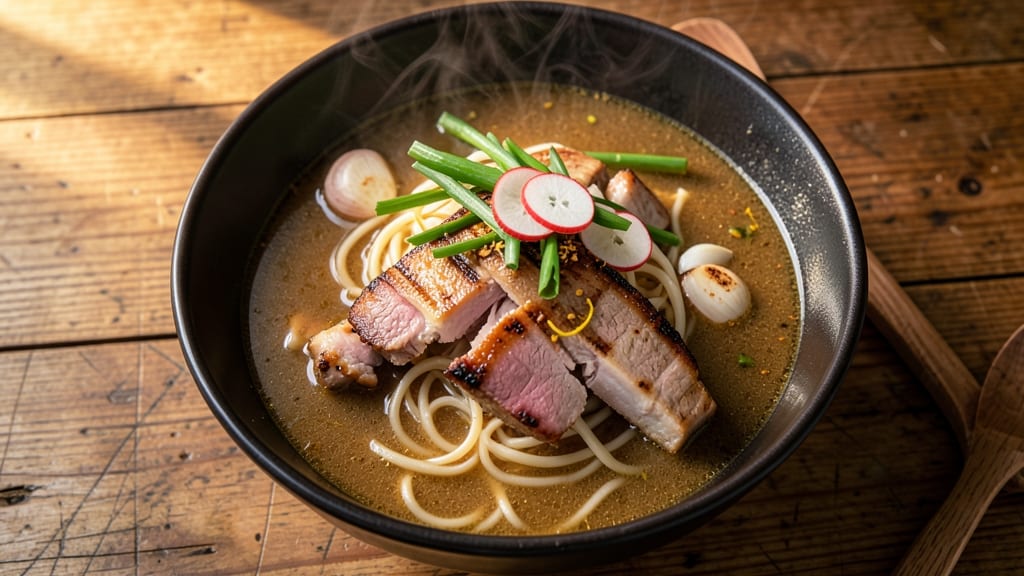
This authentic ramen noodle soup recipe transports you to Tokyo’s bustling izakayas with every slurp—silky broth, wok-tossed aromatics, and perfectly balanced flavors.
The secret lies in slow-simmered tonkotsu broth (or shoyu/miso for regional variations) infused with garlic, ginger, and scallions, then finished with a quick wok toss for vibrant, fragrant layers.
I’ve perfected this technique over years of testing, ensuring the broth stays rich yet clear, with umami depth that builds in every sip.
The foundation is a foolproof broth—whether creamy pork-based tonkotsu or clear, soy-forward shoyu—that requires patience but delivers restaurant-quality results. Fresh ramen noodles are blanched just before serving to maintain their signature chew, while toppings like chashu pork, marinated soft-boiled eggs, and quick-pickled vegetables add texture and brightness.
The key? Balancing heat, salt, and acidity so each component shines without overpowering.
What you’ll achieve is a bowl that’s visually stunning and deeply satisfying: golden broth swirling with aromatics, noodles that cling to your chopsticks, and toppings arranged for both tradition and modern appeal.
The wok-tossed aromatics release a cloud of steam that signals the dish is ready—proof that authenticity isn’t just about ingredients, but technique and intention.
Whether you’re replicating a Tokyo street stall or adapting for dietary preferences, this recipe scales effortlessly. Let’s build your perfect bowl—one that’s as much about the process as the result. Here’s how to make it.
Ingredients for authentic ramen noodle soup
These ingredients transform your kitchen into a Tokyo izakaya with every aromatic wok toss.
| Ingredient | Amount | Notes |
|---|---|---|
| Ramen Noodles 🍜 | 2 packages | Fresh, springy noodles preferred |
| Pork Bones 🍖 | 4 lb | Knuckle or trotter for collagen |
| Pork Shoulder 🥩 | 1 lb | For chashu pork, cut into chunks |
| Garlic Cloves 🧄 | 12 cloves | Smashed for deep flavor infusion |
| Fresh Ginger 🌿 | ½ cup | Thinly sliced, skin on |
| Green Onions 🧅 | 1 whole | White and green parts separated |
| Sesame Oil 🫒 | 1 tbsp | Toasted for nutty aroma |
| Soy Sauce 🍶 | ½ cup | Kikkoman or similar |
| Miso Paste 🍶 | 2 tbsp | White or red, room temperature |
| Dried Shiitake Mushrooms 🍄 | 4 whole | Rehydrated for umami depth |
| Eggs 🥚 | 4 whole | Marinated for soft-boiled texture |
| Napa Cabbage 🥬 | ½ head | Thinly sliced for quick pickling |
| Rice Vinegar 🍶 | ¼ cup | For pickling vegetables |
| Sesame Seeds 🌱 | 1 tbsp | Toasted for garnish |
| Chili Oil 🌶️ | 2 tbsp | Homemade or store-bought |
The pork bones are non-negotiable for that silky, collagen-rich broth. Costco or your local butcher shop are best for quality—look for knuckle bones or trotter pieces, which release more gelatin. Fresh ginger and garlic? Trader Joe's bulk bins are your friend here—just make sure the ginger is plump and the garlic cloves are firm. The shiitake mushrooms should be dried, not fresh; Asian markets carry them in bulk. I always double-check the miso paste too—white miso for a cleaner flavor, red if you want deeper richness. The ramen noodles? Fresh is key—those pre-packaged ones at the grocery store won't give you that signature chew.
No pork bones? Chicken thighs or beef shank work in a pinch, but the broth won't be as luxurious. Short on shiitake mushrooms? Dried porcini mushrooms are a solid swap—just rehydrate them first. The green onions can be subbed with scallions or leeks, though the white parts are crucial for that classic ramen aroma. For the pickling, if you can't find rice vinegar, apple cider vinegar does the trick, though it'll have a slightly different tang. The chili oil? Store-bought is fine, but homemade (just oil and crushed red peppers) gives you control over the heat. And if you're feeling fancy, add a splash of mirin to the broth for that authentic sweetness.
The broth keeps 3-4 days in the fridge, but honestly, it tastes even better the next day as the flavors meld. Store it in a wide-mouth jar to preserve that fat cap—it's where the umami lives. The chashu pork reheats beautifully; just slice it fresh before serving. For the pickled veggies, they'll last up to 2 weeks in the fridge, but the cabbage gets softer over time. I always make extra broth—freeze it in ice cube trays for quick ramen nights later. And if you're prepping ahead, marinate the eggs overnight for perfect soft-boiled texture.
Why You'll Love This Recipe
- Porky Richness Simmered In: The pork bones and shoulder melt into the broth until it’s thick with flavor—no powdered packets here. That slow-cooked depth? It’s the kind of taste that makes you pause mid-bite, like a hug in a bowl.
- No Chopping Marathon: Honestly, the hardest part is mincing the garlic and ginger. Everything else? Just toss the bones and pork in, cover with water, and let time do the work. My lazy Sundays thank me every time.
- Leftover Goldmine: This broth only gets better the next day—yes, even after reheating. I freeze portions for when I’m too tired to cook, and it’s still hearty enough to feed a crowd. (Or just me, three times.)
- Budget-Friendly Feast: Pork bones and shoulder stretch into so much broth—way more than store-bought ramen ever could. It’s the kind of meal that fills your stomach and your wallet’s happy about it too.
Step-by-step instructions for authentic ramen noodle soup
Here's how to build a ramen that balances deep umami broth with wok-tossed aromatics—just like Tokyo street stalls do.
Render Pork Fat and Build the Broth Base
Start by cutting the 4 lb pork bones into 2-inch chunks and placing them in a large stockpot. Add 1 lb pork shoulder cut into 1-inch cubes. Cover everything with cold water by 2 inches and bring to a boil over high heat. Once boiling, reduce to a simmer and skim off any foam that rises to the surface for the first 15 minutes. This ensures a clear, clean broth.
Add the 12 cloves smashed garlic cloves, 0.5 cup thinly sliced fresh ginger, and 4 whole dried shiitake mushrooms (rehydrated in hot water for 20 minutes). Simmer uncovered for 3 hours—this slow cook time extracts maximum collagen for that signature ramen silkiness. The broth should reduce to about 3 quarts, with a rich, porky aroma that fills your kitchen.
Marinate and Cook the Chashu Pork
While the broth simmers, prepare the chashu by combining 0.5 cup soy sauce, 2 tbsp miso paste, and 1 tbsp toasted sesame oil in a bowl. Add the pork shoulder cubes and massage the marinade into the meat. Let it marinate for at least 30 minutes at room temperature before cooking.
Transfer the marinated pork to a heatproof dish and submerge it in the simmering broth. Cook for 2 hours, turning occasionally, until the pork is fork-tender and pulls apart easily. Remove the pork and let it rest on a wire rack for 10 minutes before slicing against the grain into thin strips. This resting step prevents the meat from becoming tough when sliced.
Prepare the Quick-Pickled Vegetables
Thinly slice 0.5 head napa cabbage into matchsticks and separate the 1 whole green onions into white and green parts. In a small bowl, whisk together 0.25 cup rice vinegar, 1 tbsp toasted sesame oil, and 1 tbsp sugar. Add the cabbage and onion whites, tossing to coat evenly. Let the vegetables marinate for 15 minutes while you finish the soup. The vinegar will brighten the dish and cut through the richness of the broth.
For the garnish, lightly toast 1 tbsp sesame seeds in a dry skillet over medium heat for 2 minutes until fragrant. Set aside to cool—they'll add a nutty crunch to each bowl.
Assemble the Ramen Bowls
Bring a separate pot of water to a boil and cook the 2 packages ramen noodles for 2 minutes less than package instructions. Drain immediately and rinse under cold water to stop cooking. Divide the noodles among 4 bowls, then ladle 1 cup of hot broth over each portion. The noodles will finish cooking in the broth's heat.
Top each bowl with 2 slices of chashu pork, a soft-boiled egg (marinated in soy sauce for 10 minutes), and the quick-pickled vegetables. Drizzle with 2 tbsp chili oil and sprinkle with toasted sesame seeds. The contrast of silky broth, tender pork, crunchy vegetables, and spicy oil creates that perfect ramen harmony.
Serve Immediately with Confidence
Serve the ramen while the noodles are still hot and the broth is steaming. The key to authentic ramen is balance—each bite should deliver rich pork fat, umami from the broth, a touch of spice, and fresh crunch. If the broth seems too thin after serving, reduce it further by simmering uncovered for 10-15 minutes to concentrate the flavors.
For an extra layer of authenticity, serve with a small side of garlic chili oil for dipping. The combination of smoky, spicy, and savory flavors will make this ramen feel like a true taste of Japan—straight from a bustling Tokyo alleyway to your kitchen.
Pro Tips For Making Authentic Ramen Noodle Soup
- BLISTER THE PORK BONES: Start with a screaming-hot pot—literally. Toss in the pork bones raw and let them sear until they darken in 3-4 minutes per side. This isn’t just for flavor; it’s the only way to render fat properly and kickstart the collagen breakdown. I used to rush this, and my broth stayed thin and greasy. Now? Rich, golden, and packed with depth.
- SWEAT GINGER AND GARLIC: Don’t just chop—grate the ginger (no peeling needed) and mince garlic into a paste. Cook them low and slow in the rendered pork fat until the garlic turns just translucent, not brown. This keeps their bright flavor instead of bittering. My grandmother swore by this, and she was right: it’s the difference between "good" and "wow."
- SKIP THE BOILING NOODLES: Reserve 1 cup of hot broth before adding noodles, then shock them in ice water for 30 seconds. Drain and toss with a splash of the reserved broth to reheat. This keeps them al dente and prevents the soup from turning into a gluey mess. I was skeptical until I tried it—now I never cook them directly in the pot.
- CHAR THE PORK SHOULDER: Cut the pork shoulder into thick chunks (2-3 inches) and sear them until they develop a deep crust—this takes 5-7 minutes per side. The Maillard reaction here is non-negotiable for depth. Then, remove them early (they’ll finish cooking in the broth) and reduce the fat into a nutty paste before adding water. This isn’t the prettiest method, but it’s the tastiest.
Wine and beer pairings for this recipe
Japanese Sake Pairings
For tonkotsu ramen, a dry junmai daiginjo like Dassai 23 or Hakkaisan Junmai cuts through the richness with its crisp, clean finish and subtle floral notes. The sake’s 15-16% alcohol content balances the pork fat while enhancing the broth’s umami.
Serve it slightly chilled (45-50°F) to refresh your palate between bites. 🍶
Light Lager Complements
A crisp Japanese lager like Asahi Super Dry or Sapporo Premium mirrors the broth’s silkiness without overpowering. The lager’s 4.5% ABV and subtle hop bitterness (10-15 IBU) cleanse your palate, making each slurp of ramen feel fresh.
For a modern twist, try Kirin Ichiban—its smooth, slightly sweet profile pairs beautifully with spicy ramen variations.
Umami-Inspired Whiskey
If you prefer spirits, a Japanese whisky like Suntory Toki or Nikka Coffey Grain bridges ramen’s depth with its caramel and oak notes. Sip it neat or on the rocks to let the whisky’s vanilla and toasted grain harmonize with the broth’s richness.
The whisky’s 40-43% ABV adds warmth that contrasts the dish’s cooling elements.
Spicy Ramen Beer Boost
For spicy ramen (add 1 tbsp gochujang to the broth), a hoppy IPA like BrewDog Punk IPA or Sapporo Black Label stands up to the heat. The IPA’s 60-70 IBU bitterness tempers the chili oil’s kick, while citrus notes (grapefruit, lime) brighten the bowl.
Serve the beer well-chilled (38-40°F) to enhance its refreshing contrast.
Miso Ramen Wine Match
For miso-based ramen, a dry Riesling from Germany or a Japanese Koshu showcases the dish’s earthy, fermented depth. The wine’s high acidity (7-8 g/L) cuts through the miso’s richness, while its green apple and mineral notes echo the broth’s umami.
Chill to 48-50°F—just cold enough to preserve its aromatic complexity.
Nutrition facts
Frequently asked questions
Can I make this ramen with chicken instead of pork?
The recipe relies on pork for its signature collagen-rich broth and chashu pork, but you can adapt it! Use chicken thighs and bones for the broth (simmer 4 hours instead of 3) and substitute with chicken thighs marinated in soy sauce and mirin for the protein. The flavor will be lighter but still delicious—just add extra mushrooms or miso for umami depth.
How do I adjust the spice level for picky eaters?
Start by reducing the chili oil to just 1 teaspoon per bowl instead of 2 tablespoons. For extra mildness, swap it with toasted sesame oil and add a pinch of sugar to balance. The quick-pickled vegetables already provide a bright contrast, so the broth’s natural richness will shine without heat.
Can I use dried ramen noodles instead of fresh?
Fresh noodles are ideal for their chewy texture, but dried noodles work in a pinch. Soak them in boiling water for 3-4 minutes (check package instructions) until al dente, then rinse with cold water. The broth’s heat will finish cooking them—just add 1 extra minute to the simmering time. For authenticity, look for Japanese-style dried ramen (like Nissin or Sapporo Ichiban).
Why does my broth look cloudy?
Cloudiness usually means the broth needs more skimming or simmering time. After the initial 15-minute skim, continue removing foam for another 30 minutes to clarify it. If it’s still cloudy, strain the broth through a fine-mesh sieve or cheesecloth. For tonkotsu, a slight cloudiness is normal—it’s the pork fat and collagen giving it body.
How can I make this vegan?
Replace the pork broth with a shiitake and kombu dashi (simmer 8 dried shiitake and 1 piece kombu in water for 30 minutes). Use tofu or seitan for protein, marinated in soy sauce and mirin. Swap chashu for marinated king oyster mushrooms or smoked tofu. The eggs can be replaced with marinated soft tofu (soy sauce + rice vinegar).