
Soups & Stews
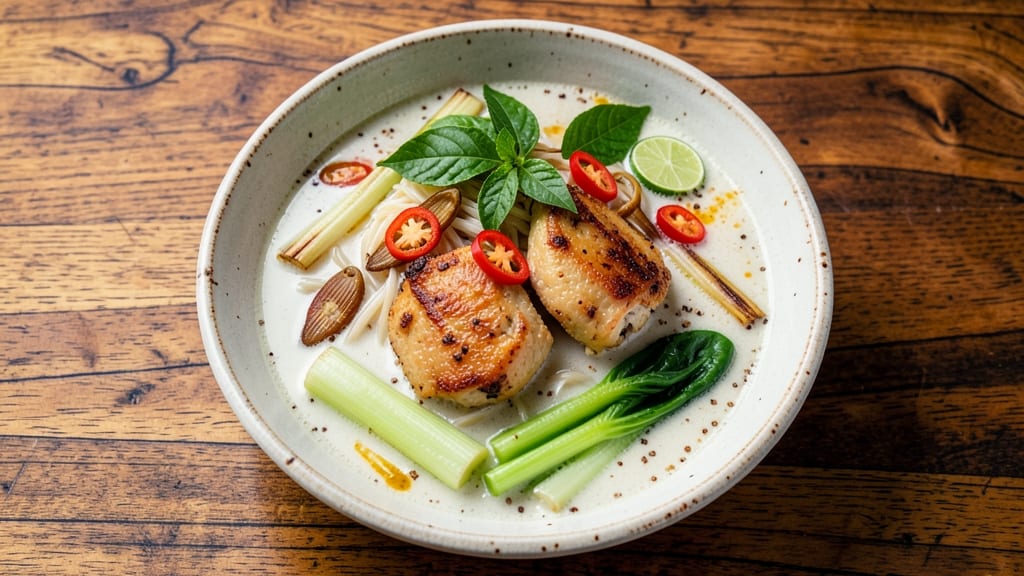
Bangkok soup recipe brings the vibrant flavors of Thailand straight to your kitchen with a fragrant lemongrass-kissed broth and velvety coconut cream. This dish captures the essence of a traditional Tom Kha Gai, where tender chicken simmers in a harmonious blend of spices, herbs, and coconut milk. The result is a comforting yet invigorating soup that balances heat, tang, and creaminess in every spoonful.
The secret to this authentic Bangkok soup lies in the careful balance of flavors—zesty lime, aromatic lemongrass, and a touch of spicy chili create a symphony that awakens the senses.
You’ll start with a fragrant broth infused with galangal, kaffir lime leaves, and lemongrass, then layer in coconut milk for a rich, velvety texture. The chicken cooks until fork-tender, soaking up all the aromatic goodness.
What you’ll end up with is a bowl of restaurant-quality soup that’s both comforting and exciting—a perfect blend of tender chicken, fragrant broth, and creamy coconut cream. The aroma alone will transport you to the bustling streets of Bangkok, where every bite is a celebration of Thai cuisine.
This recipe delivers on the promise of authenticity without sacrificing ease.
Serve it with steamed jasmine rice or crusty bread to soak up every last drop of that flavorful broth. Here’s how to bring the taste of Thailand into your home.
Ingredients for bangkok soup
Authentic Thai flavors start with these 15 simple ingredients—fresh herbs, tender chicken, and creamy coconut milk.
| Ingredient | Amount | Notes |
|---|---|---|
| Boneless Chicken Thighs 🍗 | 1 ½ lb | Skinless, cut into bite-sized pieces |
| Coconut Milk 🥥 | 1 ½ cups | Full-fat, canned preferred |
| Lemongrass Stalks 🌿 | 3 whole | Bruised, lower 4 inches only |
| Galangal 🌿 | 2 tbsp | Freshly grated, 3-inch piece |
| Kaffir Lime Leaves 🍋 | 4 whole | Bruised, stems removed |
| Fresh Chili Peppers 🌶️ | 2 whole | Bird's eye or Thai chili, sliced |
| Lime Juice 🍋 | ½ cup | Freshly squeezed |
| Fish Sauce 🍶 | 2 tbsp | Red Boat brand preferred |
| Brown Sugar 🍚 | 2 tbsp | Light or dark preferred |
| Garlic Cloves 🧄 | 6 cloves | Minced |
| Shallots 🧅 | 4 whole | Minced, about 0.25 cup |
| Vegetable or Chicken Stock 💧 | 4 cups | Homemade or quality store-bought |
| Fresh Cilantro 🌿 | ¼ cup | Chopped, for garnish |
| Salt 🧂 | 1 tsp | Kosher or sea salt |
| Black Pepper 🌶️ | ½ tsp | Freshly ground |
The galangal and kaffir lime leaves are non-negotiable for that authentic Bangkok aroma. Asian markets usually carry fresh galangal—look for a piece about 3 inches long, with a pale, knobby skin. If you can't find it, ginger at half the amount works in a pinch, though it won't be identical. Kaffir lime leaves? Freeze extras in a bag—they'll keep for months and save you from buying them every time. For the coconut milk, full-fat canned is a must—light versions won't give you that velvety texture. I always grab Aroy-D brand when I'm at Trader Joe's—it's affordable and reliable.
No lemongrass? Substitute with 2 tbsp lime zest plus 1 tbsp minced ginger, but you'll lose some depth. Fresh chili peppers are essential for heat—bird's eye or Thai chili are perfect, but jalapeños in a pinch (seeds in for heat). The fish sauce adds umami, and Red Boat brand is the gold standard, but any good-quality fish sauce will work. For the broth, homemade chicken stock is ideal, but vegetable stock works if you're vegetarian. The shallots? Don't skip mincing them—that's where the sweetness comes from. And yes, you can use regular onions, but shallots have a more delicate flavor.
This soup tastes even better the next day as flavors meld. Store in the fridge for up to 4 days—the broth gets richer over time. For freezing, portion into 2-cup servings and freeze flat. Reheat gently on the stove, adding a splash of water if it's too thick. The cilantro wilts fast, so add it last. Double the recipe if you're feeding a crowd—it disappears quickly. Leftovers reheat beautifully, and the broth makes a great base for other Thai dishes too.
Why You'll Love This Recipe
- One-Pot Magic: I swear by this recipe when I’m too tired to scrub pots—just brown the chicken, toss in the galangal and lemongrass, then let the coconut milk do the work. The broth builds itself while you chop herbs, and honestly? That’s my kind of cooking.
- Taste Like a Trip: Between us, I’ve never made a soup where the galangal’s peppery kick and kaffir lime leaves’ citrusy whisper actually transport me. The coconut milk smooths it out just enough that it’s rich but never heavy—like a hug from Bangkok.
- Leftovers That Shine: This soup only gets better the next day. I’ll be real: I make it on Sundays because the flavors meld overnight, and reheating it is the easiest way to feed the week. Add a squeeze of lime and some fresh cilantro, and it’s like a fresh bowl.
- Budget-Friendly Luxury: Chicken thighs and coconut milk stretch this into a full meal, and those aromatic stalks (lemongrass, galangal) cost pennies at Asian markets. It’s the kind of dish where you feel fancy without breaking the bank—my wallet thanks me every time.
Step-by-step instructions for lemongrass-kissed broth with tender coconut cream
Bringing Bangkok's aromatic flavors to your kitchen starts with these simple, flavor-packed steps.
Build the Aromatic Base
Heat a large pot over medium heat and add the 4 whole shallots and 6 cloves garlic. Sauté for 3-4 minutes until the shallots turn golden brown and the garlic releases its fragrant aroma. Here's the thing—don't rush this step. The deeper the color, the more complex the flavor foundation.
Next, add the 2 tbsp freshly grated galangal and 3 whole lemongrass stalks (bruised and cut to 4 inches). Stir for 2 minutes until the galangal softens slightly and the lemongrass releases its citrusy scent. This aromatic trio forms the heart of your soup's signature flavor profile. If you notice the galangal burning, reduce the heat slightly—it's delicate and can turn bitter quickly.
Create the Flavorful Broth
Pour in the 4 cups vegetable or chicken stock and bring to a gentle boil. Add the 1.5 lb boneless chicken thighs (cut into bite-sized pieces) and ½ cup freshly squeezed lime juice. Reduce heat to medium-low and let it simmer uncovered for 20 minutes, skimming off any foam that rises to the surface. This simmering time is crucial—it allows the chicken to become tender while the broth develops depth.
After 20 minutes, add the 2 tbsp fish sauce and 2 tbsp brown sugar. Stir well and continue simmering for another 15 minutes. The sugar will caramelize slightly, adding a subtle sweetness that balances the soup's acidity and umami. Taste the broth now—it should be rich and tangy, with a hint of sweetness. If it needs more depth, add a splash more fish sauce or a pinch of salt.
Add the Signature Coconut Cream
Reduce heat to low and carefully stir in the 1.5 cups coconut milk. The contrast between the warm broth and cool coconut will create a delicate swirl effect—this is your visual cue that the temperatures are balanced. Add the 4 whole kaffir lime leaves (bruised and stems removed) and 2 whole fresh chili peppers (sliced). Simmer gently for 10 minutes, allowing the coconut to infuse the broth without curdling.
Here's where it gets delicious: the coconut milk should create a velvety sheen on the surface of the broth. If you see any separation, stir gently—this is normal and will blend back together as it cooks. The kaffir lime leaves will release their floral notes, while the chili peppers add a subtle heat that brightens the entire dish.
Finish with Fresh Herbs and Seasoning
Remove the pot from heat and let it sit for 5 minutes to allow the flavors to meld. Add the 1 tsp salt and ½ tsp freshly ground black pepper, then taste again. The soup should be perfectly balanced—tangy from the lime, rich from the coconut, with a touch of heat and umami from the fish sauce and galangal.
Ladle the soup into bowls, making sure each serving gets a piece of chicken and a generous swirl of coconut cream. Garnish with ¼ cup chopped fresh cilantro and serve immediately. The contrast between the warm, aromatic broth and the cool, creamy coconut topping is what makes this dish so special. Don't forget to remove the lemongrass stalks and kaffir lime leaves before serving—while they add flavor during cooking, they're not meant to be eaten.
Pro Tips For Making Bangkok Soup
- Char Chicken First: Get those thighs blistered and golden before adding broth—high heat for 3-4 minutes per side makes all the difference. I used to skip this, and the soup always tasted underwhelming until I realized the Maillard reaction is non-negotiable here.
- Bruise Galangal: Smash that galangal with the side of your knife before slicing—it releases more flavor. My first few batches were bland until I remembered my Thai neighbor’s trick of treating it like ginger.
- Strain the Coconut Milk: Use a fine-mesh sieve to remove any grit from the canned coconut milk—it’s a nightmare to bite into later. I learned this after serving a guest who spent half the meal picking out bits.
- Simmer Low and Slow: Keep the soup at a gentle simmer (not a boil) after adding coconut milk—aggressive heat breaks the emulsion and makes it split. I’ve ruined three batches by rushing this step; patience is your friend.
Essential equipment for bangkok soup
Wok for Simmering
A 14-inch carbon steel wok is my go-to for this soup—its sloped sides and even heat distribution prevent scorching while allowing the broth to develop rich, layered flavors.
I swear by the De Buyer 14-inch wok from Williams Sonoma, but a good-quality Lodge cast iron wok works too if you're on a budget. The key is to preheat it thoroughly over medium-high heat for 5 minutes before adding your aromatics.
This creates that perfect sear for your shallots and garlic, forming the flavor foundation. 🔥
Immersion Blender
For a silky-smooth broth without straining, an immersion blender is a game-changer. I use the Magic Bullet Immersion Blender—it’s affordable and powerful enough to puree the lemongrass, galangal, and kaffir lime leaves directly in the pot, creating an infused broth without losing any of those precious aromatics.
Just blend for 10-15 seconds after simmering the broth, then strain through a fine-mesh sieve if you prefer a smoother texture. Pro tip: Remove the lemongrass stalks and kaffir lime leaves before blending to avoid overpowering the flavor.
Fine-Mesh Sieve
A stainless steel fine-mesh sieve (like the OXO Good Grips) is essential for straining your broth if you want a cleaner presentation. After simmering, carefully pour the broth through the sieve to remove any solids, leaving behind a smooth, aromatic liquid.
I like to press the solids gently with a wooden spoon to extract every last drop of flavor. For extra clarity, line the sieve with a cheesecloth—it catches even the finest particles. This step is optional but elevates the soup’s restaurant-quality appearance. ✨
Kaffir Lime Leaves
While you can bruise and tear kaffir lime leaves with your hands, a rolling pin or heavy skillet works best for even bruising. Place the leaves between two sheets of parchment paper and gently roll with the pin to release their oils without tearing them apart.
I also keep a small mortar and pestle handy for crushing the stems—this intensifies their citrusy aroma. Store any extras in the freezer for up to 3 months in a sealed bag. 🍋
Thermometer for Precision
To ensure your broth reaches the perfect 185°F for maximum flavor extraction, a digital instant-read thermometer (like the Thermoworks ThermoPop) is a must. Insert it into the broth after simmering for 20 minutes—this temperature ensures the chicken is tender without overcooking.
For the coconut milk, keep the heat at low to prevent curdling, which can happen if it exceeds 160°F. A thermometer takes the guesswork out of balancing heat and texture. 🌡️
Nutrition facts
Frequently asked questions
What's the difference between Tom Kha and Tom Yum?
Tom Kha is creamy and coconut-based (like this recipe), while Tom Yum is spicy, tangy, and broth-based without coconut. Tom Kha translates to "spicy coconut soup," while Tom Yum means "spicy and sour soup." Both use lemongrass and kaffir lime leaves, but Tom Yum skips the coconut and often includes more chili heat.
Can I make this soup vegetarian?
Yes! Replace the chicken with mushrooms (shiitake or oyster) or tofu. Use vegetable stock instead of chicken stock, and add 1 tbsp soy sauce for umami depth. The coconut and herbs will still shine, but the texture will be lighter.
Why does my coconut milk curdle?
Curdling happens when coconut milk gets too hot or is added too quickly. Always stir gently on low heat and let the broth cool slightly before adding. If it separates, whisk in 1 tsp cornstarch mixed with 1 tbsp water to restore creaminess.
How spicy should this soup be?
The recipe uses 2 whole Thai chilies for mild heat—adjust to taste! For more spice, add 1 extra chili or ½ tsp chili flakes. Remember, the heat builds as you eat, so start with fewer chilies if you're sensitive.
Can I prepare this ahead of time?
Make the broth (without coconut milk) up to 3 days ahead and store it refrigerated. Add coconut milk and heat gently before serving. For freezing, portion the broth only (without garnishes) and freeze for up to 2 months. Reheat slowly on low heat.