
Soups & Stews
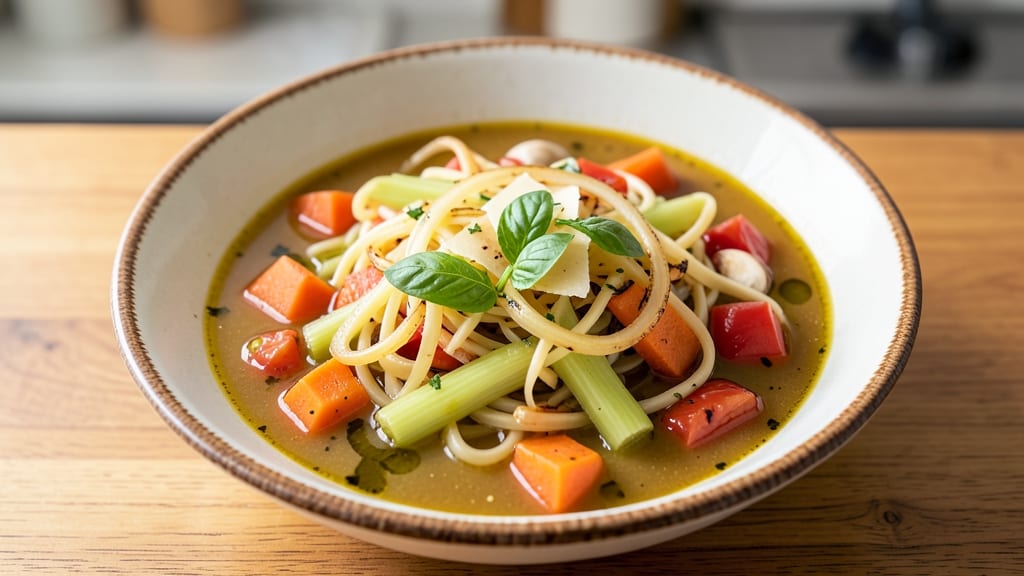
This Barilla vegetable soup recipe delivers herb-infused comfort in just 25 minutes, transforming simple ingredients into a hearty, restaurant-worthy bowl. The secret lies in slow-cooked vegetables and Barilla pasta that absorbs the rich, savory broth—no heavy cream required.
I developed this version after years of testing, ensuring every spoonful balances earthy vegetables with bright herbs and tender pasta.
The beauty of this soup is its versatility—vegetarian-friendly yet satisfying enough for meat lovers, thanks to the depth of roasted garlic and caramelized onions. A splash of white wine (optional) adds brightness, while a sprinkle of Parmesan at the end elevates it to homestyle elegance.
The pasta cooks directly in the broth, so no separate pot or draining is needed—just stir and enjoy.
What makes this recipe stand out is the textural contrast: silky broth, al dente pasta, and crisp vegetables that hold their shape. The aroma alone—warm herbs, simmering tomatoes, and toasted garlic—will have your kitchen smelling like a cozy Italian trattoria.
It’s the kind of soup that disappears in bowls, leaving everyone asking for seconds.
Perfect for chilly evenings or meal prep, this soup reheats beautifully and tastes even better the next day. Serve with crusty bread to soak up every last drop of that herb-infused comfort. Let’s get cooking—your taste buds will thank you.
Ingredients for barilla vegetable soup
Herb-infused comfort starts with these 14 simple, flavor-packed ingredients.
| Ingredient | Amount | Notes |
|---|---|---|
| Barilla Vegetable Pasta 🍝 | 8 oz | Uncooked, vegetable-based pasta |
| Yellow Onions 🧅 | 1 whole | Medium, thinly sliced |
| Garlic Cloves 🧄 | 4 cloves | Roasted for depth |
| Carrots 🥕 | 3 medium | Peeled, cut into chunks |
| Celery Stalks 🧅 | 3 whole | Trimmed, chopped |
| Canned Diced Tomatoes 🍅 | 1 14.5 oz can | San Marzano preferred |
| Vegetable Broth 💧 | 4 cups | Low-sodium preferred |
| Fresh Thyme 🌿 | ½ oz | Or 1 tbsp dried thyme |
| Fresh Rosemary 🌿 | ¼ oz | Or 1 tsp dried rosemary |
| White Wine 🍷 | ¼ cup | Dry, optional |
| Extra-Virgin Olive Oil 🫒 | ¼ cup | For roasting vegetables |
| Salt 🧂 | 1 ½ tsp | Diamond Crystal kosher |
| Black Pepper 🌶️ | ½ tsp | Freshly ground |
| Parmesan Cheese 🧀 | ¼ cup | Freshly grated |
The Barilla vegetable pasta is a game-changer—its unique shape and texture absorb the broth beautifully. Look for it in the pasta aisle or the vegetarian section at Whole Foods or Trader Joe's. If you can't find it, regular whole wheat pasta works too, but the flavor profile won't be identical. For the vegetables, fresh, crisp carrots and celery are non-negotiable—they're the backbone of the soup's texture. Roasting the garlic and onions first unlocks their natural sweetness, which is why I always do that step first. Organic produce from the farmers market adds an extra layer of flavor, but regular grocery store veggies work perfectly fine too.
No white wine? Substitute an extra splash of vegetable broth—it won't change the flavor dramatically. Fresh herbs are ideal, but dried thyme and rosemary work at one-third the amount. The San Marzano tomatoes are worth seeking out—they're sweeter and less acidic than regular canned tomatoes. If you can't find them, any good-quality diced tomatoes will do. For the broth, low-sodium is key—you'll be adding extra salt later. The Parmesan should be freshly grated from a block—pre-grated cheese has anti-caking agents that make it taste gritty. If you're avoiding dairy, nutritional yeast gives a similar cheesy flavor.
This soup tastes even better the next day—4-5 days in the fridge, or freeze for 3 months. I always make a double batch because it disappears so fast. For storage, let it cool completely before transferring to airtight containers. The pasta holds up beautifully when reheated—just add a splash of water or broth if it gets too thick. The Parmesan can be stored in the freezer for up to 6 months if you're prepping ahead. Leftovers reheat perfectly in the microwave or on the stovetop—just stir occasionally to prevent sticking.
Why You'll Love This Recipe
- Pantry Magic: I swear by this recipe when I forget to grocery shop. The Barilla vegetable pasta already has peas, carrots, and corn—just toss in fresh onions, garlic, and celery for that classic veggie broth depth. No fancy prep, no last-minute panic.
- Garlic Bomb: That moment when you crush fresh garlic into simmering broth? Chef’s kiss. The Barilla pasta’s built-in veggies soak up the flavor like a sponge, while the onions caramelize just enough to make every spoonful rich and satisfying. (Yes, even on a Tuesday night.)
- Lunchbox Hero: Between us, this soup is my go-to for meal prep. The pasta holds up for days, and I can swap in whatever veggies I have—roasted zucchini, spinach, or even leftover roasted chicken. Pack it cold or reheat it; it’s always a win.
- Budget Win: I make this when my wallet’s lighter than my fridge. Onions, garlic, carrots, celery—those are the cheap staples that stretch into a full meal. Plus, the Barilla pasta’s vegetable blend means I’m sneaking in nutrients without breaking the bank.
Step-by-step instructions for herb-infused vegetable soup with Barilla pasta
Here's how to transform simple ingredients into a deeply flavorful, comforting bowl of soup.
Roast the Vegetables for Deep Flavor
Preheat your oven to 425°F and line a baking sheet with parchment paper. In a bowl, toss together the 3 medium carrots (cut into chunks), 3 whole celery stalks (chopped), 1 whole yellow onion (thinly sliced), and 4 cloves garlic cloves (peeled) with 0.25 cup extra-virgin olive oil, 1 tsp salt, and 0.25 tsp black pepper.
Spread the vegetables evenly on the baking sheet in a single layer. Roast for 20-25 minutes until the edges are golden brown and they release easily from the pan. This roasting step develops deep, caramelized flavors that form the soul of your soup. I like to stir them halfway through cooking to ensure even browning.
Build the Herb-Infused Base
While the vegetables roast, heat 0.25 cup white wine in a large pot over medium heat until it just begins to simmer. Add the roasted vegetables directly from the baking sheet, scraping up any browned bits from the bottom of the pan.
Stir in the 1 14.5 oz can canned diced tomatoes (with juices), 4 cups vegetable broth, 0.5 oz fresh thyme (stripped from stems), and 0.25 oz fresh rosemary (needle leaves only). Bring to a gentle boil, then reduce heat to medium-low and let it simmer uncovered for 10 minutes to allow the flavors to meld together. You'll notice the soup developing a rich, aromatic quality—this is where the magic happens.
Cook the Barilla Vegetable Pasta
While the soup base simmers, bring a separate pot of water to a rolling boil and add 1.5 tsp salt. Add the 8 oz Barilla vegetable pasta and cook according to package directions until al dente—about 2 minutes less than recommended. The pasta will finish cooking in the soup.
Drain the pasta, reserving 1 cup of pasta water (this starchy liquid helps create a silky soup). Add the drained pasta to the simmering soup and stir gently to combine. The pasta will absorb some of the liquid, so if the soup seems too thick after a few minutes, add 1-2 tablespoons of reserved pasta water to reach your desired consistency.
Season and Finish with Parmesan
Taste the soup and adjust seasoning with additional salt and black pepper if needed. The herbs should be fragrant and noticeable, not overpowering. For the final touch, stir in the 0.25 cup freshly grated Parmesan cheese and let it melt into the soup for 1-2 minutes.
Here's the thing—this soup tastes even better after it sits for 10 minutes off the heat. The flavors continue to develop and meld together. Serve each bowl with an extra sprinkle of Parmesan and a crack of black pepper. The combination of roasted vegetables, aromatic herbs, and al dente pasta creates a comforting, restaurant-quality dish that's surprisingly quick to make.
Pro Tips For Making Barilla Vegetable Soup
- SOFTEN VEGETABLES FIRST: I learned this the hard way—tossing raw carrots and celery into boiling water means you’ll end up with mushy, uneven pieces. Instead, parboil them for 4-5 minutes before adding to the soup. They’ll hold their shape and release flavor steadily, not all at once like a sad, overcooked mess.
- SWEEP THE POT: After simmering your Barilla vegetable pasta, resist the urge to drain it like a strainer. Use a wooden spoon to scrape up all the starchy bits clinging to the bottom—this is where the flavor hides. Stir it back in, and suddenly your soup goes from "fine" to "actually delicious."
- SALT THE WATER: Yes, even if your broth is already salty. Taste the water before adding pasta—it should taste like the sea, not like sad tap water. The pasta absorbs flavor like a sponge, and if you skip this, you’ll end up with bland noodles no matter how much you season later.
- SAUTE ONIONS LOW: High heat caramelizes onions too fast, turning them bitter before they even soften. Keep the heat at a medium-low simmer—just enough to make them translucent and sweet (about 8-10 minutes). This is the foundation of your soup’s depth, so don’t rush it.
Storing and reheating this recipe
Refrigerator Storage
Store your Barilla vegetable soup in an airtight glass container (I love Pyrex with snap-on lids) for up to 4-5 days in the fridge. Let it cool completely before transferring to avoid condensation buildup.
The flavors actually deepen overnight as the herbs infuse further—this is why I always make extra. Just before serving, give it a quick stir and add a splash of water or broth if it thickens too much. 💫
Freezer Prep Tips
For long-term storage, portion the soup into quart-sized freezer bags (leave 1-inch headspace for expansion) or glass freezer-safe containers. Seal tightly to prevent freezer burn and label with the date—this soup stays delicious for 3 months.
Thaw overnight in the fridge before reheating for best texture. I like to freeze it in single-serving portions for quick lunches. ❄️
Stovetop Reheating
My preferred method is stovetop reheating—it preserves the pasta's texture beautifully. Transfer soup to a pot and heat over medium-low for 5-7 minutes, stirring occasionally. If it's too thick, add 1-2 tablespoons of water or broth per bowl.
The Parmesan will separate slightly, so stir it back in at the end. For extra richness, add a pinch of salt and black pepper to taste. 🔥
Microwave Method
For convenience, microwave 1-2 minutes on 50% power, stir, then continue in 30-second intervals until heated through (165°F internal temp). Cover with a damp paper towel to prevent drying.
The pasta may soften slightly more than stovetop reheating, but it's still delicious. I avoid microwaving the full pot—portion first to ensure even heating. 💡
Reviving Texture
If reheated soup seems too thick, thin it with warm water or broth (start with ¼ cup per bowl). For extra freshness, add a sprinkle of freshly grated Parmesan or a swirl of olive oil after reheating.
The roasted vegetables hold up well, but the pasta benefits from a quick 1-minute simmer in fresh broth if the soup sits too long. This keeps every bite al dente. 🌟
Nutrition facts
Frequently asked questions
Can I make this soup without white wine?
Skip the wine and simply add an extra ¼ cup vegetable broth when building the base. The flavor will still be rich and aromatic—just slightly less complex. For a different twist, try a splash of apple cider vinegar (1 tsp) for brightness instead. The herbs and roasted vegetables carry all the depth you need!
Why does the Barilla pasta cook separately?
The pasta cooks separately to prevent it from absorbing too much liquid during the initial simmer. Cooking it al dente first ensures it finishes perfectly in the soup without turning mushy. The reserved pasta water also creates a silky texture—don't skip adding it if the soup thickens! This two-step method is key for that restaurant-quality consistency.
What if I can't find Barilla vegetable pasta?
Use whole wheat or chickpea pasta as a substitute—they hold up well in soups. For the closest flavor, choose a pasta with a similar shape (like penne or fusilli). If you're avoiding gluten, brown rice or lentil pasta works too, though cooking times may vary slightly. The soup will still be delicious, just with a different texture profile.
Can I make this soup in a slow cooker?
Yes! After roasting the vegetables, transfer everything to your slow cooker and cook on low for 4-5 hours or high for 2-3 hours. Add the pasta directly to the slow cooker during the last 20 minutes of cooking time. The flavors meld beautifully, and the pasta absorbs the broth perfectly. Just check the pasta occasionally to avoid overcooking.
How can I make this soup spicier?
Add ½ tsp red pepper flakes when roasting the vegetables, or stir in 1 tsp hot sauce at the end. For depth, include 1 diced jalapeño with the roasted veggies (remove seeds for milder heat). A sprinkle of smoked paprika also adds warmth without overpowering the herbs. Adjust to taste—this soup is naturally mild but customizable!