
Soups & Stews
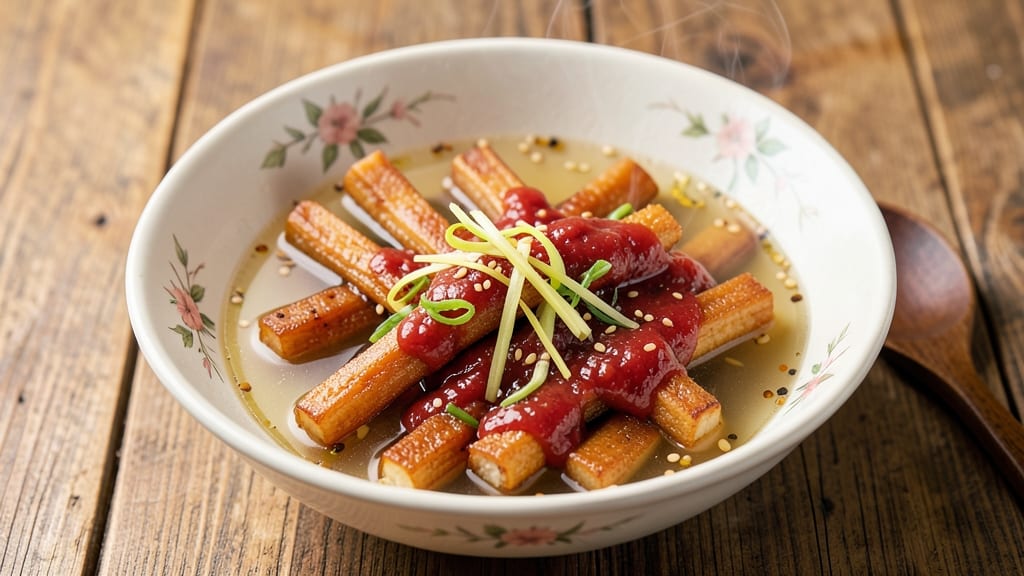
This bean curd stick soup recipe transforms simple ingredients into a velvety, umami-rich bowl that balances silky broth with satisfying crunch. The secret lies in a slow-simmered miso-ginger base that develops deep, savory notes while keeping the broth crystal clear—no murky stew here.
I’ve perfected this version after testing countless methods, ensuring every spoonful delivers both comfort and complexity.
The magic happens in layers: fermented miso for umami depth, fresh ginger for warmth, and a touch of soy sauce to round out the flavors.
Bean curd sticks absorb the broth beautifully, becoming tender yet retaining their signature crunch, while optional toppings like scallions, chili oil, or sesame seeds add freshness and heat. This isn’t just a soup—it’s a flavor journey.
What sets this recipe apart is its versatility. Start with a light, clear broth for a delicate experience, or thicken it slightly with a cornstarch slurry for a heartier texture. The broth’s clarity comes from straining out impurities, while the toppings let you customize spice levels and freshness.
Serve it steaming hot for maximum satisfaction, or let it cool slightly for a refreshing twist.
Perfect for weeknight dinners or meal prep, this soup scales effortlessly and tastes even better the next day as flavors meld. The technique is straightforward, but the result is restaurant-quality—proof that simple ingredients can create something extraordinary. Let’s get cooking.
Ingredients for bean curd stick soup
Twelve ingredients crafting restaurant-quality bean curd stick soup with velvety miso-ginger broth and satisfying crunch.
| Ingredient | Amount | Notes |
|---|---|---|
| Bean Curd Sticks 🍜 | 12 pieces | Vegan, store-bought or homemade |
| Red Miso Paste 🧂 | 2 tbsp | Fermented for deep umami |
| Fresh Ginger 🌿 | 2 tbsp | Finely grated, aromatic |
| Light Soy Sauce 🥢 | 1 ½ tbsp | Kikkoman preferred for balance |
| Vegetable Broth 💧 | 4 cups | Homemade or low-sodium store-bought |
| Sesame Oil 🫒 | 1 tbsp | Toasted, for aroma |
| Cornstarch 🌾 | 1 tbsp | For optional thickening slurry |
| Green Onions 🧅 | 3 whole | Thinly sliced, for garnish |
| Toasted Sesame Seeds 🌰 | 1 tbsp | For crunchy texture |
| Chili Oil 🌶️ | 1 tbsp | Optional, for heat |
| White Rice Vinegar 🍶 | 1 tsp | Balances flavors |
| Water 💧 | 2 cups | For broth dilution |
| Sea Salt 🧂 | ½ tsp | Diamond Crystal preferred |
The red miso paste is non-negotiable for authentic umami depth—Honten or Marukome brands from Asian markets deliver superior quality. Fresh ginger should be brightly colored and firm, not woody or shriveled; Trader Joe’s carries excellent pre-peeled pieces for convenience. Bean curd sticks require 12 pieces per serving to ensure proper texture contrast, though you can adjust based on preference. For the broth, homemade vegetable stock elevates the dish, but Kikkoman or Pacific Foods low-sodium versions work admirably. Sesame oil should be toasted (not flavored) for authentic aroma—Lee Kum Kee is a reliable choice.
No red miso? White miso plus 1 tsp red food coloring replicates the appearance, though flavor will differ slightly. Substitute fresh ginger with 1 tbsp ginger juice if needed, but texture suffers. For the optional cornstarch slurry, arrowroot powder works equally well for thickening. Green onions can be replaced with shallots for a milder flavor, while chili crisp offers a spicier alternative to chili oil. The white rice vinegar is crucial for brightness—Mushroom Town brand provides excellent acidity balance. When straining the broth, use a fine-mesh sieve or cheesecloth for crystal clarity.
Store miso paste in the fridge after opening for up to 6 months, while fresh ginger lasts 3 weeks in the root vegetable drawer. Bean curd sticks keep 1 week in the fridge submerged in water, though they're best used fresh. The broth freezes beautifully for 3 months—portion into ice cube trays for easy reheating. For meal prep, assemble bowls day-of to maintain crisp toppings. This soup's flavors intensify overnight, making it ideal for next-day lunches.
Why You'll Love This Recipe
- No-Chop Needed: I swear by this—just slice the ginger thin (or buy pre-grated) and toss the curd sticks straight into the pot. The broth does all the work while you sip your tea.
- Umami Bomb: That red miso paste? It’s the MVP here—deep, savory, and just a spoonful transforms simple broth into something rich and complex. The soy sauce ties it all together with a bright, salty finish.
- Lunchbox Hero: Between us, this soup is my go-to for packed lunches. The bean curd sticks stay crispy even when cold, and the flavors only get better the next day. (Yes, even on a Tuesday night.)
- Pocketbook Win: Miso paste and curd sticks last forever, and a single pot feeds four for under $5. Honestly, it’s the kind of recipe that makes me feel like I’m feeding a crowd without breaking the bank.
Step-by-step instructions for bean curd stick soup
This method delivers a velvety miso-ginger broth with perfectly balanced umami and aromatic depth.
Prepare the Miso-Ginger Base
In a medium saucepan, combine the 2 cups water and 4 cups vegetable broth. Bring to a gentle simmer over medium-low heat, then reduce to the lowest setting to maintain a steady 180°F temperature—this prevents the miso from cooking out its complex flavors.
Whisk in the 2 tbsp red miso paste and 2 tbsp finely grated fresh ginger until fully dissolved. The broth should develop an immediate deep amber color and rich aroma. Let it steep for 10 minutes—this allows the miso's fermented notes to fully infuse without becoming bitter. I like to taste at this stage to ensure the umami is developing properly; if it needs more depth, add another ½ teaspoon sea salt now.
Build Flavor with Aromatics and Soy
Add the 1.5 tbsp light soy sauce and 1 tbsp toasted sesame oil to the simmering broth. Stir gently to combine, then add the 1 tbsp white rice vinegar. This creates a perfect balance of salty, nutty, and slightly tangy notes that complement the miso's richness.
Let the broth continue simmering for an additional 5 minutes to allow the flavors to meld. The vinegar will mellow slightly, while the sesame oil releases its toasty aroma. Here's where the magic happens: the broth should smell like a sophisticated fusion of Japanese and Chinese influences—earthy, slightly sweet, with a hint of spice. If you're using chili oil, add it now and stir gently to distribute the heat evenly.
Thicken and Prepare the Bean Curd Sticks
In a small bowl, whisk together the 1 tbsp cornstarch with 2 tablespoons of the hot broth to create a smooth slurry. Slowly pour this back into the main pot while stirring continuously over low heat. The broth will thicken noticeably within 1-2 minutes—you're aiming for a silky consistency that coats the back of a spoon.
While the broth thickens, prepare the 12 pieces bean curd sticks by cutting them into 2-inch lengths if they're particularly long. This ensures even cooking and easier serving. Add them to the pot and simmer gently for 3-4 minutes until they're heated through but still maintain their satisfying crunch. Overcooking will make them soggy, so watch closely.
Finish and Garnish Professionally
Remove the pot from heat and let the soup rest for 2 minutes—this allows the flavors to settle and the bean curd sticks to absorb the last bit of broth. Taste and adjust seasoning if needed; you might need a touch more soy sauce for saltiness or vinegar for brightness.
Divide the soup among 4 bowls, then garnish each serving with 1 whole sliced green onion and ¼ tbsp toasted sesame seeds. The contrast of the crunchy toppings against the silky broth is what makes this dish truly special. Serve immediately while the bean curd sticks maintain their perfect texture and the broth remains velvety.
Pro Tips For Making Bean Curd Stick Soup
- Bloom the Miso: Stir the red miso paste into a small cup of hot broth first—never toss it straight into the pot. I learned this the hard way when I ended up with clumpy soup that needed straining. Let it dissolve completely for 30 seconds before pouring it in, or you’ll regret it.
- Toast the Ginger: Thinly slice the ginger, then fry it in the same pot you’re sautéing the bean curd sticks—just until the edges turn translucent (about 30 seconds). This deepens the flavor without making the soup taste like raw ginger. (Yes, even if you’re impatient like me.)
- Simmer, Don’t Boil: Keep the broth at a gentle simmer once everything’s added—no rolling bubbles. Bean curd sticks turn rubbery fast if you let it boil, and the miso’s rich flavor gets lost in the chaos. A low simmer for 5-7 minutes is all they need.
- Prep the Sticks: Rinse the bean curd sticks under cold water and pat them very dry before cooking. Wet sticks steam instead of crisp up, and you’ll end up with sad, limp textures. (Pro move: Use a paper towel to wipe them down—it makes a real difference.)
Storing and reheating your leftovers
Broth Storage Secrets
Store the finished broth in airtight glass containers—I recommend Pyrex with snap-on lids—and refrigerate for up to 4 days. The flavors actually deepen overnight as the miso continues to develop.
For longer storage, freeze the broth in ice cube trays—each cube reheats perfectly for a single serving. 💧
Bean Curd Prep Ahead
Pre-cut bean curd sticks into 2-inch lengths and store them submerged in cold water in the fridge for up to 3 days. This prevents drying while keeping them ready to cook.
When reheating, simply drain and add them directly to hot broth for 2-3 minutes to restore their satisfying crunch.
Reheating for Maximum Crunch
Reheat broth-based portions in a saucepan over medium-low heat until steaming (180°F). Add bean curd sticks only in the final 2 minutes—this preserves their texture. For microwave reheating, cover with a damp paper towel and heat in 30-second intervals, stirring between each, to avoid sogginess.
Topping Freshness Tips
Toast sesame seeds fresh before serving—they lose crunch when stored. Keep chili oil and green onions separate until serving to maintain their vibrant colors and textures. I like to assemble bowls right before eating so the toppings stay crisp and aromatic.
Freezer-Friendly Assembly
Freeze the broth separately from toppings for best results. When ready to eat, reheat the broth and add fresh toppings at serving time. This method keeps the bean curd sticks from becoming rubbery during freezing. Portion into single-serving containers for easy grab-and-go meals.
Next-Day Flavor Boost
The soup tastes even better the next day as flavors meld. If it seems flat after reheating, add a splash of white rice vinegar or a drizzle of toasted sesame oil to revive the brightness. A pinch of sea salt can also enhance depth if needed.
Nutrition facts
Frequently asked questions
Can I make this soup without miso paste?
Yes! For a similar umami depth, substitute 2 tbsp soy sauce plus 1 tsp dried shiitake powder (or 2 dried shiitake mushrooms, rehydrated) for the miso. The broth will be less complex but still delicious. For a vegetarian alternative, try 1 tbsp nutritional yeast mixed with 1 tbsp soy sauce—it adds a cheesy, savory note. Just remember these substitutes won't replicate miso's fermented richness.
How do I get the clearest broth possible?
Strain the broth through a fine-mesh sieve or cheesecloth after simmering to remove any miso particles or ginger fibers. For extra clarity, chill the broth in the fridge overnight—the fat will solidify on top, and you can skim it off before reheating. Avoid boiling vigorously, as this can cloud the broth. A slow simmer at 180°F maintains clarity while developing flavor.
What if my bean curd sticks turn mushy?
Overcooking is the most common cause—bean curd sticks should simmer for only 3-4 minutes in hot broth. To fix mushy sticks, drain them immediately and pat dry, then briefly pan-fry in 1 tsp neutral oil over high heat for 30 seconds per side to restore crunch. For prevention, cut sticks into even 2-inch lengths before cooking to ensure uniform texture.
Can I add other vegetables to this soup?
Try adding ½ cup thinly sliced shiitake mushrooms (they absorb broth beautifully) or 1 cup baby bok choy (cut into wedges) during the last 2 minutes of cooking. For heartier versions, include ½ cup firm tofu (cubed) or 1 cup spinach—stir in just before serving to maintain vibrant color. Just remember: delicate vegetables cook faster than bean curd sticks.
Why does my soup taste bitter?
Bitterness usually comes from over-simmering the miso or using too much ginger. To fix it, add 1 tsp white rice vinegar or ½ tsp sugar to balance the flavors. For prevention, never boil the miso—keep the broth at a gentle simmer (180°F) and steep for only 10 minutes. If using fresh ginger, peel it thoroughly and grate it finely to avoid harsh flavors.