
Soups & Stews
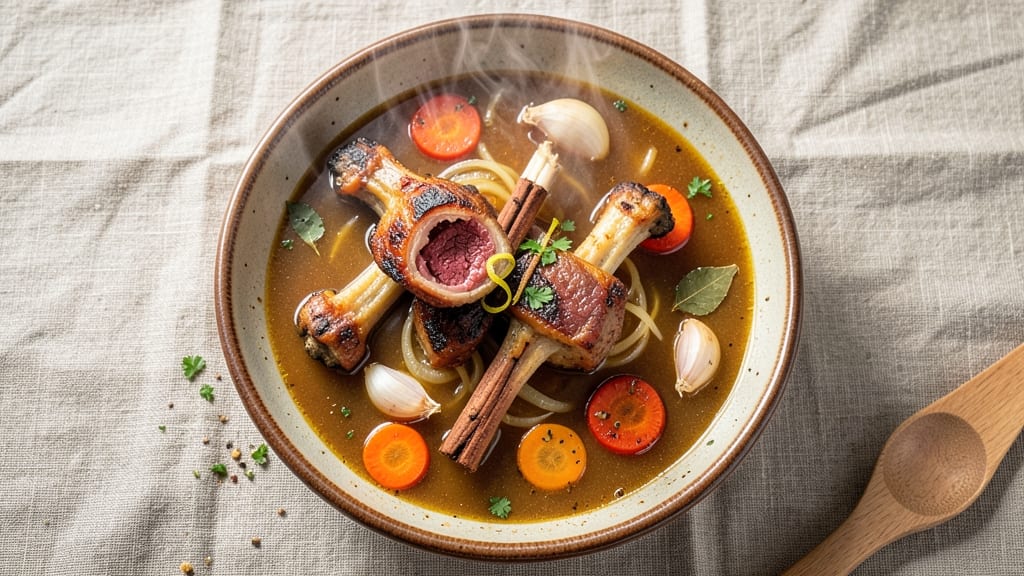
This South African beef bones soup delivers deep, slow-braised flavor that transforms tough cuts into tender, aromatic perfection. The Cape Malay spice blend—warm cinnamon, earthy coriander, and a touch of vinegar—creates a signature tang that sets it apart from traditional bone broths.
I developed this recipe after years of perfecting the balance between rich meatiness and bright, spiced complexity that feels distinctly South African.
The secret lies in the slow simmering—at least 8 hours—which extracts maximum collagen for a naturally thick, velvety broth. Beef bones, carrots, and onions form the base, while bay leaves and a splash of vinegar add that signature South African brightness.
Unlike lighter broths, this version embraces hearty textures with tender beef and vegetables that practically melt into the rich liquid.
What makes this recipe stand out is how the spices develop during simmering, creating layers of warmth and depth that feel both comforting and sophisticated. The result is a soup that’s rich enough for a winter meal but balanced enough for everyday enjoyment.
Each spoonful delivers a perfect harmony of meaty richness and aromatic spices—exactly what makes this a South African classic.
Perfect for feeding a crowd or meal prepping, this soup only gets better with time. The flavors deepen as it rests, making it ideal for preparing ahead. Whether you're recreating a Cape Malay family tradition or simply craving a soul-warming bowl, this recipe delivers restaurant-quality results at home.
Ingredients for beef bones soup recipe south africa
Eight ingredients transform tough beef bones into rich, aromatic South African soup perfection.
| Ingredient | Amount | Notes |
|---|---|---|
| Beef Bones (Marrow and Knuckle) 🦴 | 4 lb | Raw, uncooked, natural |
| Yellow Onions 🧅 | 2 whole | Peeled, quartered |
| Carrots 🥕 | 4 lb | Whole, unpeeled |
| Garlic Cloves 🧄 | 8 cloves | Peeled, smashed |
| Bay Leaves 🌿 | 4 whole | Dried, standard size |
| Cinnamon Sticks 🌶️ | 2 whole | 2-inch pieces |
| Ground Coriander 🌿 | 2 tbsp | Freshly ground preferred |
| White Vinegar 💧 | ½ cup | Distilled, 5% acidity |
| Salt 🧂 | 2 tbsp | Diamond Crystal kosher |
| Black Peppercorns 🌶️ | 1 tbsp | Freshly cracked |
| Fresh Thyme 🌿 | ¼ cup | Stems removed |
| Water 💧 | 8 cups | Filtered preferred |
| Olive Oil 🫒 | ¼ cup | Extra-virgin, fruity |
The beef bones are the foundation—marrow and knuckle create the richest broth. Local butchers often carry these cuts, or check the meat section of larger grocery stores like Pick n Pay or Woolworths in South Africa. For best results, use bones with some meat still attached—they'll yield more flavor. If you can't find marrow bones, neck bones work as a substitute. The carrots should be firm with bright orange color; no need to peel them as the skin adds texture and nutrients. For the spices, Penzeys or local spice shops offer high-quality ground coriander that makes all the difference in this Cape Malay blend.
No fresh thyme? Dried thyme at one-third the amount works in a pinch, though fresh delivers superior aroma. Vinegar substitutes like apple cider vinegar can replace white vinegar, but the acidity level may vary slightly. If you're short on time, pre-cut frozen carrots save chopping effort without sacrificing quality. For the olive oil, South African extra-virgin brands like Olive & Vine add a subtle local touch. The bay leaves should be vibrant green—discard any that are brown or brittle. And while this calls for kosher salt, sea salt works too if that's what you have on hand.
This soup improves dramatically with time—24 hours of simmering yields the deepest flavor. Store in airtight containers in the fridge for 5-7 days, or freeze portions for up to 3 months. The bones can be simmered longer for a more concentrated broth, then removed before serving. For meal prep, divide into individual portions while still warm—the broth will set more evenly. Leftovers reheat beautifully; just add a splash of water if the broth thickens too much.
Why You'll Love This Recipe
- I’ll be real: the first batch disappears fast, but the second? Even better. The flavors deepen overnight, and you can turn it into a quick lunch or a hearty side the next day. Freeze what you don’t use—because trust me, you’ll want to.
- Marrow Magic Unlocked: The moment you crack open those knuckle bones and scoop out the golden marrow, you’ll know why this soup is worth the effort. No fancy knife skills—just a sturdy cleaver and a little elbow grease to expose that rich, buttery center. (Yes, even if your kitchen’s not a professional one.)
- One-Pot Powerhouse: Between us, this is the kind of soup where you throw everything in one pot—bones, onions, carrots—and let the slow simmer do the work. The bay leaves and garlic cloves infuse the broth so deeply, you’ll taste it in every spoonful, no extra prep needed.
- Leftovers That Shine: I’ll be real: the first batch disappears fast, but the second? Even better. The flavors deepen overnight, and you can turn it into a quick lunch or a hearty side the next day. Freeze what you don’t use—because trust me, you’ll want to.
Step-by-step instructions for slow-braised beef bones soup
This Cape Malay-inspired method transforms tough bones into rich, gelatinous soup with deep umami flavor.
Prep and Sear the Beef Bones
Pat the 4 lb beef bones (marrow and knuckle) completely dry with paper towels. In a large Dutch oven, heat the 0.25 cup olive oil over medium-high heat until shimmering. Working in batches if needed, sear the bones for 4-5 minutes per side until they develop a deep golden-brown crust. This step builds foundational flavor through the Maillard reaction.
Transfer the seared bones to a plate and set aside. The goal is to create a rich, caramelized base that will infuse the broth as it simmers. Don't rush this step—proper browning ensures maximum flavor extraction from the bones.
Sauté Aromatics and Build the Spice Base
In the same Dutch oven, add the 2 whole yellow onions (peeled and quartered) and cook for 8-10 minutes until softened and golden. Add the 4 lb carrots (whole and unpeeled) and continue cooking for another 5 minutes, stirring occasionally to prevent burning.
Push the vegetables to one side of the pot and add the 0.25 cup olive oil if needed. Add the 8 cloves garlic (peeled and smashed), 2 whole cinnamon sticks, and 4 whole bay leaves. Cook for 1-2 minutes until the garlic becomes fragrant but doesn't brown. This aromatic foundation forms the soul of the Cape Malay spice profile.
Deglaze and Combine All Ingredients
Pour in the 0.5 cup white vinegar and scrape up any browned bits from the bottom of the pot. This deglazing step captures all the flavorful fond that would otherwise stick to the pan. Add the 2 tbsp ground coriander, 2 tbsp salt, and 1 tbsp black peppercorns (freshly cracked). Stir well to distribute the spices evenly.
Return the seared beef bones to the pot. Add the 8 cups water and bring the entire mixture to a rolling boil over high heat. Once boiling, reduce heat to low and add the 0.25 cup fresh thyme (stems removed). The thyme should be added last to preserve its delicate flavor.
Slow Simmer for Maximum Flavor Extraction
Cover the Dutch oven and let the soup simmer gently for 4-5 hours at a steady low heat. Maintain a temperature between 180-190°F—this slow cooking breaks down collagen in the bones, transforming them into rich, gelatinous goodness. Check the water level periodically and add hot water as needed to maintain coverage.
After 3 hours, skim any foam or impurities that rise to the surface. This ensures a clear, clean broth. The soup is ready when the bones are fork-tender and the broth has thickened noticeably. You'll know it's done when the broth coats a spoon with a glossy, velvety texture.
Strain and Serve with Cape Malay Flavor
Using a fine-mesh strainer, carefully strain the soup into a large bowl or serving pot. Press the solids gently to extract every last bit of flavorful broth. Discard the bones and vegetables—what remains is a rich, golden elixir that captures the essence of Cape Malay cuisine.
Taste and adjust seasoning if needed. This soup should be rich and savory with a subtle sweetness from the carrots and a warm, spiced depth from the coriander and cinnamon. Serve immediately with crusty bread or over steamed rice to complement the hearty broth.
Pro Tips For Making Beef Bones Soup Recipe South Africa
- Brown the Bones First: Don’t just toss raw bones into water—sear them in a dry pot over medium-high heat until deeply browned. I learned this the hard way: skipping this step means a pale broth instead of that rich, caramelized depth that makes South African bone broth sing. (Yes, it’ll smell intense, but that’s flavor building.)
- Chop Onions Roughly: Dice those yellow onions into 1.5cm chunks—no need for fine mincing. Big pieces release flavor slower, preventing bitterness and giving the broth a sweeter, more balanced base. My grandmother swore by this, and she was right: the soup tastes fresher, not overcooked.
- Simmer, Don’t Boil: Keep the heat low enough that you barely see bubbles—gentle simmering extracts collagen without turning the broth cloudy. I used to rush it, and the result was murky, weak broth. After burning three batches, I finally figured out: patience here means the marrow slides out like butter later.
- Add Garlic Late: Toss whole garlic cloves in at the last 30 minutes—no need to smash them. This keeps their sweetness intact instead of turning bitter. (I know, I know, but trust the process: the broth will still be aromatic, just without that harsh edge.)
Dietary considerations for beef bones soup recipe south africa
Gluten-Free Adaptations
This recipe is naturally gluten-free, as it relies on beef bones, vegetables, and spices without any wheat-based ingredients. The white vinegar and kosher salt used are typically gluten-free, but always double-check labels if you're sensitive. For extra assurance, I recommend using certified gluten-free vinegar from brands like Bragg. 🌾
Dairy-Free Considerations
Since this soup contains no dairy products, it's inherently dairy-free. The rich, umami flavor comes entirely from the beef bones and spices, making it safe for lactose-intolerant individuals.
If you're serving this to guests with dairy sensitivities, simply note that the broth is made with olive oil and vinegar only—no butter or cream is involved.
Vegetarian Substitutions
For a vegetarian version, replace the beef bones with mushroom stems or seaweed strips for umami depth. I've had success using shiitake mushrooms (about 1 lb) seared in olive oil before simmering.
Add 1 tbsp soy sauce to enhance the savory notes. The carrots and onions will provide natural sweetness, while the spices maintain the Cape Malay profile.
Low-Sodium Options
To reduce sodium content, cut the kosher salt to 1 tbsp and use low-sodium beef broth (about 4 cups) instead of water. For extra flavor without salt, add 1 tbsp lemon juice or an additional ½ cup vinegar during simmering.
Taste frequently—the broth should still be rich and flavorful without excessive saltiness.
Spice Sensitivity Adjustments
If you're sensitive to spices, reduce the ground coriander to 1 tbsp and omit the cinnamon sticks entirely. For warmth without spice, add ½ tsp ground ginger or ¼ tsp nutmeg instead.
The bay leaves and thyme provide aromatic depth without heat. Always taste as you go—this soup's flavor builds gradually, so you can adjust spices at any point.
Protein Alternatives
For a lighter protein option, replace beef bones with chicken backs or necks (about 4 lb) for a milder flavor. If you prefer plant-based protein, lentils (about 1 cup) added during the last 30 minutes of simmering work well.
The broth will still be rich, though the texture will differ slightly. For a seafood twist, use shrimp shells (about 2 cups) for a sweeter, brinier broth.
Nutrition facts
Frequently asked questions
Why does this South African beef bones soup need such a long simmer time?
The 8-hour slow simmer is key to unlocking maximum flavor and texture. This extended time breaks down collagen in the bones, creating a naturally thick, gelatinous broth that's rich and velvety. It also allows the Cape Malay spices—like cinnamon and coriander—to meld together beautifully, creating that signature warm, aromatic depth that defines this recipe.
Can I use different types of beef bones for this recipe?
Yes, but marrow and knuckle bones are ideal for their rich flavor and collagen content. If you can't find them, neck bones or even beef shin bones work well. Avoid small bones like ribs—they won't yield enough broth. For best results, choose bones with some meat still attached, as this adds extra flavor to the simmering liquid.
What's the secret to getting that signature South African tang?
The tang comes from the 0.5 cup white vinegar added during the deglazing step. This brightens the rich, meaty flavors and balances the warm spices. For an even more authentic touch, some Cape Malay cooks add a splash of pickle juice or a pinch of asafetida (hing), though these are optional. The vinegar should be added early to mellow out its sharpness during simmering.
How do I know when the soup is done?
The soup is ready when the bones are fork-tender and the broth coats a spoon with a glossy, velvety texture. This typically takes 4-5 hours of simmering. You'll also notice the liquid has thickened noticeably and the aroma is deeply aromatic with spice notes. For extra assurance, check that the broth reaches 180-190°F during simmering—this temperature range ensures proper collagen extraction.
Can I make this soup in a slow cooker instead of a Dutch oven?
Transfer all ingredients to a 6-quart slow cooker and cook on low for 10-12 hours or high for 6-8 hours. The slow cooker's gentle heat works perfectly for extracting collagen. Just be sure to sear the bones in a separate pan first for maximum flavor. The vinegar and spices will still develop beautifully during the extended cooking time.