
Soups & Stews
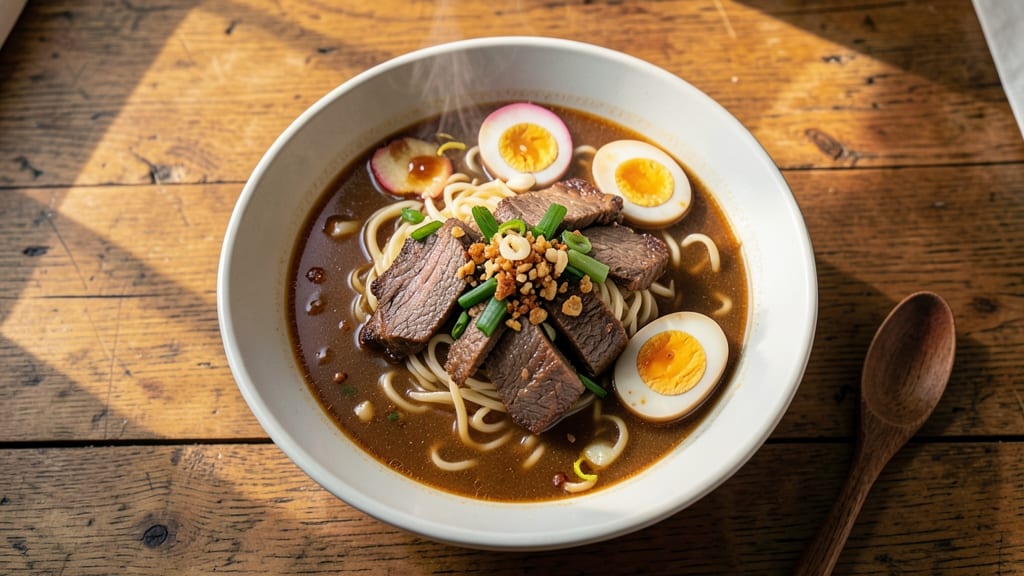
This Filipino beef noodle soup recipe delivers the comforting warmth of home-cooked sinigang—where tender beef, silky egg ribbons, and aromatic broth create a symphony of flavors. 🌟 The secret lies in a slow-simmered tamarind-infused broth that balances sour and savory, while wok-hei crisp transforms simple ingredients into restaurant-quality bites.
What sets this recipe apart is the technique: beef is braised until fork-tender, then finished with a quick sear for depth, while egg ribbons add a delicate, melt-in-your-mouth texture.
The broth, built with tamarind and ginger, develops layers of complexity as it simmers, while fresh herbs and calamansi brighten every spoonful.
By the time you serve this steaming bowl, you’ll have a dish that’s rich yet balanced—perfect for a cozy family dinner or sharing with friends. The crisp edges of the beef, the silky egg strands, and the fragrant broth come together in a way that feels both nostalgic and refined.
Ready in about 1 hour, this recipe is ideal for weeknight comfort or special occasions. The broth can be made ahead, so you’ll spend less time cooking and more time enjoying the flavors. Let’s get started!
Ingredients for beef noodle soup filipino
Rich beef broth, silky egg ribbons, and aromatic herbs transform simple ingredients into Filipino comfort.
| Ingredient | Amount | Notes |
|---|---|---|
| Beef Chuck Roast 🥩 | 1 ½ lb | Cut into 1-inch cubes |
| Eggs 🥚 | 4 large | Room temperature for ribbons |
| Egg Noodles 🍜 | 8 oz | Fresh or dried, medium width |
| Tamarind Paste 🍈 | 2 tbsp | Or 1 tbsp tamarind concentrate |
| Fresh Ginger 🌿 | 1 inch | Sliced thinly, peeled |
| Garlic Cloves 🧄 | 6 cloves | Minced finely |
| Onion 🧅 | 1 medium | Thinly sliced |
| Carrots 🥕 | 2 medium | Thinly sliced, peeled |
| Green Onions 🌱 | 4 whole | Chopped, white and green parts |
| Calamansi or Lime Juice 🍋 | 2 tbsp | Freshly squeezed |
| Soy Sauce 🥄 | 2 tbsp | Dark soy preferred |
| Fish Sauce 🐟 | 1 tbsp | Red Boat brand recommended |
| Vegetable Oil 🫒 | 2 tbsp | For searing |
| Salt 🧂 | 1 ½ tsp | Adjust to taste |
| Black Pepper 🌶️ | ½ tsp | Freshly ground |
The beef is the foundation—chuck roast delivers that melt-in-your-mouth texture after braising. Look for well-marbled cuts at Asian markets or your grocery store's meat counter. If you can't find chuck, flank steak works in a pinch, but slice it thinly first. For the tamarind, Filipino markets carry it in paste form, or grab a block at Trader Joe's. Fresh ginger and garlic? Double-check the roots—they should be firm and free of mold. The egg noodles can be fresh or dried, but fresh ones hold up better to the long simmer. I always buy extra—half goes in the soup, half gets stir-fried for crunch at the end.
No tamarind? Lemon juice plus a pinch of sugar mimics the tang. Short on fish sauce? Soy sauce with a splash of vinegar gets you close, though the umami won't be identical. The carrots can be baby carrots if that's what's in your fridge, but julienned for presentation. For the egg ribbons, room-temperature eggs are key—they stretch better. If you're not serving immediately, cook the noodles al dente and finish them in the hot broth at the end. The green onions? Save the white parts for the broth—they add depth without overpowering.
This broth tastes even better the next day—make a double batch and freeze half. Store cooked noodles in the fridge for 3 days or freeze for 2 months. The beef stays tender when reheated gently. For extra flavor, save the broth scraps in the freezer—they make great stock. The egg ribbons? Cook fresh or they'll turn rubbery. I always prep the broth first, then let it sit while I handle the beef and noodles—good planning saves time.
Why You'll Love This Recipe
- One-Pot Magic: I swear by this recipe because it’s literally one pot, one timer. Toss in the beef chuck, simmer with tamarind paste and ginger, then dump in the noodles—no chopping, no fuss. The broth thickens as it cooks, so you’re left with a rich, hearty bowl without extra cleanup.
- Tamarind Tang Kick: Here’s what sold me—the tamarind paste. That deep, slightly sour punch cuts through the beef’s richness like a sigh of relief. Add a splash of soy sauce, and you’ve got a flavor profile that’s dangerously addictive, especially when those poached eggs slide into the bowl.
- Weeknight Workhorse: Between us, this soup is my secret weapon for busy nights. Make a big batch on Sunday, and you’ve got lunch for Monday, a quick dinner for Wednesday, or even a potluck dish for Thursday’s book club. The noodles soften perfectly when reheated, and the eggs add freshness every time.
- Budget Beef Bang: Honestly, beef chuck roast is one of the most affordable cuts for this kind of depth—tender, flavorful, and forgiving. A single roast stretches to feed four, and the tamarind and ginger stretch even further. Leftovers? Even better the next day, if that’s possible. (Yes, even on a Tuesday night.)
Step-by-step instructions for Filipino beef noodle soup
Master this comforting Filipino classic with rich umami broth and delicate egg ribbons.
🔥 Step 1: Sear the Beef for Deep Flavor
Heat the 2 tablespoons vegetable oil in a large pot over medium-high heat until shimmering. Add the 1.5 lb beef chuck roast cut into 1-inch cubes, working in batches if needed to avoid crowding. Sear each piece for 2-3 minutes per side until deeply browned and caramelized—this builds the soup's foundation.
Remove the beef and set aside. The browned bits (fond) in your pot will dissolve into the broth later, adding incredible depth. If your pot isn't large enough for all ingredients later, use a separate pot for the broth base.
🍳 Step 2: Build the Aromatic Broth Base
In the same pot, add 2 tablespoons vegetable oil if needed, then sauté the 1 medium onion and 2 medium carrots (thinly sliced) for 3-4 minutes until softened. Add the 1-inch fresh ginger (sliced) and 6 cloves garlic (minced), cooking for another 1 minute until fragrant—this releases their full flavor potential.
Stir in 2 tablespoons tamarind paste, 2 tablespoons soy sauce, and 1 tablespoon fish sauce. Pour in 8 cups water (enough to cover the beef) and bring to a boiling point. Once boiling, reduce heat to medium-low, return the beef to the pot, and simmer uncovered for 1 hour 15 minutes until the beef is fork-tender.
🥘 Step 3: Season and Prepare the Noodles
After the beef has cooked, skim off any excess fat from the surface. Add 1.5 teaspoons salt, 0.5 teaspoon black pepper, and 2 tablespoons calamansi or lime juice to brighten the broth. Taste and adjust seasoning—Filipino soups should balance sweet, sour, and salty notes.
While the broth simmers, cook the 8 oz egg noodles according to package instructions until al dente. Drain and set aside. The noodles should be slightly firm—they'll finish cooking in the hot broth.
🍳 Step 4: Create Silky Egg Ribbons
In a separate bowl, whisk the 4 large eggs (room temperature) until fully combined. Heat 1 tablespoon vegetable oil in a small nonstick skillet over low heat. Pour in the eggs, tilting the pan to create a thin, even layer. Cook for 1 minute until the bottom just sets but the top remains runny.
Flip the egg onto a plate, then roll it up like a jelly roll. Slice into ¼-inch thick strips for delicate ribbons. Repeat with the remaining eggs. These ribbons should be tender yet hold their shape when added to the soup.
🥘 Step 5: Assemble and Finish
Return the pot to medium heat and add the cooked noodles and egg ribbons. Simmer gently for 2-3 minutes until the noodles are tender and the egg ribbons are heated through. Stir in the 4 whole green onions (chopped) and adjust seasoning if needed.
Ladle the soup into bowls, garnishing each serving with additional green onions. The broth should be rich and aromatic, the beef tender yet flavorful, and the egg ribbons silky and delicate. Serve immediately with crusty bread to soak up every last drop of that savory broth.
Pro Tips For Making Beef Noodle Soup Filipino
- Sear the Chuck Roast First: I learned this the hard way—skipping the sear means flavor hiding in the broth instead of bursting into every bite. Brown that beef chuck in batches on medium-high heat until deep caramel forms (5-7 minutes per side), then deglaze with soy sauce and a splash of water. That crust is non-negotiable for rich, layered taste.
- Slice Ginger Paper-Thin: Fresh ginger’s power fades fast, so don’t chop it like you’re prepping for a stir-fry. Use a mandoline or sharp knife to shave it into translucent slices—about 1/16-inch thick. Toss them straight into the simmering broth; they’ll melt into the tamarind base without bitterness, adding warmth without texture.
- Don’t Rush the Tamarind: Tamarind paste is the soul of this soup, but I used to dump it in all at once and end up with a mouth-puckering mess. Start with 1 tablespoon, whisk it into 2 cups of hot broth first, then taste. Simmer it 5 minutes before adding the rest—this smooths the sour edge and lets the acidity bloom evenly.
- Poach Eggs Last, Hotter: Cold eggs in lukewarm broth? Nope. Raise the heat to a rolling simmer right before adding them, then lower to a gentle bubble. The whites should set in 3-4 minutes, yolks stay runny—no need for vinegar or fancy tools. This keeps the broth hot enough to cook them properly without turning the eggs to rubber.
Storing and reheating this beef noodle soup filipino
Broth Storage
Your Filipino beef noodle soup broth tastes even better the next day—make a double batch and freeze half in airtight containers or freezer bags. Label with the date since it keeps for 3 months without losing flavor.
I always freeze it in quart-sized portions for easy reheating. When ready to use, thaw overnight in the fridge or use the microwave defrost setting for 2-3 minutes. 🥄
Noodle Preservation
Cooked noodles can be stored in the fridge for 3 days or frozen for 2 months in a sealed container. For best texture, reheat them in the soup broth directly—this prevents drying.
I often prep noodles ahead and store them separately to add fresh when reheating. To reheat, simply drop them into simmering broth for 2-3 minutes until warmed through. 🍜
Beef Reheating
The beef stays tender when reheated gently—never microwave it directly. Instead, place the beef in a pot with ½ cup fresh broth and warm over low heat for 5-7 minutes until heated through.
For extra flavor, add a splash of fish sauce or soy sauce while reheating. Avoid boiling, as this can make the beef tough. 🥩
Egg Ribbon Prep
Egg ribbons are best made fresh, but you can prep them ahead and store in the fridge for 1 day covered with plastic wrap. To reheat, simmer them in the hot broth for 1-2 minutes until warmed through.
Never microwave egg ribbons—they'll turn rubbery. For a shortcut, cook the egg ribbons directly in the reheated soup for 2-3 minutes before serving. 🥚
Complete Soup Reheating
To reheat the entire soup, combine all components in a pot over medium-low heat. Add ½ cup water or broth to prevent sticking, then simmer for 5-7 minutes until everything is heated through.
Taste and adjust seasoning—Filipino soups often need a splash of calamansi juice or extra fish sauce after reheating. Serve with fresh garnishes like green onions. ⏳
Nutrition facts
Frequently asked questions
Can I substitute tamarind if I can't find it?
Yes! Mix 2 tablespoons lemon juice with 1 teaspoon sugar to mimic tamarind's tangy-sweet balance. For deeper flavor, add ½ teaspoon vinegar (like cane or apple cider). The broth will still taste rich but slightly brighter than traditional tamarind-based versions.
How do I get the beef extra tender?
For melt-in-your-mouth texture, braise the beef longer (up to 2 hours) on low heat. Add 1 bay leaf and 1 star anise to the broth for extra tenderness. After cooking, sear the beef again in a hot pan for 1 minute per side to create a flavorful crust while keeping the inside juicy.
Can I make this soup spicier?
Add 1-2 tablespoons chopped chili peppers (like siling labuyo) with the aromatics. For heat without texture, stir in ½ teaspoon chili flakes at the end. Filipinos often balance spice with sourness, so extra tamarind or calamansi juice helps. Start with ½ teaspoon and adjust to taste.
What's the best way to store leftovers?
Store components separately: broth in airtight containers (lasts 3 months frozen), beef in broth (3 days fridge), and noodles in a sealed bag (2 months frozen). Reheat broth first, then add noodles and beef separately to avoid sogginess. For egg ribbons, reheat them directly in hot broth for 1-2 minutes to prevent rubberiness.
Why did my egg ribbons turn out tough?
Overcooking or microwaving causes rubbery ribbons. Keep heat low and cook just until the bottom sets (1 minute). For reheating, simmer in broth for 1-2 minutes max. Use room-temperature eggs (they stretch better) and a nonstick pan. If they break easily, the eggs were too cold or the pan wasn't hot enough.