
Soups & Stews
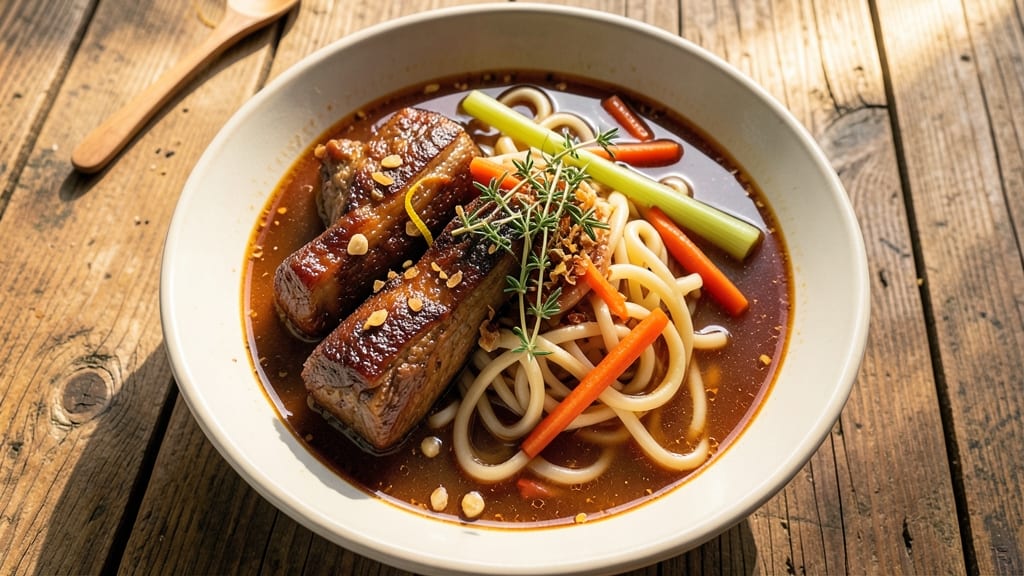
This beef shank noodle soup recipe delivers the kind of rich, deeply flavorful comfort you crave after a long day. The secret lies in slow-braising beef shanks until they fall apart, creating a deep umami broth that transforms simple ingredients into something extraordinary.
Every spoonful is packed with tender meat, silky noodles, and layers of savory depth that warm you from the inside out.
What sets this recipe apart is the two-stage cooking process: first, building the broth by simmering beef shanks with aromatic vegetables and herbs until the meat is fork-tender, then finishing with fresh noodles and garnishes that brighten the dish.
The result is a bowl that balances hearty textures and bold flavors, perfect for chilly evenings or when you need a meal that feels like a hug.
With just 10 ingredients and 3 hours of hands-off cooking, you’ll achieve restaurant-quality results at home. The beef shanks become melt-in-your-mouth tender, the broth develops a complex, caramelized richness, and the noodles soak up every drop of that savory goodness.
This is the kind of soup that disappears in minutes and leaves everyone asking for seconds.
Whether you’re meal prepping for the week or serving a crowd, this recipe scales beautifully while keeping the same depth of flavor. The best part? It tastes even better the next day, making it ideal for busy schedules. Let’s get started on creating your perfect bowl of comfort.
Ingredients for beef shank noodle soup
Ten ingredients, three hours of hands-off magic for that perfect bowl of umami comfort.
| Ingredient | Amount | Notes |
|---|---|---|
| Beef Shanks 🥩 | 2 lb | Bone-in, 1.5-2 inches thick |
| Yellow Onion 🧅 | 1 whole | Cut into 1-inch chunks |
| Carrots 🥕 | 4 medium | Peeled, cut into 1-inch pieces |
| Garlic Cloves 🧄 | 6 cloves | Smashed, not minced |
| Celery Stalks 🥬 | 3 whole | Cut into 1-inch pieces |
| Fresh Thyme 🌿 | 2 sprigs | Or 1 tsp dried thyme |
| Fresh Bay Leaves 🌿 | 2 whole | Remove after cooking |
| Dried Parsley 🌿 | 1 tbsp | For garnish |
| Egg Noodles 🍜 | 8 oz | Fresh or dried, wide egg noodles |
| Beef Broth 💧 | 4 cups | Low-sodium preferred |
| Dry Red Wine 🍷 | ½ cup | Bold variety like Cabernet |
| Tomato Paste 🍅 | 2 tbsp | Smooth, not chunky |
| Kosher Salt 🧂 | 1 ½ tsp | Adjust to taste |
| Black Peppercorns 🌶️ | ½ tsp | Freshly cracked |
The beef shanks are the star—bone-in, 1.5-2 inches thick—they're what give this soup its legendary richness. Butcher sections or your grocery store's meat department usually have them pre-cut. If you're buying whole, ask for the shank portion. Look for good marbling; that's what turns into flavor during the long braise. I always pick up a second pound if I'm feeding a crowd—this soup disappears fast. The carrots, celery, and onion form the aromatic base, so don't skimp on freshness here. Trader Joe's often has great pre-cut veggies for convenience, but whole roots keep longer.
No red wine? Dry sherry or extra beef broth works just as well—just don't skip the acid. The tomato paste might seem like overkill, but trust me, it deepens that umami magic. Fresh thyme is ideal, but dried works at one-third the amount. If you're using dried, toast the spices first in a dry pan for 30 seconds to wake up their flavors. The egg noodles should be wide and fresh if possible—Trader Joe's or Whole Foods carry excellent brands. For a gluten-free version, swap in rice noodles, but they'll absorb the broth differently.
This soup only gets better with time—4-5 days in the fridge, 3 months in the freezer. Make a double batch and freeze half; it's perfect for lazy weeknights. Store the broth separately from the noodles if you're prepping ahead, then reheat the broth first. The noodles go in last minute to keep them from turning mushy. Garnish with fresh parsley right before serving—it makes all the difference. Leftovers? Even better the next day as the flavors meld together.
Why You'll Love This Recipe
- Foolproof Start: I swear by the slow sear on beef shanks—just salt, pepper, and a hot pan. That crust locks in flavor while you chop onions and carrots in 10 minutes flat. No fancy techniques, no stress.
- Umami Bomb: The combo of caramelized onion, garlic, and celery stalks simmered with shanks? It’s the kind of depth that makes you pause mid-sip of wine. The broth reduces into something dangerously rich—like a hug in a bowl.
- Leftovers? My Favorite: This soup only gets better the next day. I make a double batch on Sundays, and by Wednesday, the shanks are falling off the bone. Freeze half for lazy nights when you’d rather scroll than cook.
- Budget Hero: Beef shanks stretch further than you’d think, and veggies like carrots and onions bulk it up without breaking the bank. Honestly, I’ve fed four people for under $15 with this—plus, the leftovers save me from takeout temptation.
Step-by-step instructions for beef shank noodle soup
This rich, comforting soup delivers melt-in-your-mouth beef and deep umami flavor in every spoonful.
Sear the Beef Shanks for Maximum Flavor
Pat the 2 lb beef shanks completely dry with paper towels—this helps create that beautiful crust. In a large Dutch oven, heat 1 tablespoon olive oil over medium-high heat until shimmering. Working in batches if needed, add the beef shanks and sear for 3-4 minutes per side until deeply browned. You're looking for a rich, caramelized crust that's the foundation of your soup's flavor.
Don't rush this step. The deep brown color means hundreds of flavor compounds are forming through the Maillard reaction. Once all sides are browned, remove the shanks and set them aside on a plate. You'll return them to the pot later, but first, we need to build that incredible aromatic base.
Build the Aromatic Base with Onion, Carrots, and Celery
In the same Dutch oven, add 1 whole yellow onion cut into 1-inch chunks, 4 medium carrots cut into 1-inch pieces, and 3 whole celery stalks cut into 1-inch pieces. Cook for 5-6 minutes over medium heat, stirring occasionally, until the vegetables begin to soften and the onion becomes translucent. This process releases their natural sugars and sweetness into the pot.
Add 6 cloves garlic that have been smashed (not minced) and 2 sprigs fresh thyme. Cook for another 1-2 minutes until the garlic is fragrant but not browned—you want to preserve its delicate flavor. Here's where the magic happens: sprinkle in 2 whole fresh bay leaves and the 2 tablespoons tomato paste. Stir well to coat everything in that rich, umami-packed paste. Let it cook for 30 seconds to toast the tomato paste lightly—this deepens its flavor significantly.
Deglaze and Simmer the Beef Shanks
Pour in the 0.5 cup dry red wine and scrape up all those beautiful browned bits from the bottom of the pot with a wooden spoon. This deglazing step captures all the flavor you worked so hard to create. Let the wine simmer for 2-3 minutes until it reduces by about half and the alcohol cooks off—you'll smell that rich, concentrated aroma developing.
Add the 4 cups beef broth and bring everything to a gentle boil. Return the seared beef shanks to the pot, bone-side up. Reduce the heat to low and cover partially with a lid. Here's the key: simmer for 2 hours until the beef is fork-tender. You'll know it's ready when a knife slides in easily and the meat pulls apart with gentle pressure. The broth should have reduced slightly and developed a deep, rich color.
Finish with Seasoning and Noodles
Remove the beef shanks from the pot and set them aside. Strain the broth through a fine-mesh sieve into a clean pot, pressing on the vegetables to extract all their flavor. Discard the solids. Return the strained broth to the Dutch oven and bring it to a gentle simmer over medium heat. Add the beef shanks back to the pot and stir in the 1.5 teaspoons kosher salt and 0.5 teaspoon freshly cracked black peppercorns. Taste and adjust the seasoning—you want it to be rich and savory, not salty.
Add the 8 oz egg noodles and cook for 8-10 minutes until they're al dente. The noodles should be tender but still have a slight bite to them. If the soup seems too thick, add a splash of hot water to reach your desired consistency. The noodles will absorb some of the broth as they cook, so don't worry if it looks perfect at first.
Serve with Fresh Herbs and Crispy Garnishes
Ladle the soup into bowls, dividing the beef shanks among them. The meat should be falling apart at this point, releasing its rich juices into the broth. Garnish each serving with a sprinkle of 1 tablespoon dried parsley for a pop of color and freshness. For extra texture, I like to add a few crispy fried shallots or toasted breadcrumbs on top—this contrast really elevates the dish.
Serve immediately while the noodles are hot and the broth is steaming. Each spoonful should deliver that perfect balance of tender beef, rich umami broth, and comforting egg noodles. The longer it sits, the more the flavors meld together, but trust me, it's worth the wait for that first bite of this hearty, satisfying soup.
Pro Tips For Making Beef Shank Noodle Soup
- Brown the Shanks Hard: I used to think "browning" just meant "don’t burn it," but beef shanks need a deep, dark crust—almost black in spots—before adding liquid. This isn’t about aesthetics; it’s the Maillard reaction building flavor. Use a heavy pot, medium-high heat, and let them sit undisturbed for 3-4 minutes per side. Yes, it’ll look scary, but that’s how the soup gets depth.
- Cut Celery into Matchsticks: Skip the big chunks—this soup isn’t a stew. Thinly slice celery into ¼-inch sticks so it cooks faster and stays crisp enough to bite into. Thick pieces turn to mush and make the broth taste dull. (Pro tip: Use the white base too; it’s sweeter and adds subtle flavor.)
- Don’t Rush the Braise: After searing, splash in enough liquid to cover the shanks by 1 inch, then simmer low and slow—not a rolling boil. I learned this after a rushed 2-hour braise left the meat tough. Aim for 2.5 to 3 hours, checking occasionally to skim off any foam that rises. Patience here makes the difference between fork-tender and chewy.
- Save the Onion Water: When dicing onions, reserve the soaking liquid in a small bowl. Strain it through a fine-mesh sieve, then add it to the pot after the shanks are seared. The leftover onion flavor in that water infuses the broth faster than starting from scratch. (Yes, it’s weird, but it works—trust me.)
Essential equipment for this recipe
Dutch Oven Essentials
Your Dutch oven is the MVP for this recipe—it's the only pot that can handle searing, braising, and simmering all in one. I swear by a 5-6 quart enameled cast iron like the Le Creuset Signature or Lodge Enameled Cast Iron—they distribute heat evenly and last forever.
If you're on a budget, a stainless steel Dutch oven from All-Clad works too, though you'll need to monitor heat more carefully. 🔥
Precision Thermometer
A meat thermometer is non-negotiable for perfect beef shanks. The ThermoWorks Smoke or Meater are my go-tos—they're fast and accurate. Insert the probe into the thickest part of the shank (avoid bone) and aim for 203°F for fall-apart tenderness.
No thermometer? Use the fork test: gently prod the meat—if it slides in easily and pulls apart, it's ready.
Fine-Mesh Sieve
Straining the broth is where the magic happens, and a fine-mesh sieve (like the OXO Good Grips) separates the silky liquid from the cooked veggies without losing flavor. Press the solids with a wooden spoon to extract every last drop of umami goodness.
Pro tip: Line your sieve with a cheesecloth for even finer straining if you're feeling fancy.
Wooden Spoon Set
Wooden spoons are your best friend for stirring and deglazing—no metal here. A set of 3-4 (like the Ozeri Touch-Grip) prevents scratching your Dutch oven and helps scrape up those flavorful browned bits. Keep one near your stove at all times for this recipe and countless others. 🌟
Instant-Read Thermometer
While your meat thermometer works for the shanks, an instant-read thermometer (like the Thermoworks Thermapen) is perfect for checking broth temperature and noodle doneness. The broth should simmer at 195-205°F—too hot, and the noodles will overcook.
I also use mine to test the internal temp of the noodles (they're done at 160°F for al dente perfection).
Optional Upgrades
For next-level results, consider a sous vide circulator (like the Anova Precision Cooker) to pre-cook the shanks at 185°F for 24 hours—it guarantees melt-in-your-mouth texture. Or, a mandoline (like the Julienne) for perfectly even noodle slices if you're feeling experimental.
Even a high-quality microplane for garlic and shallots makes all the difference in flavor depth. 💡
Nutrition facts
Frequently asked questions
Can I use bone-in or boneless beef shanks?
Bone-in shanks are ideal—they add incredible depth of flavor to the broth as they simmer. If you must use boneless, look for thick-cut beef shanks (at least 1.5 inches thick) to ensure proper tenderness. The cooking time remains the same, but boneless shanks may cook slightly faster. Never substitute with beef chuck roast—it lacks the connective tissue that creates that melt-in-your-mouth texture.
How do I know when the beef shanks are perfectly tender?
Use the fork test: gently prod the thickest part of the shank—if the meat slides off the bone with minimal pressure, it's ready. For precision, use a meat thermometer and aim for 203°F internal temperature. The broth should also be reduced and deeply flavorful. Overcooking by 15-20 minutes won't hurt, but the meat will start to crumble too much.
Can I make this soup in a slow cooker or Instant Pot?
For a slow cooker, brown the shanks first, then transfer everything to the pot and cook on low for 8 hours or high for 4-5 hours. For an Instant Pot, sear the shanks, then pressure cook on high for 60 minutes followed by a 10-minute natural release. The Instant Pot version will be slightly faster but may need extra broth to compensate for steam loss. The flavor develops differently but remains rich and satisfying.
What if my broth tastes too salty?
Add 1-2 cups hot water to dilute the broth, then taste again. If it's still too salty, stir in 1-2 tablespoons heavy cream or milk—the fat helps balance the salt. For a more dramatic fix, blend 1/2 cup broth with 1/2 cup water, then return it to the pot. Avoid adding fresh broth or water directly, as it can thin the soup too much and dilute the umami flavors you've worked so hard to build.
Can I freeze this soup for later?
Yes! Freeze the soup without noodles for up to 3 months—they'll get mushy when reheated. Store the broth and beef shanks separately in airtight containers. When ready to serve, reheat the broth and shanks (add a splash of water if needed), then cook fresh noodles separately and add them at the end. The flavors actually improve after freezing as the ingredients meld together.