
Soups & Stews
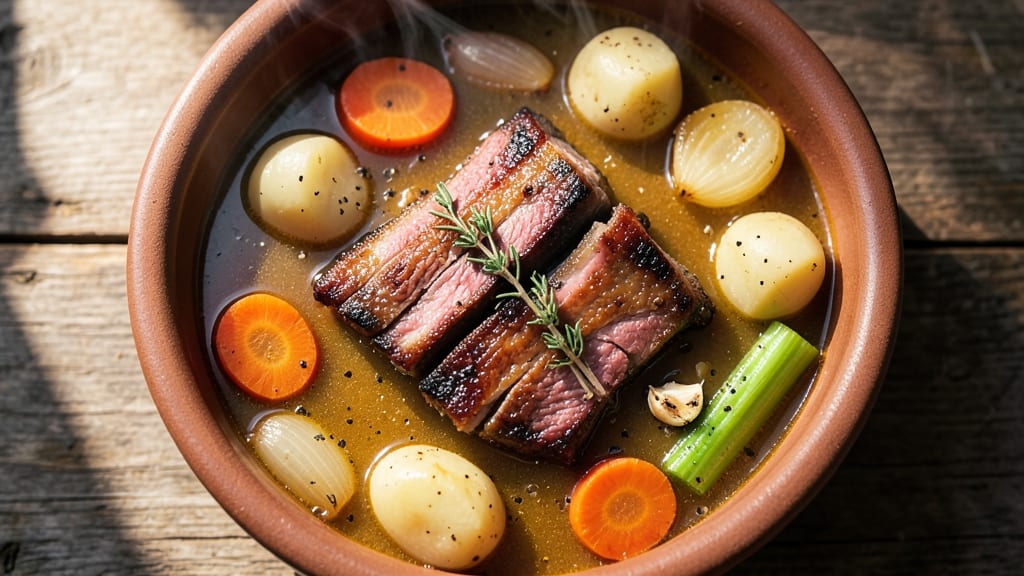
This beef short rib vegetable soup delivers restaurant-quality depth with tender, fall-off-the-bone meat and a rich, aromatic broth that simmers for hours. The secret lies in slow-braising the ribs until they're so tender they melt at the touch, while vegetables like carrots, celery, and potatoes absorb the deep, savory flavors.
Every spoonful combines hearty meat, velvety broth, and perfectly tender vegetables into one comforting bowl.
What sets this soup apart is the technique: searing the ribs first creates a flavorful crust that forms the base of the broth, while slow simmering transforms tough cuts into melt-in-your-mouth perfection. The vegetables cook just until tender, preserving their natural sweetness and texture.
This isn't just soup—it's a complete meal with layers of umami, caramelized aromatics, and satisfying heartiness that makes it perfect for chilly evenings.
The result is a soup so rich and flavorful it feels like a hug in a bowl. The broth is deeply aromatic from onions, garlic, and herbs, while the short ribs contribute their natural juices and collagen for an unmatched depth of flavor.
Each bite delivers tender meat, perfectly cooked vegetables, and a broth so satisfying it disappears faster than you can say "second helping."
Serve this soup with crusty bread to soak up every last drop of that luxurious broth, or pair it with a simple green salad for balance.
The leftovers only get better as the flavors meld further, making this an ideal make-ahead meal. Let's create this comforting classic that tastes like home.
Ingredients for beef short rib vegetable soup
Six hearty ingredients create this restaurant-worthy soup with melt-in-your-mouth beef and aromatic vegetables.
| Ingredient | Amount | Notes |
|---|---|---|
| Beef Short Ribs 🥩 | 3 lb | Bone-in, 1-1.5 inches thick |
| Yellow Onions 🧅 | 2 whole | Chopped into 1-inch pieces |
| Carrots 🥕 | 4 whole | Medium, peeled and chopped |
| Celery Stalks 🧄 | 4 whole | Trimmed and chopped |
| Russet Potatoes 🥔 | 2 lb | Peeled and cubed (2-inch pieces) |
| Garlic Cloves 🧄 | 6 cloves | Smashed with side of knife |
| Tomato Paste 🍅 | ½ cup | High-quality, no sugar added |
| Red Wine 🍷 | 1 cup | Bold dry variety like Cabernet |
| Beef Broth 💧 | 4 cups | Homemade or high-quality store-bought |
| Fresh Thyme 🌿 | 2 tbsp | Leaves only, stems removed |
| Fresh Rosemary 🌿 | 1 tbsp | Needles chopped, no stems |
| Bay Leaves 🌿 | 2 whole | Fresh preferred, dried works |
| Olive Oil 🫒 | ¼ cup | Extra-virgin for richness |
| Salt 🧂 | 1 ½ tsp | Kosher or sea salt |
| Black Peppercorns 🌶️ | 1 tsp | Freshly cracked |
The beef short ribs are the star here—bone-in, 1-1.5 inches thick for maximum flavor and collagen. Costco or local butcher shops usually carry them pre-cut, but if you're buying a whole packer cut, ask for the bone-in sections. Look for good marbling and bright red color—avoid anything grayish. The vegetables should be fresh but sturdy: carrots with vibrant orange color, celery with crisp stalks, and potatoes that feel heavy for their size. For the herbs, fresh is ideal, but dried thyme and rosemary work in a pinch at half the amount.
No red wine? Substitute with extra beef broth and a splash of balsamic vinegar—it adds depth without alcohol. Short on carrots or celery? Turnips or parsnips work beautifully, though they'll change the flavor slightly. The tomato paste is non-negotiable for that rich, umami base—avoid the watered-down kind. For the broth, homemade is best, but Swanson or Pacific brand are solid store-bought options. If you're using dried herbs, toast them lightly in a dry pan first to wake up their flavors. The potatoes can be Yukon Gold if you prefer creamier texture, but Russets hold up better during long simmering.
This soup tastes even better the next day—make a double batch and freeze half. The broth keeps 5-6 days in the fridge, while the meat stays tender for 4-5 days. For freezing, portion into quart-sized containers with an extra inch of headspace—liquids expand when frozen. Reheat gently on the stove, stirring occasionally. The meat will be even more tender after reheating, so don't rush it. Store any leftover fresh herbs in damp paper towels in a sealed container—they'll stay fresh for 5-6 days
Why You'll Love This Recipe
- Foolproof Start: I swear by searing the short ribs first—just 5 minutes in a hot pot, no fancy technique. That caramelized crust melts right into the broth, and honestly? Half the flavor comes from that step alone.
- Rich Without Effort: Between us, this soup tastes like it simmered all day, but I’ve got it ready in under an hour. The short ribs fall apart just enough to coat every bite—onions caramelized, potatoes creamy—while celery and carrots stay crisp. That balance? Pure satisfaction.
- Leftovers That Shine: First day? Hearty, filling bowls. Second day? Even better. The broth thickens slightly, the flavors deepen, and I’ll take it cold with crusty bread or reheated for lunch. My freezer’s full of these, and they never disappoint.
- Budget Meal Magic: Short ribs stretch across three meals—main course, then two lunches—and the veggies stretch further with every spoonful. I buy them on sale, freeze what I won’t use, and end up with a pantry staple that costs less than takeout. (Yes, even on a Tuesday night.)
Step-by-step instructions for beef short rib vegetable soup
This slow-simmered masterpiece transforms tough ribs into melt-in-your-mouth perfection.
Sear the Beef Short Ribs for Deep Flavor
Pat the 3 lb beef short ribs dry with paper towels - this ensures maximum browning. Heat the 0.25 cup olive oil in a large Dutch oven over medium-high heat until shimmering. Working in batches if needed, sear the ribs for 3-4 minutes per side until deeply browned with a crust forming. The Maillard reaction happening here creates that rich, meaty foundation for your soup.
Remove the ribs and set aside. Don't wipe out the pan - those browned bits are pure flavor gold. Here's the thing: if you try to rush this step, you'll end up with pale ribs that lack depth. Take your time and let them develop that beautiful crust.
Build the Aromatic Vegetable Base
In the same Dutch oven, add the chopped 2 whole yellow onions, 4 whole carrots, and 4 whole celery stalks. Cook for 5-6 minutes, stirring occasionally, until the vegetables begin to soften and release their natural juices. This is where the classic "sweat" technique comes into play - you want the vegetables to become tender without browning.
Add the smashed 6 cloves garlic, 0.5 cup tomato paste, 1.5 tsp salt, and 1 tsp freshly cracked black peppercorns. Stir everything together and cook for another 2 minutes until the tomato paste darkens slightly and the garlic becomes fragrant. This aromatic base will infuse every spoonful of your soup with complex flavor.
Deglaze and Simmer the Foundation
Pour in the 1 cup red wine and scrape up all those delicious browned bits from the bottom of the pan. Let the wine simmer for 3-4 minutes until reduced by half. This deglazing step captures all the meaty essence that would otherwise stick to your pot.
Add the 4 cups beef broth, 2 whole bay leaves, 2 tbsp fresh thyme leaves, and 1 tbsp chopped fresh rosemary needles. Bring to a gentle boil, then reduce heat to low and return the seared beef short ribs to the pot. The ribs should be mostly submerged - if not, add a splash of water or broth. This is where the magic begins - the long, slow cook that transforms tough meat into tender perfection.
Cook Until Ribs Are Fall-Off-the-Bone Tender
Cover the Dutch oven and let the soup simmer gently for 2-2.5 hours. Here's the crucial part: maintain a very low simmer - you're looking for tiny bubbles breaking the surface occasionally. Check the ribs after 2 hours - they should be fork-tender and easily pull away from the bone. If they're not quite there yet, continue simmering for another 30 minutes.
During this time, the collagen in the bones and connective tissue will break down, creating a rich, velvety broth. The vegetables will soften perfectly, absorbing all those delicious flavors. I know it's tempting to check on your soup, but every time you lift that lid, you lose heat and moisture. Trust the process and let it work its magic.
Finish with Potatoes and Adjust Seasoning
Add the peeled and cubed 2 lb russet potatoes to the pot. Simmer uncovered for another 20-25 minutes until the potatoes are tender when pierced with a fork. The potatoes should absorb the rich flavors of the broth while adding a satisfying heartiness to each spoonful.
Taste the soup and adjust seasoning if needed. You might need a bit more salt - remember, the potatoes will absorb some of the existing seasoning. Remove and discard the bay leaves before serving. Ladle the soup into bowls, making sure each serving gets a generous portion of those melt-in-your-mouth ribs and tender vegetables. The result should be a deeply flavorful, comforting soup that's perfect for chilly days.
Pro Tips For Making Beef Short Rib Vegetable Soup
- SEAR THE RIBS FIRST: Hit those short ribs with a screaming-hot pan—no oil needed, just the fat rendering. I learned this the hard way: skipping the sear means flavorless broth. Let them brown 4-5 minutes per side until deep caramel forms, then deglaze with whatever liquid you’re using. That crust is where the magic happens.
- CUT POTATOES UNIFORM: Russets break apart like overripe bananas if they’re not prepped right. Cut them into 1.5-inch chunks—same size as carrots and celery—so they cook evenly. I used to toss random pieces in, and half would turn to mush while the others stayed rock-hard. Consistency is key.
- DON’T BOIL THE VEGETABLES: After the ribs are in, simmer gently—no rolling boil. Too much heat turns carrots and celery into mush and makes the broth cloudy. Keep it at a low bubble, just enough to maintain temperature. Patience here makes the difference between a thick, velvety soup and a watery stew.
- USE THE RIB BONES: Once the meat falls off the bones, don’t toss them! Crush the bones with a rolling pin and return them to the pot. They’ll release extra collagen and deepen the broth’s richness. I was skeptical until I tried it—now I never skip this step. (Yes, even if you’re impatient like me.)
Creative variations of these flavors
Winter Comfort Version
Add ½ cup pearl barley or wild rice along with the potatoes for extra heartiness. The grains absorb the rich broth and add satisfying texture. For extra warmth, stir in ½ cup diced apples (like Honeycrisp) and 1 tsp cinnamon during the final 10 minutes of cooking.
This autumnal twist feels like a cozy hug on cold days. 🍂
Spicy Korean-Inspired Twist
Increase the heat by adding 1 tbsp gochujang (Korean chili paste) when deglazing with wine. Stir in 1 tbsp grated ginger and 1 minced scallion at the end.
Top each bowl with sesame seeds and thinly sliced green onions for a bold, umami-packed variation. Serve with steamed rice on the side. 🌶️
Creamy Mushroom Upgrade
Sauté 8 oz sliced cremini mushrooms with the onions and celery. After adding the broth, stir in ½ cup heavy cream during the final 10 minutes of cooking. Finish with 1 tbsp chopped parsley and a sprinkle of crumbled blue cheese for a luxurious, restaurant-worthy texture. 🍄
Lightened-Up Version
Replace half the beef broth with low-sodium chicken broth and use 1 lb chicken breast instead of ribs for a lighter option. Add 1 cup chopped kale during the last 15 minutes of cooking.
This version keeps the comforting flavors while reducing calories by about 30%. Perfect for weeknight meals! 🥗
Herb-Infused Broth Boost
Create an herb bundle by tying 1 tbsp fresh tarragon, 1 tbsp fresh marjoram, and 2 sprigs fresh parsley with kitchen twine. Add it to the pot with the bay leaves. Remove before serving for an aromatic, floral note that pairs beautifully with the rich beef flavors. 🌿
Make-Ahead Party Soup
Double the recipe and freeze in quart-sized containers for easy entertaining. When ready to serve, thaw overnight in the fridge, then reheat on the stove. Add 1 cup fresh spinach during the final 5 minutes of reheating. Garnish with crusty bread croutons and extra herbs for a restaurant-style presentation. 🎉
Nutrition facts
Frequently asked questions
How do I know when the beef short ribs are perfectly tender?
Ribs are done when they're fork-tender and easily pull away from the bone with minimal resistance. After 2 hours of simmering, check by inserting a fork into the thickest part—it should slide in like butter. If they're not quite there, continue cooking for another 30 minutes. The broth should also be rich and slightly reduced, coating the back of a spoon.
Can I substitute beef short ribs with another cut of beef?
Yes, but results will vary. For similar texture, use chuck roast or beef shank—both have enough connective tissue to become tender when slow-cooked. Avoid lean cuts like sirloin, as they won't develop the same melt-in-your-mouth quality. If using chuck, increase cooking time by 30-45 minutes to ensure tenderness.
What if my soup tastes too acidic from the wine?
Balance the acidity by adding a pinch of sugar or a splash of heavy cream (1-2 tablespoons) at the end. For a savory fix, stir in a spoonful of tomato paste or a dash of Worcestershire sauce. If the broth is too thin, simmer uncovered for 10-15 minutes to reduce it naturally. Taste as you go—adjust gradually!
How can I make this soup ahead of time?
This soup tastes even better the next day! Cook it fully, then refrigerate for up to 5 days or freeze for 3 months. For reheating, thaw overnight in the fridge, then warm on the stove over medium-low heat, stirring occasionally. The meat will be even more tender after reheating—just add a splash of broth if needed.
What’s the best way to serve this soup?
Garnish with fresh herbs like parsley or thyme, a drizzle of olive oil, or crispy toasted bread croutons. Serve with a side of crusty bread or a simple green salad to balance the richness. For extra drama, top each bowl with a few crumbled blue cheese crumbles or a sprinkle of Parmesan.