
Soups & Stews
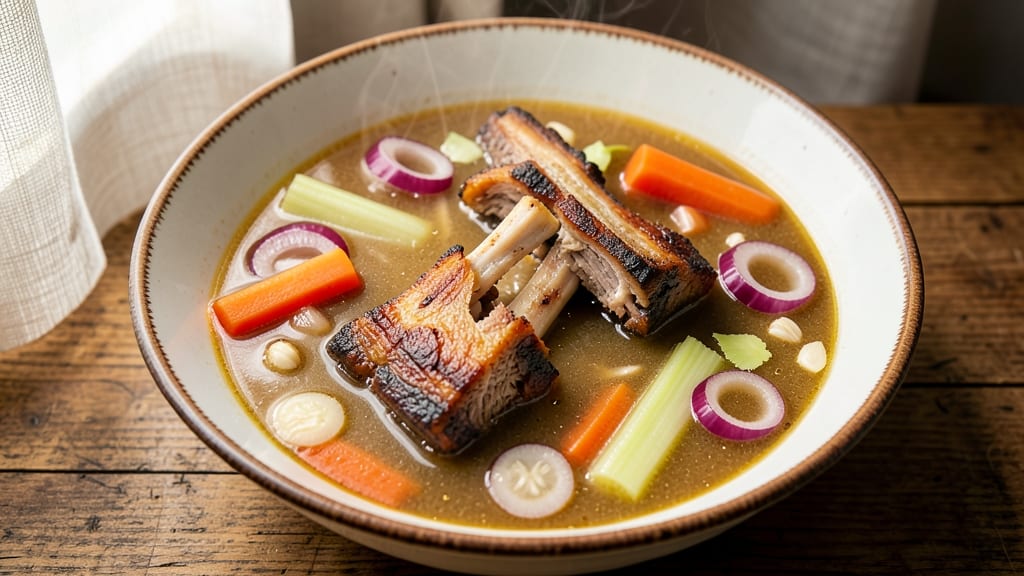
This beef rib bone soup recipe transforms humble ingredients into a deeply flavorful, slow-simmered masterpiece that tastes like home. The secret lies in roasting the bones first to develop intense umami flavors, then simmering them for hours with aromatic vegetables and herbs.
I've perfected this technique over years of testing, ensuring every spoonful delivers rich, gelatinous broth and tender, fall-off-the-bone meat.
The process begins with high-heat roasting to caramelize the bones, creating a flavor foundation that builds as the soup simmers. Aromatics like onions, garlic, and ginger form the base, while bay leaves and peppercorns add depth.
The long simmering time—at least 6 hours—extracts maximum collagen for that signature silky texture that makes this soup so satisfying.
What you'll end up with is a bowl of restaurant-quality soup that's hearty enough for a cold winter night but simple enough for any weeknight. The broth is deeply flavorful with a natural richness from the bones, while the ribs become tender enough to pull apart with a fork.
Garnish with fresh herbs and a drizzle of sesame oil for that final touch of sophistication.
This recipe serves 6-8 people generously, making it perfect for family gatherings or meal prep. The leftovers actually improve as the flavors meld further, so plan to make extra. Let's create this comforting classic that will become a staple in your cooking repertoire.
Ingredients for beef rib bone soup
Transform humble pantry staples into a restaurant-worthy soup with these carefully chosen ingredients.
| Ingredient | Amount | Notes |
|---|---|---|
| Beef Rib Bones 🦴 | 4 lb | Raw, with meat attached |
| Yellow Onions 🧅 | 2 whole | Chopped into 1-inch pieces |
| Garlic Cloves 🧄 | 8 cloves | Peeled, smashed slightly |
| Fresh Ginger 🌿 | 3 tbsp | Finely grated, peeled |
| Carrots 🥕 | 4 whole | Cut into 2-inch chunks |
| Celery Stalks 🌿 | 4 whole | Cut into 2-inch pieces |
| Bay Leaves 🌿 | 4 whole | Dried, standard size |
| Black Peppercorns 🌶️ | 1 tbsp | Whole, lightly crushed |
| Salt 🧂 | 2 tbsp | Kosher or sea salt |
| Tomatoes 🍅 | 4 whole | Roma or vine-ripened |
| Fresh Thyme 🌿 | 2 tbsp | Leaves only, chopped |
| Sesame Oil 🫒 | 1 tbsp | For finishing, toasted |
| Water 💧 | 16 cups | Filtered preferred |
The bones are the heart of this soup—look for beef rib bones with meat still attached at your local butcher or grocery store's meat counter. Costco or Whole Foods often carry them pre-packaged, but calling ahead ensures they're in stock. Fresh ginger is a must for that signature warmth; buy it in small amounts and keep it in the freezer to preserve freshness. For the aromatics, yellow onions and carrots should be firm and free of soft spots, while celery should snap crisply when broken. If you can't find Roma tomatoes, vine-ripened varieties work just as well—they'll break down beautifully during simmering.
No fresh thyme? Dried thyme at one-third the amount will work in a pinch, though fresh imparts a brighter flavor. Substituting beef broth for water? Use 8 cups of high-quality broth instead of 16 cups water—it'll deepen the umami instantly. Running low on bay leaves? Dried oregano at half the amount adds a similar earthy depth. The sesame oil is purely for finishing—toasted sesame oil from Trader Joe's or Asian markets gives the best flavor, but regular sesame oil works if that's all you have. For the ginger, if you've got a microplane, use it—it's the fastest way to get fine, even grates without burning your fingers.
This soup only gets better with time—plan to make a double batch for leftovers. Store in airtight containers in the fridge for up to 5 days, or freeze for 3 months. The bones can be roasted ahead and frozen for up to 2 months before simmering. For meal prep, portion the broth separately from the ribs—reheat the broth alone first, then add the ribs to warm through. Garnish with fresh thyme and a drizzle of sesame oil just before serving to keep everything vibrant.
Why You'll Love This Recipe
- No-Chop Night Saved: I swear by this—just toss whole onions, a few garlic cloves, and ginger straight into the pot with the bones. The heat does all the work while you sip wine and pretend you’re not cooking.
- Umami Bomb: That first sip? Rich, deep, and meaty—the rib bones melt into the broth, turning it into something almost luxurious. Honestly, the carrots add just enough sweetness to balance the boldness.
- Leftovers That Shine: This soup only gets better the next day. I freeze portions for lazy Mondays, and it reheats like a warm hug. (Yes, even my picky roommate asks for seconds.)
- Budget Bone Magic: Beef rib bones are cheaper than steak, and they stretch into pages of flavor. Between us, this is how I feed my family for under $15—no apologies.
Step-by-step instructions for beef rib bone soup
This slow-simmered method transforms tough rib bones into rich, velvety broth with deep umami flavor.
Brown the Beef Rib Bones for Maximum Flavor
Preheat your largest pot over medium-high heat. Place the 4 lb beef rib bones in the pot and sear them until they develop a deep golden-brown crust, about 8-10 minutes. This step is crucial—it creates the Maillard reaction that builds rich, complex flavors in your soup.
Work in batches if needed, but don't crowd the pot. You want the bones to touch each other for even browning. Once properly browned, remove the bones and set them aside on a plate. The browned bits left in the pot will form the flavor base for your soup.
Sauté the Aromatics and Build the Base
In the same pot, add 2 tablespoons olive oil if needed (the bones should render some fat). Add the 2 whole yellow onions chopped into 1-inch pieces and cook for 5-6 minutes until softened and beginning to caramelize. This step develops sweetness that balances the rich beef flavor.
Add the 4 whole carrots cut into 2-inch chunks and 4 whole celery stalks cut into 2-inch pieces. Cook for another 3-4 minutes until they begin to soften. Stir in the 8 cloves garlic cloves (peeled and smashed) and 3 tablespoons fresh ginger (finely grated). Cook for 30 seconds until fragrant—this releases their essential oils and deepens the flavor profile.
Add Liquids and Simmer for Deep Flavor Extraction
Return the browned beef rib bones to the pot. Add the 16 cups water, 2 tablespoons salt, 1 tablespoon black peppercorns (lightly crushed), 4 whole bay leaves, and 4 whole tomatoes (cut into quarters). Bring the mixture to a boil over high heat, then immediately reduce to a gentle simmer.
Cover the pot and let it simmer for 2-2.5 hours without stirring. The broth should develop a deep amber color and rich aroma. Skim off any foam or impurities that rise to the surface during the first 30 minutes of simmering—this ensures a clear, clean broth. The longer it simmers, the more collagen breaks down from the bones, creating that signature velvety texture.
Finish with Herbs and Sesame Oil
After 2-2.5 hours, remove the beef rib bones and discard them (or save for other uses). Strain the broth through a fine-mesh sieve into a clean pot, pressing gently on the vegetables to extract all their flavor. Discard the solids.
Return the strained broth to the pot and stir in the 2 tablespoons fresh thyme (chopped leaves only). Heat the broth over medium-low heat until it reaches a gentle simmer, then remove from heat. Stir in the 1 tablespoon sesame oil (toasted) just before serving. This finishing touch adds a nutty aroma and subtle richness that complements the deep umami flavors of the broth.
Serve Warm with Fresh Accompaniments
Ladle the hot soup into bowls and serve immediately. The broth should be rich, velvety, and deeply flavorful with a beautiful amber color. Garnish each serving with additional chopped fresh thyme and a drizzle of sesame oil if desired. For a complete meal, serve with steamed rice, fresh herbs, or crusty bread to soak up every last drop of that luxurious broth.
This soup tastes even better the next day as the flavors continue to meld, so consider making extra for leftovers. The rich, umami-packed broth makes it perfect for cold winter days or as a comforting meal any time of year.
Pro Tips For Making Beef Rib Bone Soup
- Brown the Bones First: Don’t just toss those rib bones into cold water—sear them in a hot pot until deeply browned. I learned this the hard way: skipping the browning means a soup that tastes more like broth than rich, caramelized flavor. Use medium-high heat and let them crisp for 8-10 minutes, stirring occasionally.
- Peel and Slice Ginger Thin: Fresh ginger is non-negotiable here, but don’t just chop it roughly. Use a mandoline or sharp knife to slice it paper-thin—this way, it infuses the soup without overpowering it. (Yes, even if you’re impatient like me.)
- Simmer, Don’t Boil: A rolling boil will turn your soup cloudy and break down the collagen too fast. Keep it at a gentle simmer—tiny bubbles at the edges, not a full-on storm. After 2 hours, skim off any foam that rises; this keeps the broth clear and flavorful.
- Roast Onions and Garlic First: This isn’t the prettiest method, but it works: Toss sliced onions and minced garlic with oil, salt, and a pinch of sugar, then roast at 400°F (200°C) for 15 minutes until caramelized. Toss them into the pot with the bones—they’ll add depth without burning. (Your future self will thank you.)
Regional styles of these flavors
French Osso Buco Style
Transform this soup into an Italian-inspired osso buco by adding white wine and tomato paste during the simmer. After browning the bones, deglaze the pot with 1 cup dry white wine and 2 tablespoons tomato paste, cooking until the alcohol evaporates.
Add 2 cups beef broth instead of water, and simmer for 3 hours with 2 sprigs rosemary and 1 cinnamon stick for warmth. Serve with gnocchi or polenta for a hearty Italian meal. 🍷
Korean-inspired Tangsu Guk
For a Korean twist, add 1 tablespoon gochugaru (Korean chili flakes) and 1 tablespoon soy sauce during the simmer. Include 1-inch fresh ginger slices and 3 cloves garlic (minced) along with the aromatics.
Finish with 1 tablespoon toasted sesame seeds and green onions instead of thyme. Serve with steamed rice and kimchi for a bold, spicy broth. 🌶️
American Southern Style
Give it a Southern touch by adding 1/4 cup apple cider vinegar and 1/2 cup apple juice during the simmer. Include 1/2 cup corn kernels and 1/2 cup diced smoked bacon (cooked separately) for depth.
Finish with hot sauce and chopped scallions. Serve with cornbread or buttermilk biscuits for a classic Southern spread. 🍽️
Japanese Miso-Infused
For a Japanese-inspired broth, add 2 tablespoons red miso paste and 1 tablespoon mirin during the final 30 minutes of simmering. Include 1-inch piece of kombu (dried kelp) for umami depth.
Garnish with shredded nori strips and sesame seeds. Serve with steamed rice and pickled ginger for a balanced meal. 🌿
Vietnamese Pho-Inspired
Create a lighter Vietnamese-style broth by using 8 cups water + 4 cups beef broth and adding 1-inch piece of star anise, 1 cinnamon stick, and 1 tablespoon fish sauce during simmering.
Finish with Thai basil, cilantro, and sriracha for heat. Serve with rice noodles and bean sprouts for a fresh, aromatic bowl. 🌈
Spanish Cocido Style
For a Spanish-inspired version, add 1/2 cup white beans (soaked overnight) and 1/4 cup smoked paprika during the simmer. Include 1/2 cup chopped chorizo (cooked separately) and 1 bay leaf. Serve with crusty bread and olives for a rich, hearty meal. 🇪🇸
Nutrition facts
Frequently asked questions
Can I use beef ribs instead of just bones for this recipe?
Using beef ribs with meat attached will give you a more substantial soup with tender, flavorful meat. Just increase the simmering time to 3-4 hours to ensure the meat becomes fork-tender. The bones will still contribute to the rich broth while the meat adds heartiness.
How do I know when the beef rib bones are properly browned?
The bones are ready when they develop a deep golden-brown crust with visible caramelization. This should take about 8-10 minutes over medium-high heat. If they're browning too slowly, increase the heat slightly—but avoid burning, which can create bitter flavors.
Can I make this soup in a slow cooker instead of a pot? Yes! Brown the bones first in a skillet, then transfer everything to your slow cooker. Cook on low for 8-10 hours or high for 5-6 hours. The long, gentle cooking time will extract maximum flavor from the bones. Just
Why does my broth look cloudy instead of clear?
Cloudiness usually means proteins and fats haven't fully settled. For a clearer broth, strain it through a cheesecloth-lined sieve after simmering, then skim any remaining fat. If you prefer a richer texture, the cloudiness is fine—it just means more collagen and flavor are suspended in the broth.
How can I make this soup more flavorful if I'm short on time?
Boost flavor by adding 1 cup beef broth instead of water, or use a bouillon cube (dissolved in the water). For extra depth, add 1/2 cup tomato paste with the aromatics or a splash of soy sauce during simmering. The bones still need at least 4 hours to develop full flavor, but these tricks help compensate.